Survivors of the Bedford train crash that killed a driver are urging Network Rail to install a safety system they believe could have prevented the collision, despite the infrastructure operator deciding against fitting it after a recent review.
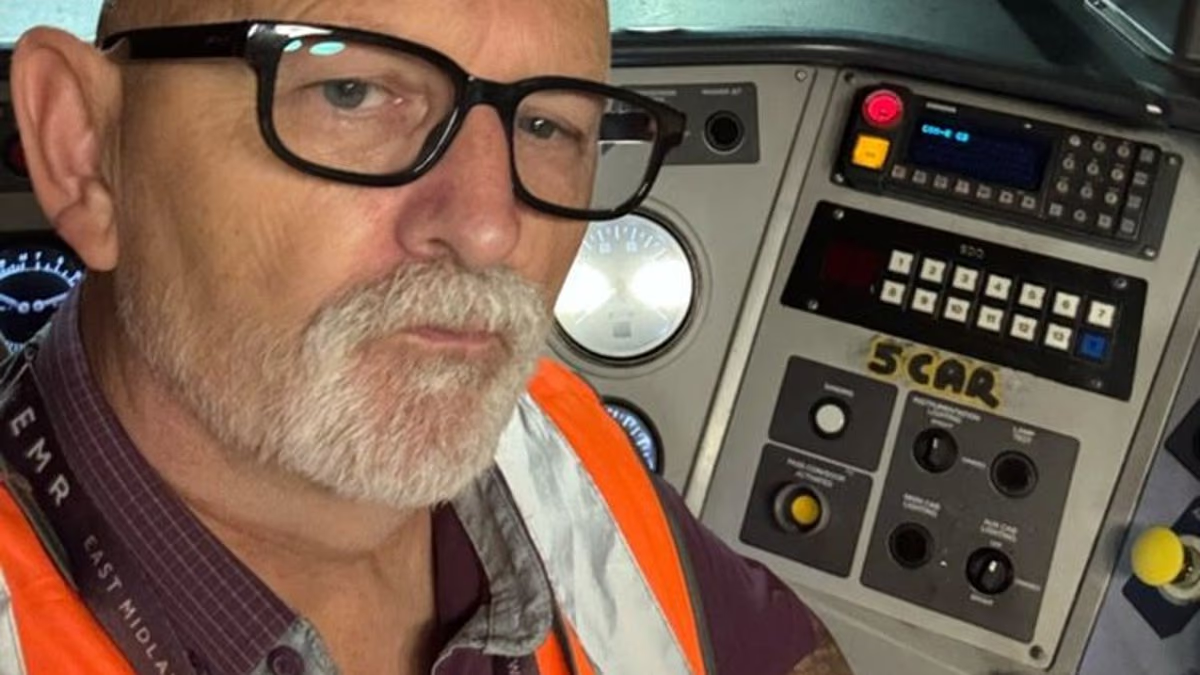
Shaun Burton, a 60-year-old East Midlands Railway driver, died on June 19 when his Class 360 Luton Express struck the rear of a Class 810 high-speed train at about 50mph south of Bedford station. The crash injured 160 people, including 11 who suffered very serious injuries.
An interim report released by the Rail Accident Investigation Branch (RAIB) said Mr Burton passed a red signal at 58mph while joining the line occupied by the train ahead. That train had stopped unexpectedly after a fault in its safety system.
The driver had received a warning from the train’s Automatic Warning System (AWS), which alerts drivers to a red signal. However, he acknowledged the alarm and continued accelerating, eventually reaching 76mph.
Mr Burton applied the brakes 10 seconds before impact, when he was around 850ft from the other train. The collision was so powerful that the combined length of the two trains was compressed by up to 10 metres.
AWS can warn a driver about a hazard ahead, but it does not automatically stop a train that passes a red signal — an incident known as a signal passed at danger, or SPAD.
The Train Protection & Warning System (TPWS), by contrast, is designed to intervene and bring a train to a halt. It was not installed on the track south of Bedford, and lawyers representing some passengers said the system could have prevented the crash.
TPWS was introduced after deadly rail disasters including the 1997 Southall crash and the 1999 Paddington accident. Its installation requires additional equipment to be placed along the track.
Network Rail currently limits TPWS installation largely to areas considered high risk, including sections near merging or converging lines. This is despite an inquiry recommending that the system be deployed across high-speed routes such as the railway at Bedford. Estimates have placed the cost of saving each life at several million pounds.

The Bedford train crash scene in June, where 160 people were injured and driver Shaun Burton was killed

Driver Shaun Burton, 60, died in the collision. An interim report says he accelerated past a red signal shortly before sustaining fatal injuries
As Our News Outlet reported in the days following the crash, Network Rail reviewed the Bedford signal last year. To the anger of survivors and injured passengers, it concluded that TPWS was not necessary at the location.
No SPAD incidents had been recorded at the signal since records began in 1985. Under the rules governing TPWS, signals where a rear-end collision was considered possible were also exempt from mandatory installation.
Des Collins, a solicitor representing several crash victims, said: “While we recognise there is much more to determine, today’s report already makes clear that the SPAD was compounded by the absence of TPWS on that section of railway.
“The system is specifically designed to stop a train automatically and safely. Had it been in place, this accident would have been prevented.
“It is deeply troubling that Network Rail appears to have assessed the area as low risk and decided that TPWS was not required.
“Once again, the lessons from the Paddington and Southall inquiries appear not to have been fully implemented, with devastating consequences for passengers.”
Network Rail said it could not comment on demands for TPWS to be installed on the route while the RAIB investigation remains under way.
RELATED: Air Force Lt. Col., wife accused of starving adopted 9-year-old kept in closet, made her wear bells
Mark Budden, the organisation’s East Midlands route director, said in a written statement: “We are carefully reviewing these interim findings and continuing to work closely with RAIB and our industry partners.
“The safety of passengers and colleagues is our highest priority. We owe it to the driver who lost his life, those who were injured, everyone affected by the collision and the millions of people who use the railway each day to identify and act on every lesson that can be learned.”
‘We will continue to cooperate fully with the investigation and ensure those lessons shape our future decision-making.’
A final report on the crash is unlikely to be published until well into next year.

The scene of the crash. An investigation found the collision had shortened the combined length of both trains by as much as 10 metres

A railway engineer inspecting a TPWS grid. Lawyers for the injured say this system could have averted disaster at Bedford had it been installed

TPWS was rolled out on much of the UK’s railway network following high-profile disasters such as the Paddington train crash in 1999 (pictured)
The RAIB says it is yet to ascertain why Mr Burton – described as a ‘devoted’ train driver – silenced an alarm designed to alert him to the fact he was at a red signal and continued to accelerate until he saw the train in front.
In-cabin CCTV from his train showed him acknowledge the AWS – but could not offer any further clues as to his actions because the digital footage captured in the seconds before the collision was corrupted by the crash.
Questions are also still being asked about why the front train’s emergency brakes were applied automatically due to a fault with its AWS equipment – which sounded an alarm despite the track being clear ahead.
Network Rail has tested the on-track AWS safety systems and found no faults.
In a statement, East Midlands Railway said it could not comment on the RAIB’s interim report, citing the ongoing investigation.
It added: ‘Our focus remains on supporting those affected by the incident, while continuing to work with the relevant authorities and carefully considering any recommendations identified through the investigation process.
‘We will do everything we can to act on the lessons of this incident and take all appropriate steps to prevent something similar from happening again.’
Ultimate responsibility for railway policy falls to the Department for Transport.
A DfT spokesperson told Our News Outlet: ‘Our deepest sympathies remain with everyone affected by this tragic incident.
‘Safety remains the absolute priority across our rail network and while incidents like this are incredibly rare, when they do occur, they are taken incredibly seriously.
‘We will ensure the industry acts on any findings in the Rail Accident Investigation Branch’s full report once published.’