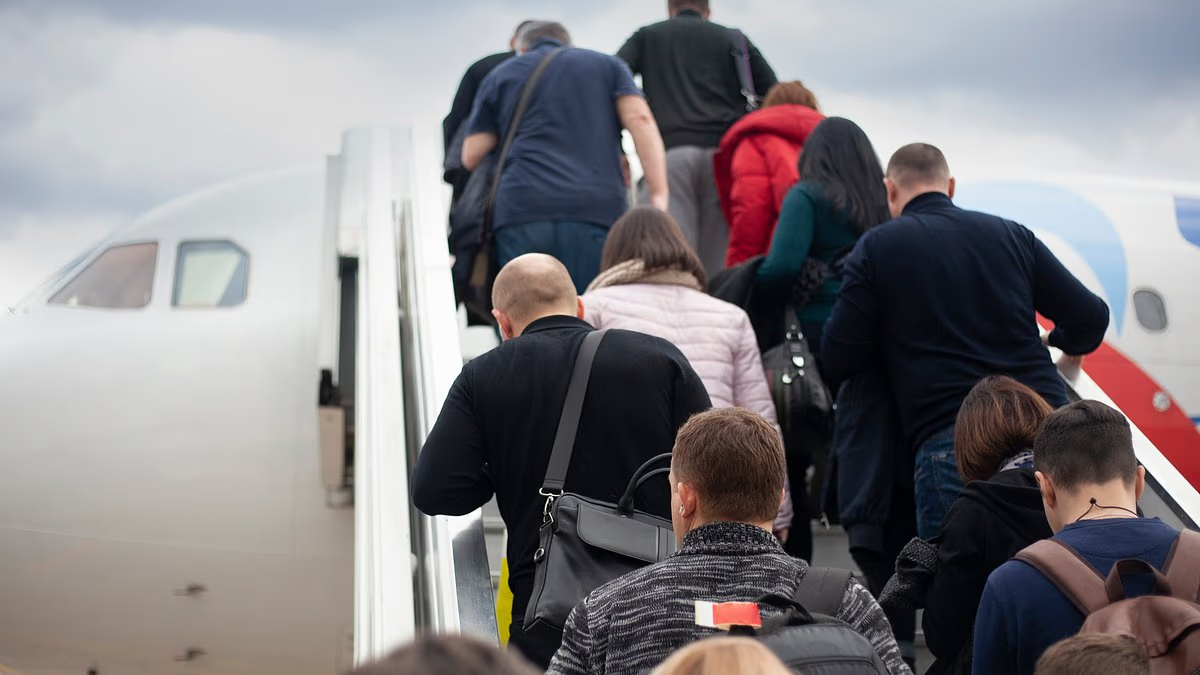

Cost-conscious Brits are turning to “Travel Tetris” to cut the price of their holidays by piecing together separate flights—but one expert warns the money-saving strategy could ultimately derail their trip.
The phrase borrows from the block-stacking video game and describes booking individual flights with self-transfers, rather than purchasing a single itinerary with built-in connections.
Travellers who book a connected journey—or arrange their flights through a package holiday—are generally protected if delays or other problems disrupt their plans.
Those who transfer themselves between separate bookings, however, risk losing money if delays, airport queues or lengthy baggage collection cause them to miss the next flight. In many cases, they may not be entitled to a refund.

Brits are increasingly using “Travel Tetris” to book separate flights instead of connection packages, but self-transfers can carry significant risks
New figures from the International Air Transport Association show that missed flight connections in Europe doubled during the summer. The increase came as the new Entry/Exit System faced its first peak tourist season.
Experts at corporate travel management company Good Business Travel warn that passengers may not receive the same protections if a delay to their first flight causes them to miss a separately booked second flight.
Instead, they could be left having to buy a replacement ticket at short notice—often at a considerably higher price.
Natasha Inglis, client experience director at Good Business Travel, said: “We’re seeing an influx of travellers playing ‘Travel Tetris’ and becoming more creative in the way they assemble their journeys.
“Booking separate flights may appear to be a smart way to reduce the overall cost, but travellers must remember that they are also taking responsibility for ensuring every part of the journey fits together.
“The danger with Travel Tetris is that an apparent saving can quickly turn into an expensive mistake when one part of the journey goes wrong. The cheapest flight is not always the cheapest journey.
“Anyone choosing to try Travel Tetris should build in plenty of extra time and understand exactly what they will be responsible for if something goes wrong.”

Delays and long airport queues could cause travellers trying to save on connecting flights to miss their second booking and lose valuable protection
The Civil Aviation Authority sets out how protection differs between flights booked as part of one journey and those arranged separately using the “Travel Tetris” approach.
It explains: “If your booking includes two or more flights booked together as one journey—often with one airline or an alliance—your entitlement to care and compensation in the event of delays will be based on the final airport in your journey.
“If your journey consists of two or more separate bookings, sometimes known as a ‘self-transfer’, each flight is treated as an individual journey.
“You will not be able to claim care and compensation for the journey as a whole if delays cause you to miss a flight. However, the relevant entitlements for each individual flight will still apply.”
Despite the risks, Ms Inglis said there are steps travellers can take to make self-transfer itineraries more manageable.
She advised leaving at least four hours between flights, saying: “If Travel Tetris is the only option because of your route or travel dates, I would be cautious about booking anything with less than a four-hour window.
“Treat that time as a safety buffer rather than spare time. A longer layover offers far greater flexibility if the first flight is delayed, queues take longer than expected or additional border checks are required.”

Fortunately, there are ways to help make self-transfer flights work
Avoiding checked luggage and travelling light is another way to skip unnecessary hassle.
Ms Inglis added: ‘You may need to wait at baggage reclaim, collect your bags, go through arrivals and border control, check in again and drop your luggage before heading back through security.
‘If you can travel with hand luggage, you can remove one of those potential pressure points and give yourself more time to make the connection.’
It is also important to factor in border checks and other airport queues as well as flight times.
‘Don’t look at your connection as simply the time between one plane landing and the next one taking off,’ she said. ‘You need to think about everything you may have to do in between.’
The new Entry/Exit System launched across Europe late last year has been a factor in airport waits this year.
Ms Inglis warned: ‘Airport queues, baggage collection, border control and security can all eat into your connection time, so build that into your plans.’
She concluded: ‘The golden rule for those trying ‘Travel Tetris’ is simple – never treat your connection time as a gamble. Give yourself enough time and understand what you’re responsible for if something goes wrong.’