
When Kate Kelso arranged a routine pedicure at a nearby nail salon, she had no reason to think the appointment would change her life.
The university student was a regular client and had never encountered a problem there.
So, when a small red lump appeared on her left calf about a week later, she initially paid little attention.
Kate, now 41, assumed it was a spider bite. “At first, I just put a bit of concealer on it to disguise it before leaving the house,” she recalls.
But the swelling continued to grow, while the area became increasingly painful. Concerned, she sought medical advice.
Over the next year, Kate underwent at least ten biopsies as doctors tried to determine the cause of what they initially described as “an infection”.
Several courses of antibiotics failed to improve her condition. Eventually, the skin surrounding the affected area turned black, indicating that the tissue was dying — a process known as necrosis.
With her symptoms continuing to deteriorate, doctors concluded that surgery was necessary.

Kate Kelso told the Daily Mail that she contracted MRSA from a local nail salon while she was at university
“The last thing I remember is the doctor saying I’d be left with just a two-inch scar and would recover quickly,” says Kate, who is from North Carolina in the US.
The procedure was far more extensive than anticipated, however, and left her with a 14-inch scar stretching down her calf.
Doctors eventually diagnosed a serious bacterial infection caused by methicillin-resistant Staphylococcus aureus, commonly known as MRSA. Kate believes she picked it up from a foot bath at the salon.
She suspects the bacteria had survived in the bath’s filtration system, where routine cleaning may not have removed it.
“It took a year of my life, and I still have the scar to prove it,” she said.
“Sometimes when people ask me what the scar is from, I tell them it was a shark bite or a knife fight, because it’s ridiculous that I got it just by trying to make my toenails look cute.”
Tens of millions of people in Britain visit nail salons each year, supporting an industry that generated more than £600 million in revenue in 2024 alone.
Most manicures and pedicures take place without complications. Nevertheless, dermatologists warn that inadequate hygiene can expose customers to potentially serious infections.
There are no national UK public health figures recording the precise number of infections linked specifically to manicures and pedicures, although outbreaks have occasionally affected large groups of customers.
Earlier this year, an American woman sued PDX Nails and Lashes, alleging that she contracted herpes after receiving acrylic nails and a hand massage. She claimed the technician was not wearing gloves.
According to the woman, she developed a burning and stinging sensation along her right little finger the day after the appointment, followed by a painful, itchy blister.
Her allegations have not been proven in court. A different client brought a similar claim against the same salon in 2023, but the case was settled for an undisclosed sum without a reported finding of liability.
Herpes transmission during a manicure is exceptionally uncommon, although the virus can infect the fingers as well as the genitals.
In a particularly severe incident at a California salon, 110 customers developed persistent skin infections after visiting the premises. Investigators later found potentially harmful bacteria in each of the salon’s ten whirlpool footbaths.
In a separate investigation involving 18 California nail salons, similar bacteria were detected in 29 of the 30 footbaths that were tested.
Even so, finding bacteria in a footbath does not automatically mean that every customer will become infected.
The risk increases when bacteria or other microorganisms enter the body through tiny cuts or abrasions. These can result from cutting the cuticles — the thin protective layer at the base of the nail — filing too aggressively or shaving the legs shortly before a pedicure.

Kate told the Daily Mail that she now paints her own nails to reduce the risk of another infection
“Cutting cuticles is one of the practices I advise against,” says Dr Shamsa Kanwal, a consultant dermatologist at My Psoriasis Team.
“The cuticle forms a protective seal between the nail and surrounding skin. Removing it creates an opening through which bacteria can enter.”
Pedicure baths — often small, whirlpool-style spas used to soak and soften the feet — are a particular concern. Bacteria can collect in their jets, filters and internal pipes, making them difficult to eliminate without thorough cleaning and disinfection.
The organisms associated with outbreaks include nontuberculous mycobacteria. These bacteria are commonly found in water and soil and can cause persistent skin infections that sometimes require months of treatment.
Pedicure baths are not the only potential source of harmful microorganisms in a nail salon.
Reusable tools such as nail clippers and cuticle cutters may also pass bacteria, fungi and viruses between customers if they are not cleaned and disinfected properly.
Dr Kanwal also warns that shared nail polish brushes could transfer infection if they touch an infected nail.
Experts recommend postponing a pedicure if you have cuts, scratches or insect bites on your feet or lower legs. They also advise avoiding shaving for at least 24 hours beforehand, because shaving can create tiny breaks in the skin.
“Avoid pedicures if there are cuts or bites on the lower legs,” Dr Debra Jaliman, a dermatologist and assistant clinical professor at Icahn School of Medicine at Mount Sinai in New York City, US, told the Daily Mail.
Possible signs of infection include redness, swelling, warmth, worsening pain and pus around the affected area.
Infections linked to contaminated footbaths may initially look like insect bites before developing into painful sores that gradually become larger.

Gel nail polish contains chemicals associated with serious health concerns, particularly for workers exposed to them throughout the day
People with weakened immune systems face a greater risk of serious complications, although otherwise healthy customers can also develop infections.
Nail salons present another possible health concern: the chemicals used in nail polish, gel products, acrylic nails and removers.
Some of these products produce fumes that may irritate the eyes, skin and airways.
The greatest concern, however, is often for nail technicians, who can spend hours each day breathing chemical vapours and fine filing dust.
A recent study published in the journal Risk Analysis examined the air inside five New York City nail salons and detected benzene, a carcinogen linked to cancers including leukaemia.
However, detecting a carcinogen does not necessarily mean that exposure is high enough to create a significant cancer risk, particularly for customers who visit only occasionally.
“I’m particularly concerned about nail technicians, who inhale chemical vapours and filing dust throughout their working day,” Dr Kanwal said.
“Long-term occupational exposure to certain chemicals raises additional reproductive and cancer-related concerns, although an occasional manicure should not be treated as equivalent to chronic workplace exposure.”
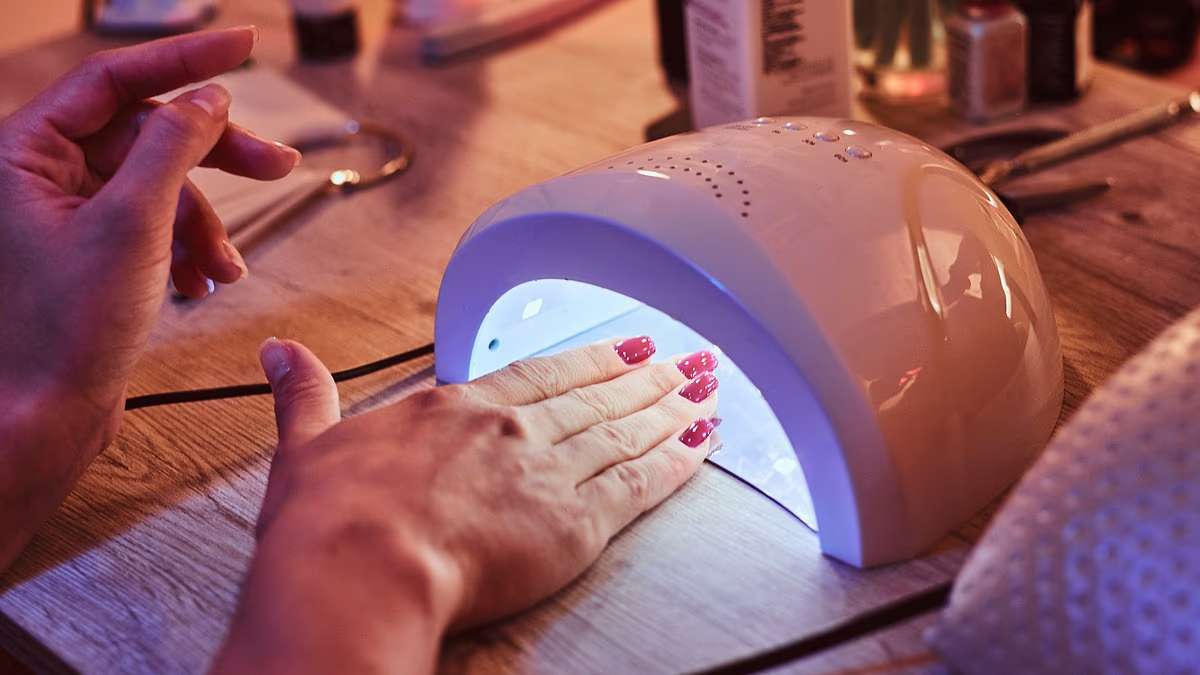
Ultraviolet (UV) lamps used to cure gel nail polish are another potential concern.
The lamps emit ultraviolet A radiation, the same type of radiation produced by tanning beds. UVA can penetrate the skin and damage DNA.
In a 2023 study published in Nature Communications, researchers found that exposure to UV nail dryers caused DNA damage and mutations in human and mouse cells grown in laboratory conditions.
The findings do not establish that using UV nail lamps increases the risk of skin cancer in people, and experts consider the risk from occasional use likely to be low.
Even so, dermatologists recommend applying a broad-spectrum sunscreen with a sun protection factor (SPF) of at least 30 to the hands before treatment, or wearing fingerless gloves designed to block ultraviolet radiation.
Dermatologists stress that these concerns do not mean people must stop having manicures or pedicures altogether. A few straightforward precautions can help reduce the risks.
“I recommend choosing a salon with good ventilation and clearly demonstrated procedures for disinfecting tools,” Dr Kanwal said.
“Ask for disposable nail files and buffers, and check that reusable metal instruments are properly sterilised.”

Experts told the Daily Mail that nail salon customers should consider bringing their own tools and rescheduling appointments if they have recently shaved
Dr Jaliman also recommends taking your own nail tools and asking the technician not to cut your cuticles.
Customers should ensure that pedicure baths are cleaned and disinfected thoroughly between appointments, paying particular attention to the jets and filters, where bacteria can build up.
If you have cuts, broken skin or signs of infection on your hands, feet or lower legs, it is safest to delay the appointment until the area has healed.
“Additionally, avoid foot soaks if you have open wounds or have shaved your legs immediately before an appointment, as this increases your risk of infection,” Dr Kyle Hoedebecke, clinical adviser at Care Point Boston, told the Daily Mail.
Finally, seek medical advice if unusual swelling, painful lumps or sores appear after a salon visit — especially if they worsen or fail to heal.
Serious infections are uncommon, but spotting the warning signs early can help prevent lasting tissue damage.


