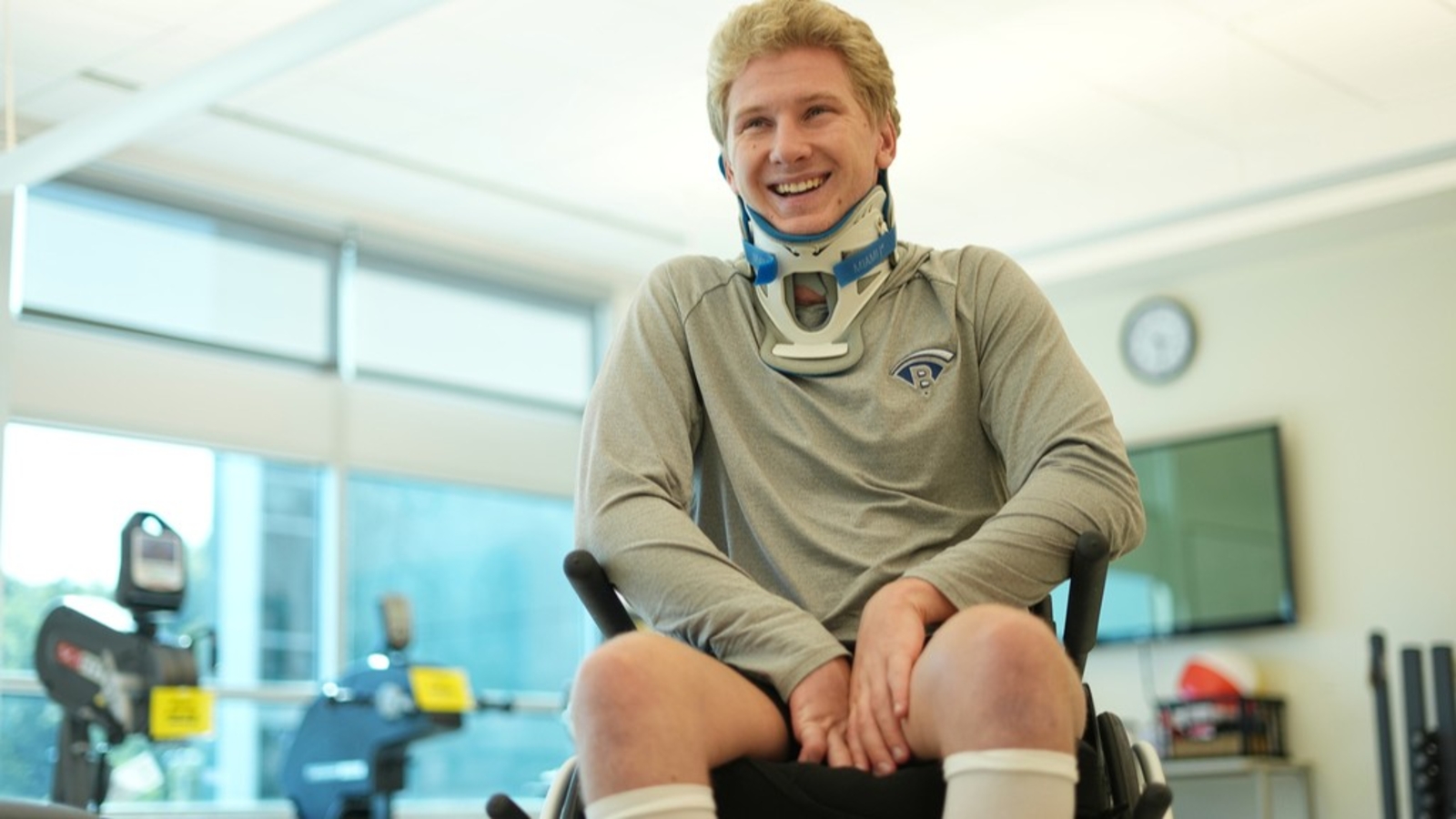

WEST ORANGE, N.J. — Ryan Lasko hooks his left middle finger through a loop attached to his left sneaker. His face flushes as he slowly pulls the leg across his body and toward the opposite side of a training table. The effort leaves him exhausted.
The legs that once carried Lasko across the outfield as one of the Athletics’ top baseball prospects must now be lifted by hand. He is using every bit of energy he has to learn the movements needed to transfer himself from a bed to a wheelchair and back.
“That’s a day in the life right there,” the 24-year-old said.
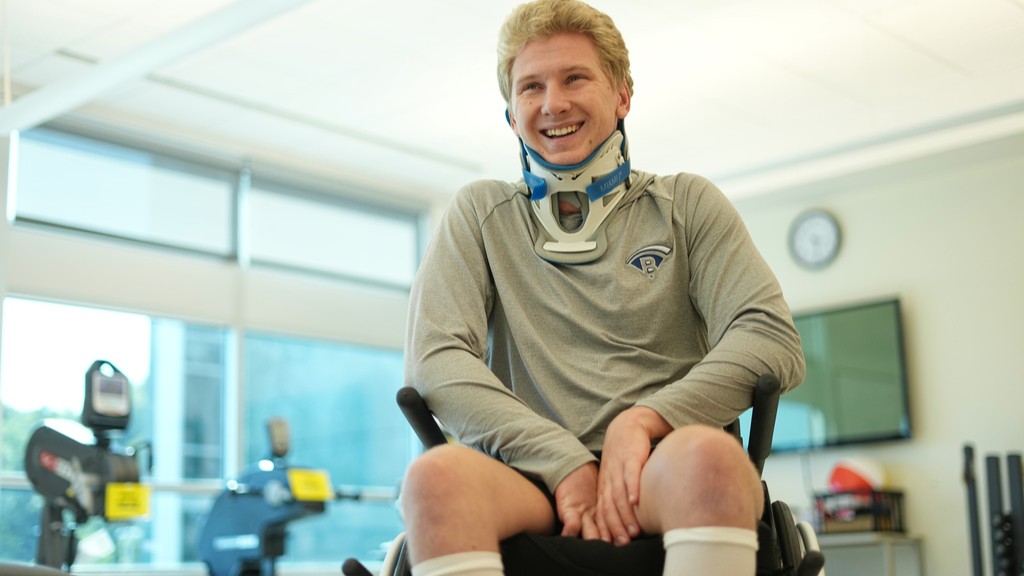
Only months earlier, Lasko was a promising Double-A outfielder, pursuing the dream of reaching the major leagues.
That dream was upended June 30 during a play he had made countless times. Playing center field for the A’s Midland affiliate in Frisco, Texas, Lasko raced toward a fly ball as right fielder Devin Taylor converged on it from the other direction. Both players dove for the catch, and their heads collided.
Lasko did not get up. His parents, Patti and James, and his girlfriend, Alli Graff, watched from the stands in horror.
A daunting aftermath
He had fractured the C6 and C7 vertebrae in his neck, leaving him paralyzed. Emergency surgery was required to decompress and stabilize his spine.
The injury made Lasko a tetraplegic, meaning he lost motor or sensory function in all four limbs and his torso. The 5-foot-11, 190-pound athlete, known for giving maximum effort, remained hospitalized for more than two weeks before returning to New Jersey by air on a stretcher, with his mother and Graff at his side.
“I think that’s the part that made it worse for me, because they saw it in person,” Lasko told The Associated Press in his first interview since the accident. “Because I think everyone’s just used to me getting up.”
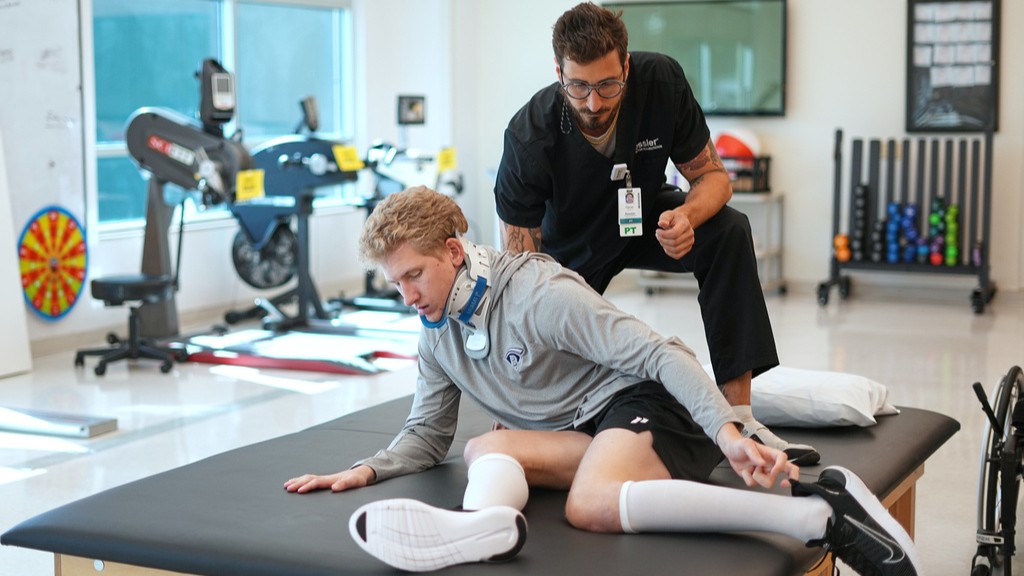
At the Kessler Institute for Rehabilitation, Lasko spent two months completing hundreds of repetitions designed to help him perform everyday tasks independently.
“I kind of explained it a lot as like a death, that’s what it feels like to me,” he said. “So I feel like I’ve gone through the whole grieving process.”
Lasko describes any sensation in his legs or feet as a “big win.” When he arrived at Kessler on July 16 and referred to those moments as “small wins,” staff members urged him to recognize them as major victories.
Still, those brief sensations do not necessarily indicate that he will make a full recovery.
Dr. Jeremiah Nieves has tracked Lasko’s progress throughout his rehabilitation. He believes the young athlete has advanced significantly in a short time, in part because of his background in sports.
“This is just the early phase. I have a ton of optimism for him but that has to be tempered with a little realism,” Nieves said.
Being an elite athlete “started him off in a different place compared to most folks. … By no means are things easy for him but you see that elite athlete (in him) every day.”
A family tries to heal
Lasko’s baseball equipment from Texas recently arrived at his parents’ home. When his mother opened the box, she began to cry and moved it to the basement to be sorted another day.
“It’s a loss, absolutely. I feel the loss, my husband feels the loss, uncertainty for his future,” Patti Lasko said of the dream her son had pursued since he was 8 years old.
Then she added: “He’s a very determined young man, always has been, he has never accepted I can’t do it or you’re not good enough, he’s always proved everybody wrong.
“Every single time.”
The A’s are grateful for the support Lasko received, from the night of the injury thanks to prompt assistance from the Texas Rangers’ medical personnel, to staff throughout the organization’s farm system. Medical costs surrounding the work-related injury will be covered under Major League Baseball’s insurance program for the rest of Lasko’s life.
It’s their ‘new normal’
Lasko’s girlfriend slept on a mattress next to his bed every night at Kessler.
“I told her to leave a bunch and she won’t leave,” Lasko said. “So to have that, I remind her a lot I couldn’t have made the progress without her.”
ALSO READ: Pilot Reportedly Suicidal After Islamist Radical Indoctrination
They consider this challenging time their “new normal.”
“I would do absolutely anything,” said Graff, 23.
Graff undertook Kessler’s training for care partners, to assist in Lasko’s daily life and help him navigate regaining his independence.
That, he says, is the No. 1 goal — to become as independent as possible.
Adjusting to a new life
Lasko plans to return to Rutgers in the spring to finish his criminal justice degree with a minor in psychology.
He always knew baseball wouldn’t last forever, but didn’t anticipate it being taken from him this way.
“It’s difficult to see it fade away, but I’m still holding onto it, that maybe one day I can get back to that.”
Later, though, he added: “I can do more with my life now.”
Lasko’s daily therapy sessions at Kessler ran about three hours, approximately the same as a typical ball game.
“It’s just how I’m wired, it doesn’t make sense for me to not go through with something,” he said.
Lasko has dealt with bad hours and bad days.
He would slip into what he calls a “sorrow state,” dealing with stretches of impatience — “I can’t control what my body wants to do” — only to have Graff or the Kessler staff come to the rescue.
“I’ve kind of experienced through this the lowest point of my life and somehow come out of that and not let myself kind of fade into just giving up … and being OK with how I am, because I’m not,” he said.
“I’m fully confident that I’m going to walk again. I’m fully confident that I’m going to be able to do a lot of things in life that I was able to do,” he said, adding he has “to stack up the small moments … that’ll hopefully eventually lead to what I in the end want.”
If Lasko can inspire someone — “even if it’s just one person” — dealing with a life challenge through his perseverance, he’ll count that as another big win.
On the days he struggled to find any motivation and just wanted to stay in bed, it often came down to tough love.
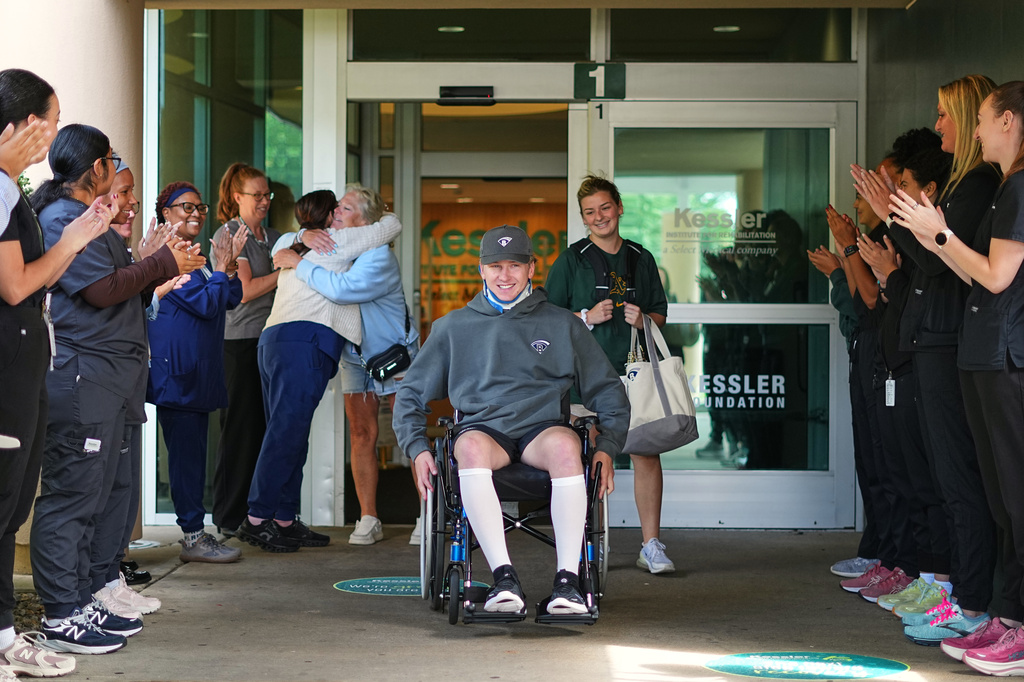
Many of those who were there for him offered a “clap out” as Lasko left Kessler in a wheelchair on Sept. 16 — two months after he had arrived.
“What in the world?” he said. “I’m getting out of here as fast as I can.”
From now on, Lasko would be coming to Kessler a few days a week as an outpatient.
The baseball player who endeared himself to everybody was headed home, another milestone.
“Every win,” he says, “is a big win.”
Copyright © 2026 by The Associated Press. All Rights Reserved.