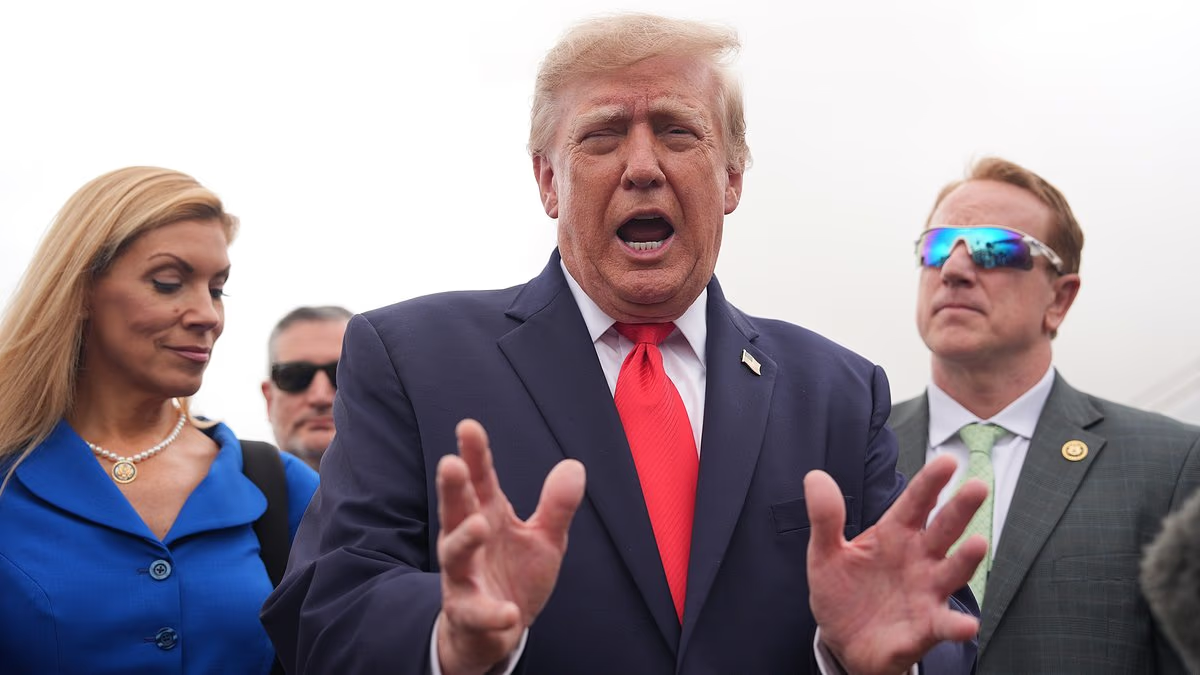

Donald Trump has abandoned threats to restrict US diesel exports after European countries agreed to release part of their strategic fuel reserves.
The president said G7 allies would put “massive” volumes of stockpiled fuel onto the market after pressing them to help lower energy costs ahead of next month’s US midterm elections.
However, French President Emmanuel Macron said G7 leaders had also agreed not to introduce “measures to restrict the exchange of energy and petroleum products between partner countries”.
The diplomatic agreement briefly pushed Brent crude prices back to $100 a barrel, as the dispute unfolded after average UK diesel prices passed £2 per litre for the first time.
The RAC said diesel had reached 200.01p per litre by this morning, setting another record. Analysts had warned prices could climb as high as £3 per litre if the US moved ahead with export restrictions.
The decision to draw on reserves has nevertheless prompted concern that Europe could have less protection against future supply disruptions. One potential risk is further interference with Saudi oil production by the Houthis via the Red Sea.
Mr Trump said the release would start “immediately”, while Mr Macron said up to 100 million barrels would reach the market over a period of four months.
Ed Miliband represented the UK on the emergency G7 call this afternoon in place of Andy Burnham, who is attending his father’s funeral.
Economists said export curbs might have reduced US fuel prices in the short term, but warned that the policy was more likely to cause problems over time.

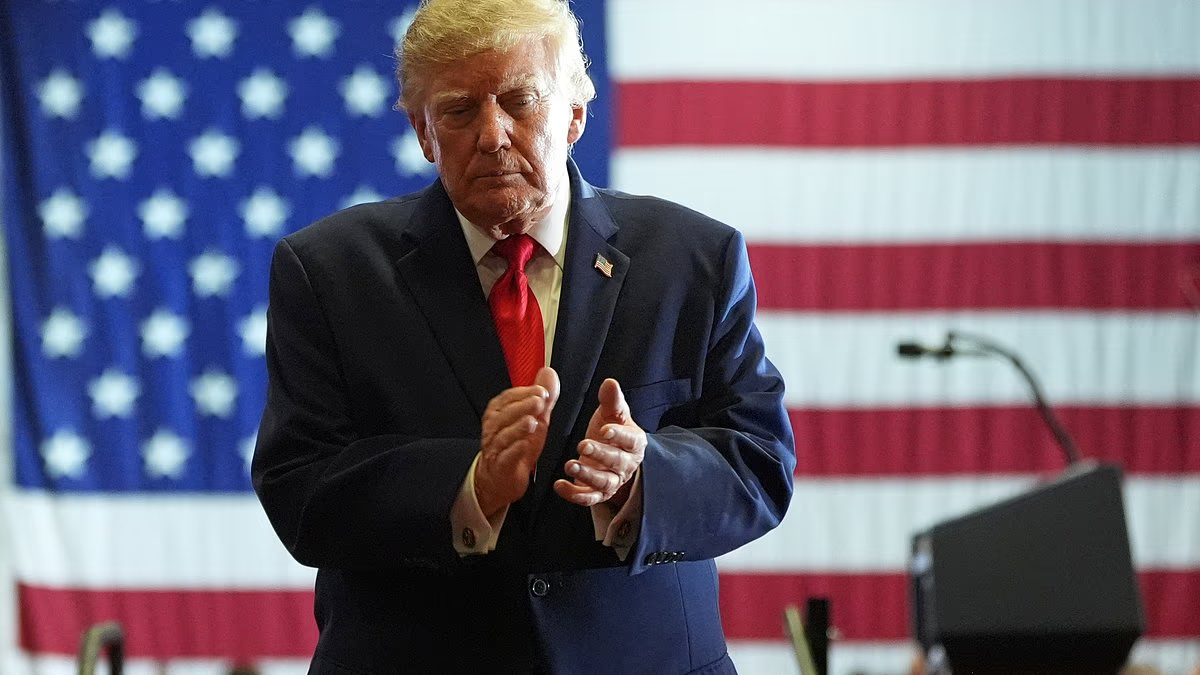
Mr Trump is intensifying pressure on Western nations to help reduce energy costs, which have surged as the war with Iran continues

Mr Trump said this afternoon that European countries had agreed to release “massive” quantities from their reserves

French President Emmanuel Macron said G7 leaders had also ruled out “measures to restrict the exchange of energy and petroleum products between partner countries”

Writing on Truth Social this afternoon, Mr Trump said: “Europe has just agreed to release a massive amount of their heavily stocked Diesel Oil. The process will begin immediately.”
Mr Macron issued a separate account of the discussions shortly afterwards, saying the leaders had agreed to act jointly to reduce petroleum prices, particularly the cost of diesel.
The French president said countries would also make production more flexible, allowing refineries to operate at their maximum capacity.
Under the plan, the International Energy Agency will coordinate the release of up to 100 million barrels of oil from strategic reserves over the next four months.
The United States was understood to have asked the European Union to release 120 million barrels of diesel over a six-month period.
Crucially, the statement from the meeting said there would be “no measures to restrict the exchange of energy and petroleum products between partner countries”.
Mr Trump had said he was “very seriously” considering restrictions on diesel exports, with the US currently the world’s largest exporter.
Mr Burnham had previously said he was lobbying Mr Trump against imposing an embargo.
Around a quarter of the UK’s supplies typically come from America.
Diesel has been particularly hard-hit by the chaos in the Middle East.
Even before that Europe had become increasingly dependent on US fuel after banning Russian imports over Vladimir Putin’s full-scale invasion of Ukraine.
RAC head of policy Simon Williams said this morning: ‘This is a pump price threshold that no-one wanted to cross – the average price of a litre of diesel has risen to a record 200.01p and is showing no signs of slowing, heaping more misery onto motorists.
‘The cost of filling up an average family car is now £110, almost £32 more than it was at the start of the US-Iran war.
KEEP READING: Trump’s Iran Crackdown Complicates Turkey’s Push for F-35 Access
‘This will be very challenging for households and companies that drive a lot of miles, from commuters, haulage and delivery firms, businesses with large fleets all the way through to sole traders.
‘In a cruel twist, it’s diesel vehicles, which were once considered the most cost-effective option for lengthy journeys, that are now burning a hole in people’s pockets.’
The separate RAC Foundation found that average diesel prices on the Government’s Fuel Finder site were over £2 a litre earlier this month. But this is the first time the mark has been reached on the most-followed measure.
UK officials spoke with their counterparts in Germany, France, Italy and Ireland yesterday as well as at the European Commission to consider using stockpiles of the fuel.
Britain holds only 40 days worth of diesel reserves, whereas some other nations have more than 200 days.
IEA member countries that are net oil importers are required to maintain stocks of at least 90 days’ worth of oil imports, although the UK only has around 70million barrels and makes the threshold by requiring firms to keep their own reserves.
US Energy Secretary Chris Wright told reporters yesterday that the US administration expected announcements soon from Europe about new diesel supplies.
Treasury Secretary Scott Bessent said European states should release diesel reserves ‘immediately’, adding: ‘Our European partners should accelerate delivery on their existing commitments and make additional supplies immediately available to address ongoing disruptions.’
A Whitehall source said that Washington was deploying ‘brazen negotiating tactics’, telling the Times that bowing to US demands could lead to a ‘really, really bad’ supply shortage this winter.

The moves immediately brought Brent Crude costs back to $100 a barrel

Many garages in the UK are already charging £2 a litre for diesel, and experts warn they could hit £3 if the US follows through on threats (file picture)
There are concerns that the Red Sea could be effectively closed by Houthi action, sparking another wave of energy shocks.
‘These reserve stocks are there to act as a buffer against supply shortages,’ the source said. ‘They are not there to bring fuel prices down.’
Motoring organisations have urged the Government to extend the current 5p cut in fuel duty beyond the end of this year, when it is currently scheduled to be reversed.
A decision on what happens to fuel duty is due to be announced by Chancellor John Healey in his Budget speech on October 28.
Mr Burnham admitted earlier this week that the UK is on track for an ‘energy crisis’ this winter, as costs surge on international markets.
A 4 per cent hike to Ofgem’s energy price cap took effect yesterday, and there are warnings that household bills are set to soar by another £300 from January.
Mr Healey has insisted he will try to help families at the Budget on October 28, but the Government is facing a desperate struggle to balance the books as debt interest costs rise.
Campaigners urged the Government to make plans now to support all households with energy costs this winter because of the severity of forecast bill hikes.
Transport minister Keir Mather insisted the UK had a wide-range of sources of fuel.
Mr Mather told Sky News: ‘I want to reassure people this morning that the United Kingdom has got a diverse range of supply when it comes to diesel.
‘We have resilience built into our system for that reason. We are working very closely with our US counterparts to stress the importance of that relationship, and the importance of sustaining flows of diesel around the world, but also working through international fora in the International Energy Agency and partners in Europe from whom we get a proportion of our diesel imports as well.’
He added: ‘Although prices have gone up at the pump, the Government is aware of that and the freeze in fuel duty is still in place. People shouldn’t be concerned about shortages because of the inherent resilience that is built into that system.’
Pressed on LBC whether he agreed with President Trump about European diesel reserves, he said: ‘We’re working closely with our European partners on diesel supply. It means we’re continuing those discussions about how we retain our resilience and robustness of our supply chains.
‘President Trump is welcome to make those comments, we’ve got to focus here at home about ensuring that we have diversity of supply into our economy. Our European partners are absolutely central to that, particularly the flows of diesel coming through the Netherlands.’