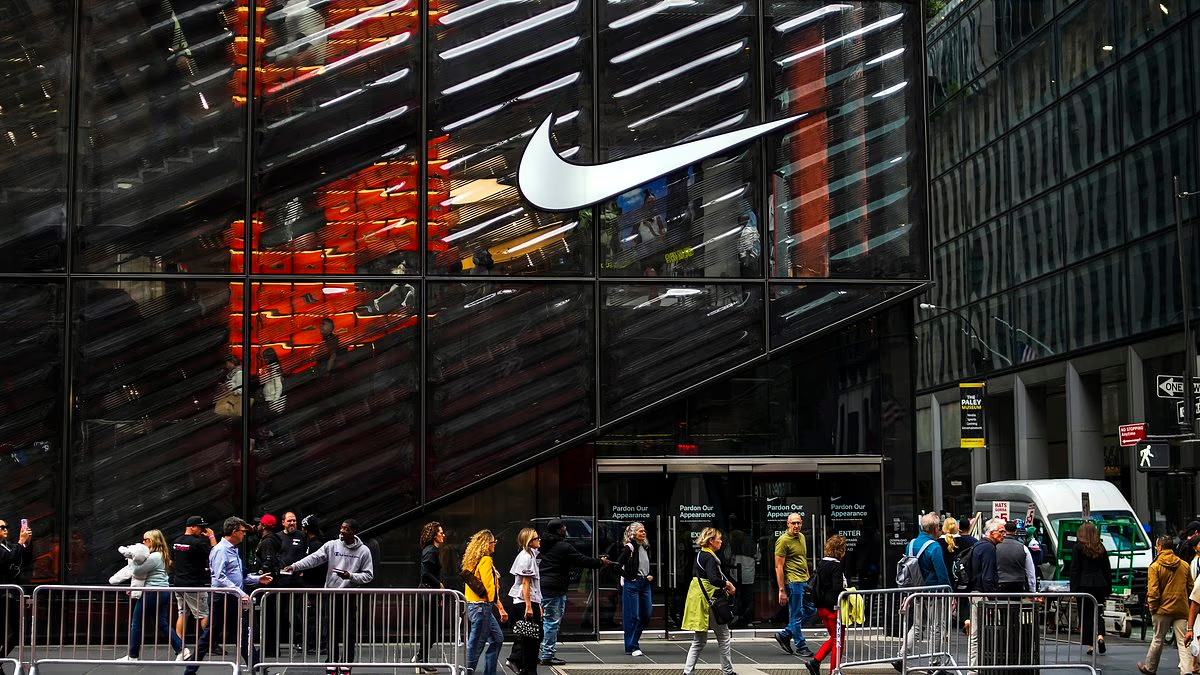

Nike is preparing for another round of job cuts after warning that its sales decline will be deeper than previously expected, as the sportswear giant’s once-thriving business in China continues to deteriorate.
Revenue in China fell 26 percent to $1.18 billion in the first quarter, excluding currency fluctuations. It was the market’s ninth consecutive quarterly decline.
The result is a stark reversal for a region that was once among Nike’s most important sources of growth.
Nike is facing mounting pressure from domestic competitors such as Anta and Li-Ning, alongside global rivals including Adidas and Puma. Fast-growing running brands such as On and Hoka are also intensifying the competition.
The latest warning came as Nike reported first-quarter revenue of $11.2 billion, a 4 percent drop from the $11.7 billion recorded during the same period a year earlier.
The company expects conditions to worsen before they improve, forecasting an even steeper revenue decline in fiscal 2027.
Investors reacted swiftly, pushing Nike shares down by as much as 10 percent in overnight trading.

Nike is preparing for another round of job cuts after warning that its sales downturn will be worse than expected, while its once-booming China business continues to unravel

In a memo to employees, Nike CEO Elliott Hill gave an unusually direct assessment of what the restructuring will mean for the workforce
Nike employees were then given more unwelcome news: further job reductions are planned.
The sportswear company has introduced a sweeping restructuring program intended to simplify its operations and deliver approximately $2.5 billion in savings through fiscal 2031.
In an internal memo, CEO Elliott Hill spoke candidly about the likely impact of the overhaul on Nike’s workforce.
Hill said the changes “will result in fewer roles across Nike over time,” but emphasized that the company has not determined how many positions will be eliminated or where the cuts will occur.
“We don’t yet know the number of roles or the specific locations of positions,” Hill wrote, describing reports about particular job-loss figures as speculative.
He also recognized the anxiety the announcement could create among staff, saying he was “not taking it lightly.”
Employees affected by the restructuring are expected to be notified beginning in 2027, leaving workers facing months of uncertainty.
IN CASE YOU MISSED IT: American Idol’s Caleb Flynn Allegedly Prayed Before Wife’s Killing
Nike has already reduced its workforce as part of Hill’s effort to revive the struggling brand, with thousands of positions cut during the company’s turnaround campaign.

Investors reacted to Nike’s declining sales by sending its shares down around 8.5 percent in after-hours trading
Under the new structure, Nike will be organized into three geographic divisions: the Americas; Asia Pacific and Greater China; and Europe, the Middle East and Africa.
Nike also plans to open a new campus in Bengaluru, India. Hill said the site would enhance the company’s capabilities while improving its access to talent.
The restructuring will not come cheap. Nike expects around $1 billion in costs through fiscal 2031, primarily involving employee expenses, on top of around $300 million in severance costs already recorded in fiscal 2026.
Despite all the belt-tightening, Nike’s latest quarter was not a complete disaster. Net income fell two percent to $712 million, while earnings per share slipped to 48 cents from 49 cents.
Sales in North America actually increased, providing a rare bright spot as the company attempts to get its biggest markets moving again.
But Nike’s own direct business remains under pressure, with sales through its stores and website falling 12 percent overall in the quarter.
Even one of Nike’s best-known stablemates is struggling. Converse, the iconic footwear brand Nike has owned since 2003, saw revenue plunge 28 percent to $263 million.
China, meanwhile, is proving particularly stubborn. Nike is changing the way it sells there and plans to remove online sales rights from some major retail partners from January as it takes greater control over its digital business.

Even one of Nike’s best-known stablemates is struggling. Converse, the iconic footwear brand Nike has owned since 2003, saw revenue plunge 28 percent to $263 million
That is a risky move in a market where Nike is already losing ground, but Hill has indicated that the company needs to rethink how it operates if it is to rebuild its position.
The CEO has been attempting to breathe new life into Nike by putting greater emphasis on sports such as running, restoring relationships with wholesale retailers and pushing new products.
But he has acknowledged that Nike Sportswear, Jordan Brand and Greater China all need work – and that fixing them will take time.
Hill’s turnaround strategy is increasingly looking like a long-distance run rather than a quick sprint.