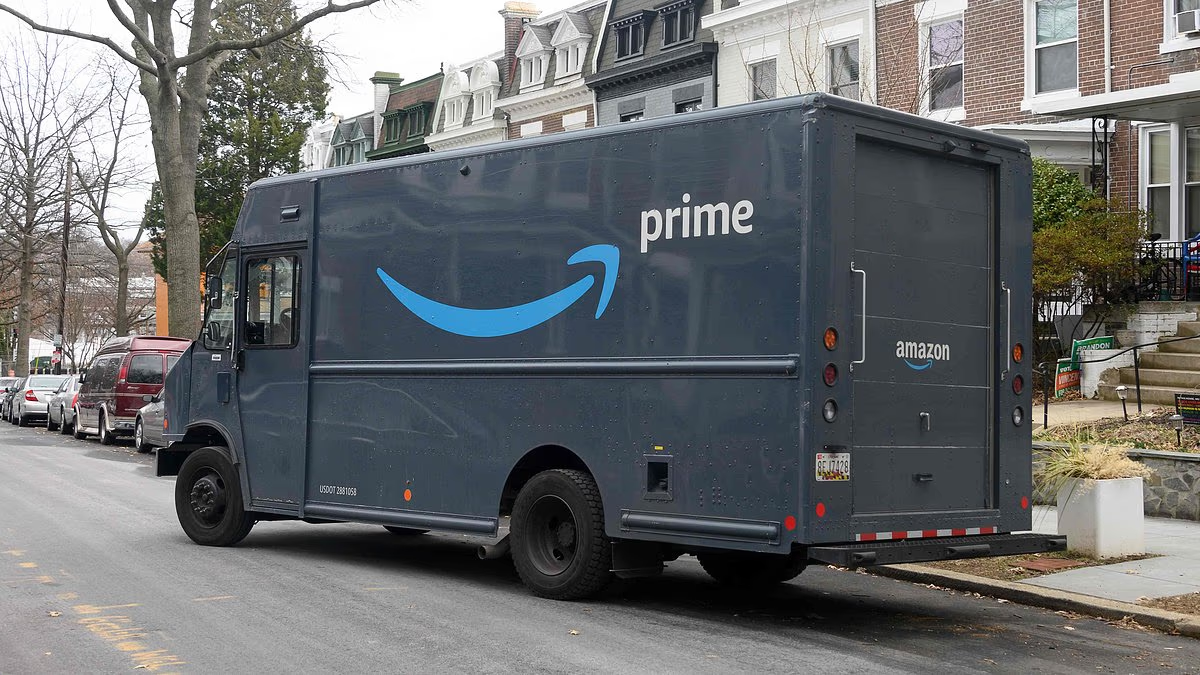
A surprise payment showing up in your Venmo account may not be random—it could be part of Amazon’s latest Prime refund program.
Millions of Amazon Prime subscribers may qualify for automatic payments after the company agreed to a $2.5 billion settlement with the Federal Trade Commission.
The newest round of refunds started October 1. That means some eligible customers may already find a small payment—or, in some cases, as much as several hundred dollars—waiting in their accounts.
The FTC said last month that a federal court approved revisions to the agreement. The changes broadened the group eligible for compensation and increased the maximum refund from $51 to $200.
The settlement was first reached in September 2025 after the FTC accused Amazon of signing customers up for Prime without clear consent and creating obstacles for those attempting to cancel their memberships.
Under the deal, Amazon agreed to distribute as much as $1.5 billion to affected customers and pay an additional $1 billion civil penalty.
According to the FTC, more than $845 million had already been sent to consumers by September 2026.
The latest court-approved changes mean even more Prime members could now receive money.
The revised order includes millions of customers who used between 11 and 20 Prime benefits within a 12-month period. Those individuals may qualify for an automatic refund.

Millions of Amazon Prime customers may receive another round of automatic refunds under the e-commerce company’s $2.5 billion settlement with the Federal Trade Commission
These customers were not included in the earlier distribution rounds, but their eligibility for payments began October 1.
The process is designed to be straightforward, so eligible Prime members do not need to rush to search through old emails or complete complicated paperwork.
No new claim, response to a notification or application form is required. Amazon will issue payments automatically through PayPal, Venmo or a mailed check.
But which Amazon customers actually meet the requirements?
The program applies to US Prime members who signed up through certain enrollment pages or attempted to cancel online but could not complete the process between June 23, 2019, and June 23, 2025.
They must also have used 20 or fewer Prime benefits during any 12-month period after joining. Eligible benefits may include services such as Prime Video and Prime Music.
Simply having held an Amazon Prime membership, however, does not guarantee that a refund is coming.
The FTC said the settlement is limited to customers affected by specific Amazon enrollment and cancellation practices identified in the case.

The FTC said a federal court approved settlement changes that expand refund eligibility and lift the maximum payment to $200

The refund program covers US Prime customers who joined through certain sign-up pages or were unable to cancel online between June 23, 2019, and June 23, 2025
And for people who have already received money, there could be another payday.
If the required payment threshold has not been reached by February 2027, Amazon will make additional automatic payments to consumers who previously received refunds.
Those customers could receive up to another $149, taking their total settlement payment to as much as $200.
The final round of supplemental payments is expected to begin by April 2027.
The FTC says customers do not need to contact Amazon to claim the money, although payments can expire 60 days after they are issued.
There is, however, one big catch: scammers know a surprise Venmo payment is the perfect bait.
The FTC warns that it will not contact consumers about these refunds, and neither the agency nor Amazon will ask anyone to pay money to receive their settlement payment.
That warning is especially timely given the confusion already playing out online, with Reddit users reporting surprise payments landing in their accounts.
One user said they received $34 through Venmo without even realizing they were eligible, while another said they initially thought their unexpected payment might be a scam.
Others reported smaller amounts, including $13.77 and around $40.
So if a mysterious Amazon-related payment appears in your account, don’t panic – but don’t click on a random link either.
Check the official FTC refund information first, and remember that nobody should be asking you for money in exchange for getting your money.