
Violent student demonstrations in France have prompted renewed debate over immigration and integration, with some U.S. commentators presenting the unrest as a warning about the potential consequences of open-border policies.
“As we’re sitting here in beautiful New York City, this is also a cautionary tale,” Tomi Lahren, co-host of “The Big Weekend Show,” said Saturday.
Lahren argued that the United States should study Europe’s experience. “They decided they wanted to have open borders. They decided they wanted diversity as their strength, and of course, Joe Biden tried that for four years. We’re undoing that currently,” she said.
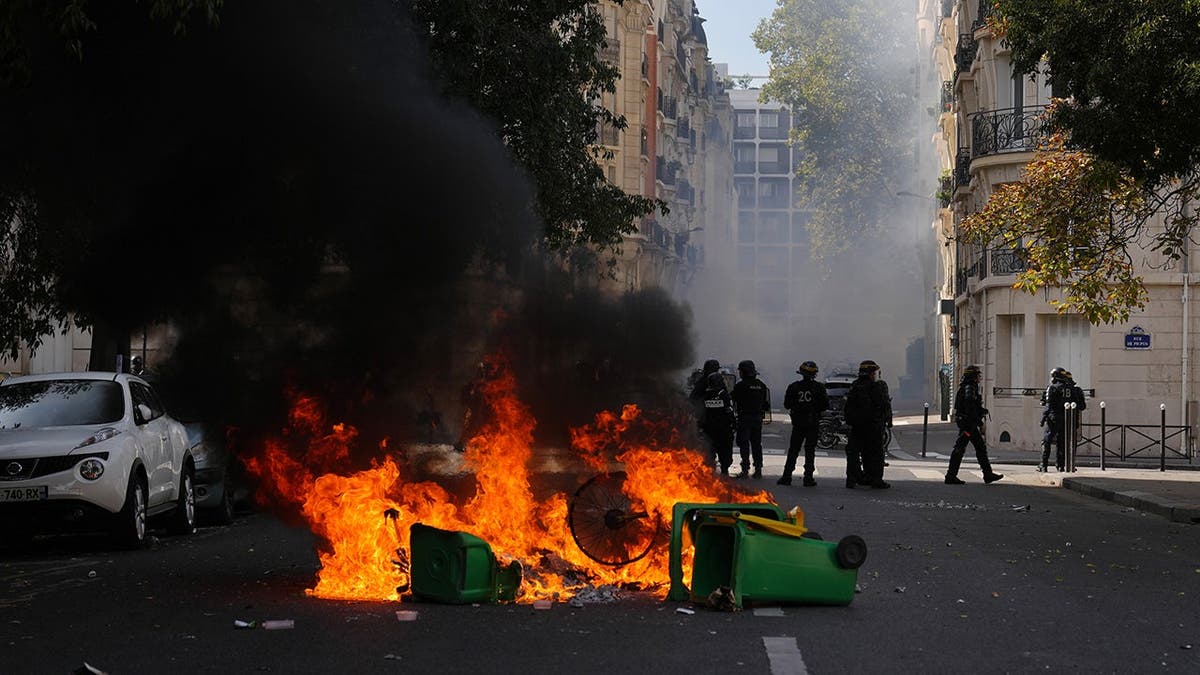
Police officers stand before burning garbage as they confront students during a protest over underfunded schools in Paris on Friday. (Aurelien Morissard/AP Photo)
Lahren said public frustration can grow when large numbers of newcomers are perceived as relying on government services. “When you let so many people come into your country, leech off of your system, then the people who are from there are going to at some point get upset,” she said.
She added that the resulting anger can be misdirected. Demonstrators “end up lighting things on fire,” she said, calling that response unacceptable while arguing that countries seeking to serve as “a global home for everybody” ultimately bear a heavy cost—one she said is often felt most by native residents.
The protests began in Paris late last month, as students objected to crowded classrooms, teacher shortages, lengthy school days and deteriorating facilities. Demonstrators accused the government of failing to provide adequate investment in education.
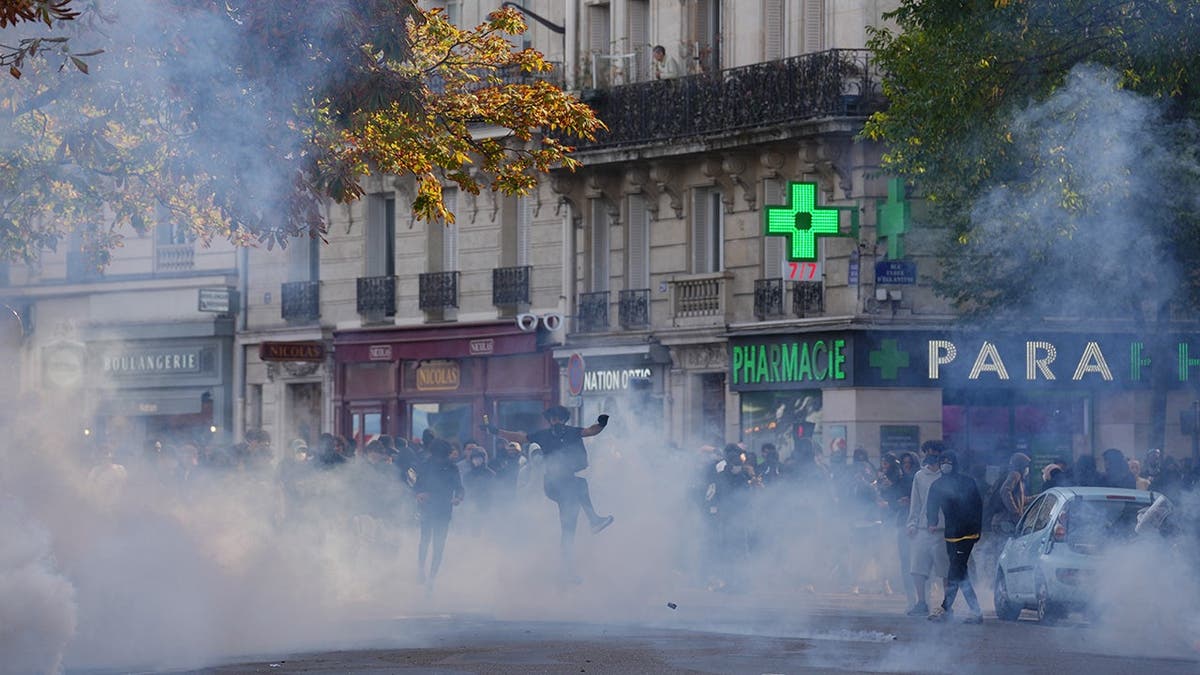
A student kicks a tear-gas canister during a protest over underfunded schools in Paris on Friday. (Aurelien Morissard/AP Photo)
The initial demonstrations were largely peaceful and centered in poorer Paris suburbs. They soon reached the capital and spread nationwide to cities including Marseille, Strasbourg, Tours, Nantes, Toulouse and Lille, with clashes and acts of violence intensifying as the movement expanded.
Tensions rose further after the government unveiled its 2027 budget Thursday. Education spending, excluding teacher pensions, was projected to increase by just 1.7%—less than the inflation rate, according to Reuters.
Authorities say rioters have set fires, damaged property, thrown objects at police and assaulted people in some incidents. Police have responded with tear gas and rubber bullets.
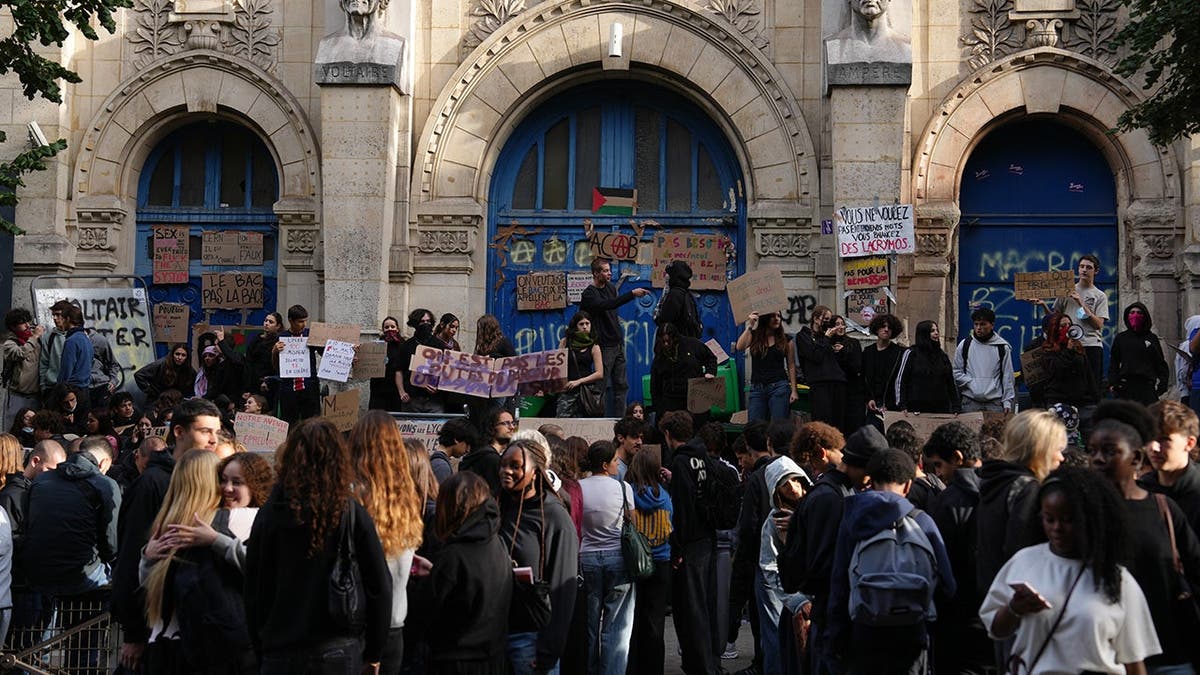
Students block the entrance to Voltaire High School in Paris during a Friday protest over underfunded schools. (Aurelien Morissard/AP Photo)
More than 5,000 people were arrested across France this week, Reuters reported, while more than 400 schools remained closed as of Friday.
At least 65 school employees—including 40 principals—and approximately 170 students have been injured since the unrest began, Euronews reported Friday.
More than 100 high schools sustained what Education Minister Édouard Geffray called “severe damage.”
French intelligence officials told a government crisis meeting Thursday that politicians from the hard-left France Unbowed party, or LFI, helped initiate the protest movement, Reuters reported Friday.
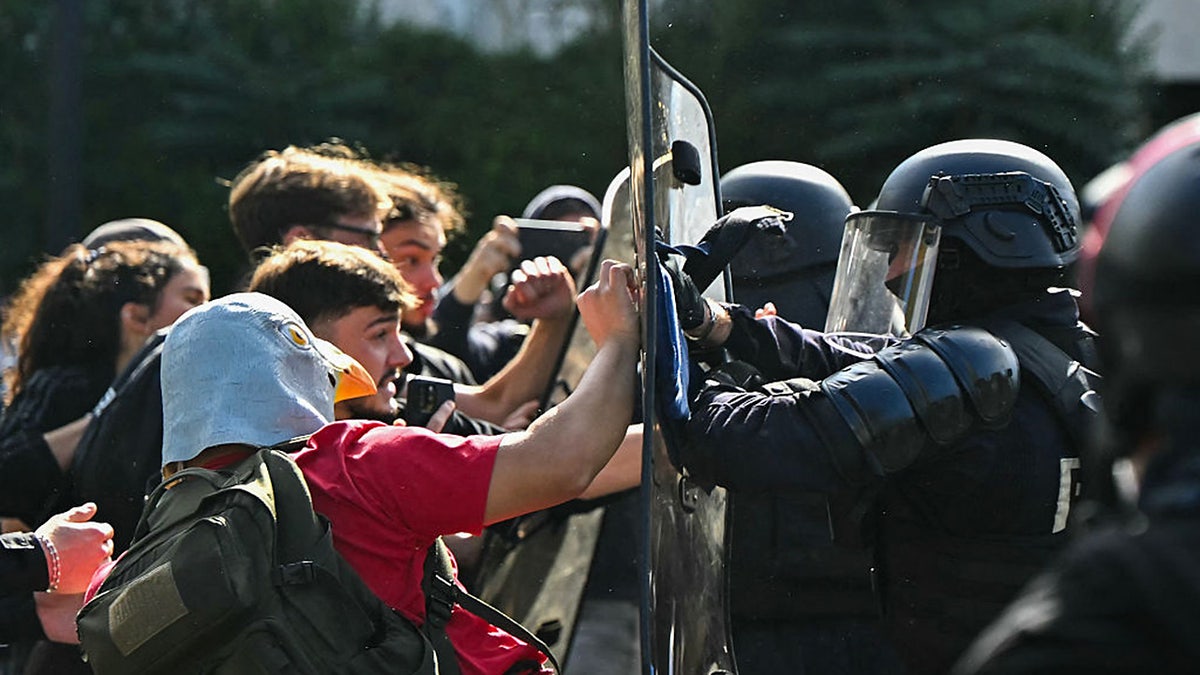
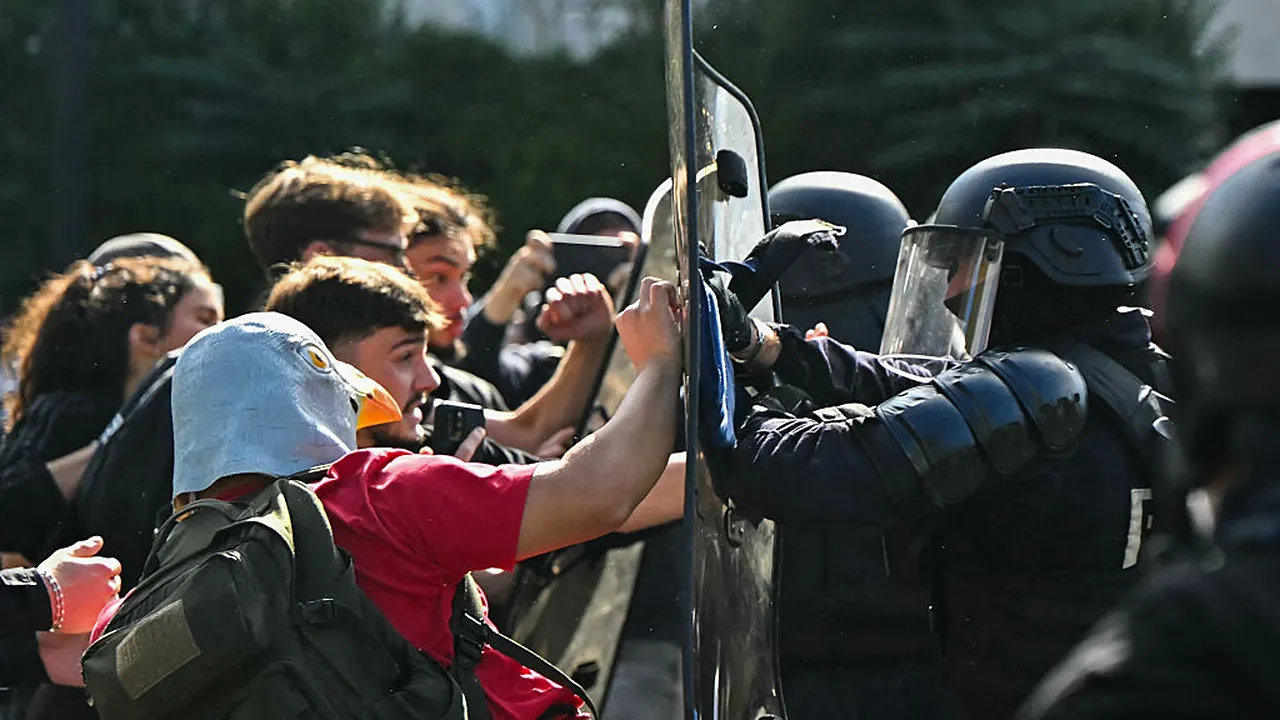
Anti-riot police face students taking part in a blockade outside Le Corbusier secondary school in Aubervilliers, north of Paris, on Friday. (Lou Benoist / AFP via Getty Images)
LFI rejected the claim, accusing President Emmanuel Macron’s government of politicizing the demonstrations ahead of France’s 2027 presidential election.
Simone Rodan-Benzaquen, the Foundation for Defense of Democracies’ senior envoy to Europe, told News Outlet Thursday that the movement began with genuine concerns but has since taken a far more dangerous turn.
“The students’ grievances about missing teachers and deteriorating schools were real at first,” Rodan-Benzaquen said. “But dousing a principal in gasoline and attacking firefighters are acts of extreme violence. What makes this politically significant is the effort to turn frustration over schools into a much broader confrontation with the government.”