Andrew Mountbatten-Windsor has launched a legal challenge against the courts and police over searches linked to Jeffrey Epstein at his former homes in Windsor and Sandringham.
The disgraced former prince has served Thames Valley Police (TVP) and the Old Bailey with a judicial review claim, understood to question whether the search warrants used against him were lawful.
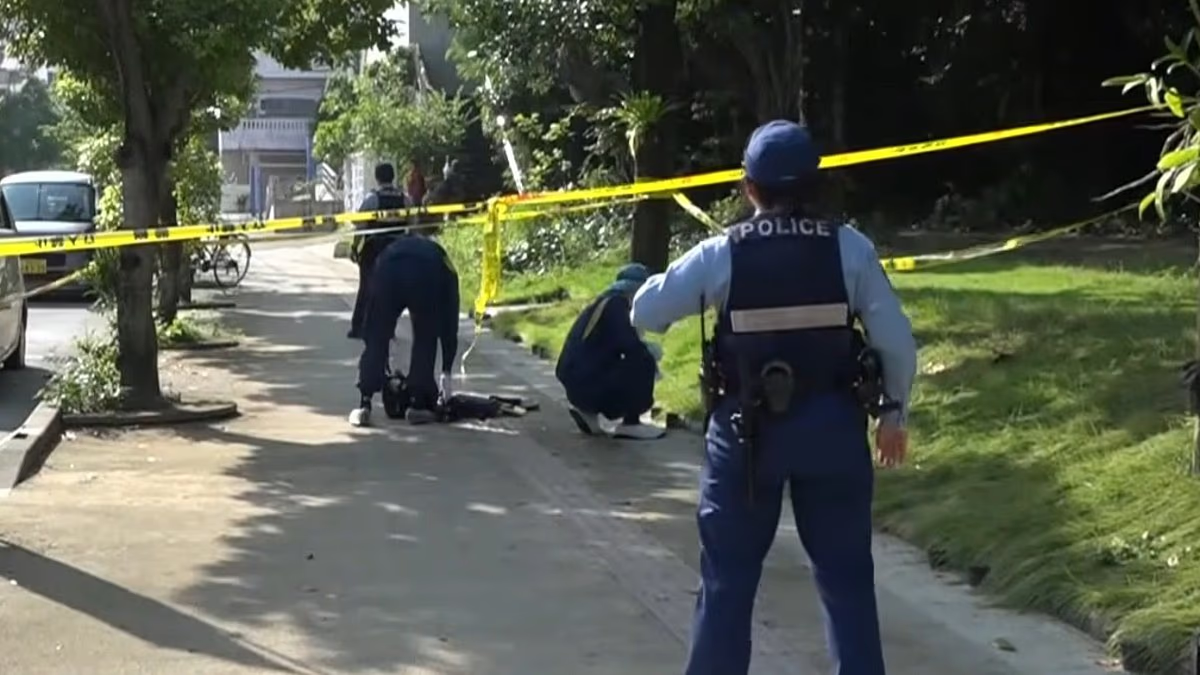
Police searched Andrew’s belongings in February at Marsh Farm in Norfolk, following his arrest on suspicion of misconduct in public office.
The searches followed the publication of material suggesting that Andrew had shared sensitive information with convicted sex offender Jeffrey Epstein.
The former Duke of York has asked a judge to examine whether Thames Valley Police acted lawfully when it raided Royal Lodge in Windsor and his residence on the Sandringham Estate.
The proceedings are being conducted in unusual secrecy. A hearing is due to take place behind closed doors this week, when Mr Justice Hilliard will consider an application to keep at least some details of the review confidential.
If the challenge proceeds, it would mark the first time in almost 400 years that a royal has contested the lawfulness of criminal proceedings, dating back to the trial of Charles I in 1649.
Andrew’s arrest, which took place on his 66th birthday, was the first of a British royal in more than 350 years and one of the most extraordinary such incidents in modern history.

Andrew Mountbatten-Windsor leaving Aylsham Police Station after his release from custody in February

The former Duke of York appeared shellshocked after spending 11 hours in police custody
At 8am, police arrived at the Sandringham Estate in Norfolk in unmarked cars. Andrew had been living there for two weeks.
The former prince was taken to Aylsham police station, around 40 miles away, where he was interviewed under caution as plain-clothes officers searched the property.
At the same time, TVP officers searched Royal Lodge, the Windsor Great Park mansion Andrew had called home for 22 years.
He had been forced to leave the property earlier that month amid mounting scrutiny over his links to Epstein.
The decision followed the publication of photographs showing Andrew riding horses, smiling and waving at members of the public. The images provoked anger among people in Britain and reportedly upset his brother, King Charles, who is understood to have subsequently evicted him from the property.
FIND OUT MORE: FBI Director Kash Patel Announces Engagement to Singer Alexis Wilkins
Sarah Ferguson was also asked to leave Royal Lodge alongside Mountbatten-Windsor after living there for 18 years.
She is believed to have spent much of her time in hiding across Europe since the pair were stripped of their royal titles last October, following intense public scrutiny of Andrew’s ties to Epstein.
Andrew was released under investigation 11 hours after his arrest.
As he was driven away from the police station, paparazzi captured the now-infamous image of Andrew slumped in his seat and attempting to shield himself from waiting cameras.
The search at Sandringham concluded on the day of his release, while the operation at Windsor continued into the following week.
The warrants for these searches were sought by TVP and granted by the Old Bailey.
Andrew served as the UK’s special representative for international trade and investment from 2001 until 2011, when he stepped down amid the controversy over his friendship with Epstein.
His arrest came after emails released as part of the Epstein files suggested Andrew may have shared confidential information with the financier about his official work.
It has been alleged Andrew forwarded reports to the paedophile about his visits to Singapore, China, Hong Kong and Vietnam as well as allegedly sharing a briefing note on investment opportunities in Afghanistan’s Helmand province.
It emerged in May that detectives investigating Andrew could consider allegations of sexual misconduct as part of their inquiry into potential offences.
It is understood that Andrew’s legal team are trying to make a case that these searches were unlawful, with an application made earlier this year being recently granted by a High Court judge.
A judicial review, in effect, acts as an appeal process. It involves a judge examining the lawfulness of a decision or action by a public body.
The details of Andrew’s claim – or how TVP and the Old Bailey may have acted unlawfully – remain unclear.
He has strongly denied any wrongdoing.