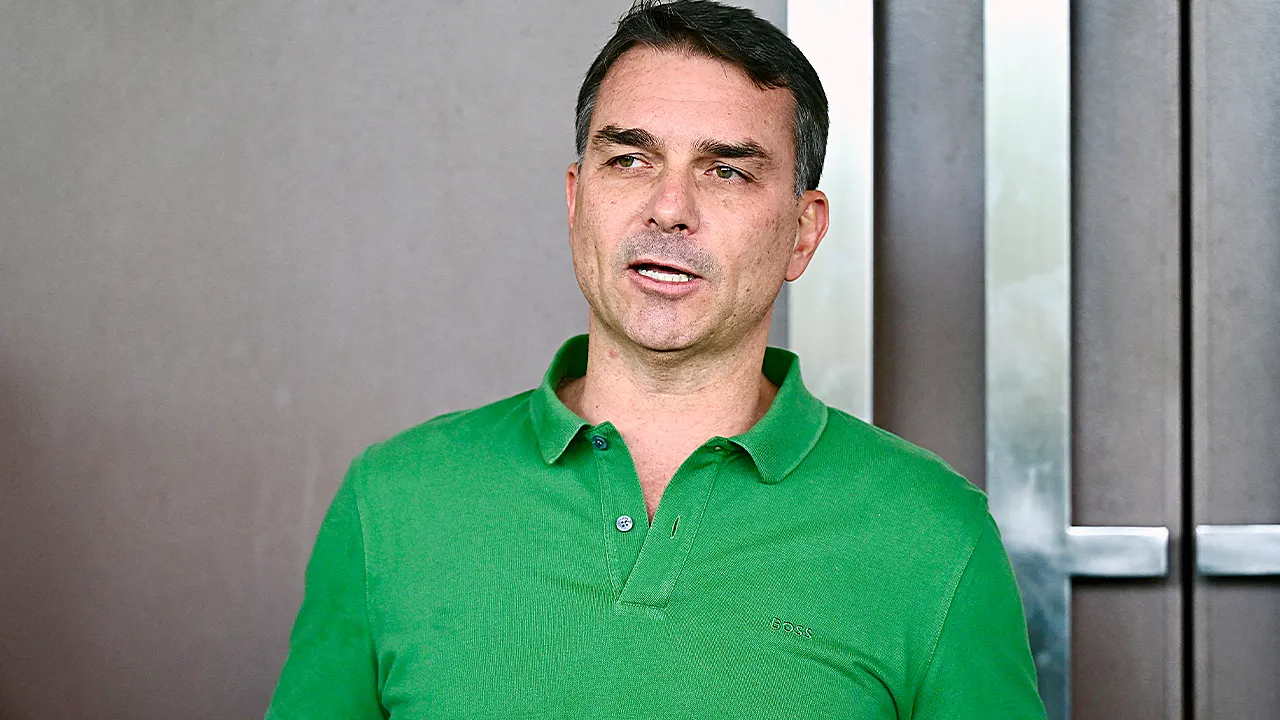

Senator Flavio Bolsonaro, the son of former President Jair Bolsonaro, captured the first round of Brazil’s presidential election tonight with a stronger-than-expected performance, extending a broader wave of victories for right-wing Latin American candidates aligned with Donald Trump.
The contest had tightened sharply in the final weeks, but most polling consistently gave incumbent President Inacio Lula da Silva a single-digit advantage heading into voting day.
Bolsonaro will meet Lula in the October 25 runoff. With 99% of ballots counted, Bolsonaro held 47.2% of the vote to Lula’s 44.9%—a result that defied widespread expectations that the incumbent would lead the first round.

Senator Flávio Bolsonaro has entered the 2026 Brazilian presidential race after father’s prison endorsement. (Evaristo Sa / AFP via Getty Images)
The immediate question dominating Brazil’s political conversation is how the pollsters could have missed the outcome by such a wide margin.
The dramatic polling miss is likely to strengthen the Bolsonaro camp and Brazil’s political right, which have long accused the country’s major polling firms of producing surveys tilted toward Lula and his Workers Party.
Polling also underestimated Jair Bolsonaro’s support in the 2018 and 2022 elections, although those errors were far smaller than the gap between the surveys and tonight’s result.
Bolsonaro delivered an especially powerful showing across his southern strongholds, sweeping Brazil’s three largest states by substantial margins:
In São Paulo, Brazil’s most populous state, Bolsonaro led Lula 52% to 38%.
Bolsonaro also carried Minas Gerais, the country’s traditional bellwether, by 48% to 43%. In his home base of Rio de Janeiro, he defeated the incumbent 53% to 39%.
Lula posted commanding victories in his traditional northeastern strongholds, including the vote-rich states of Bahia, Pernambuco and Ceará. Those margins, however, could not overcome Bolsonaro’s unprecedented strength in southern Brazil.
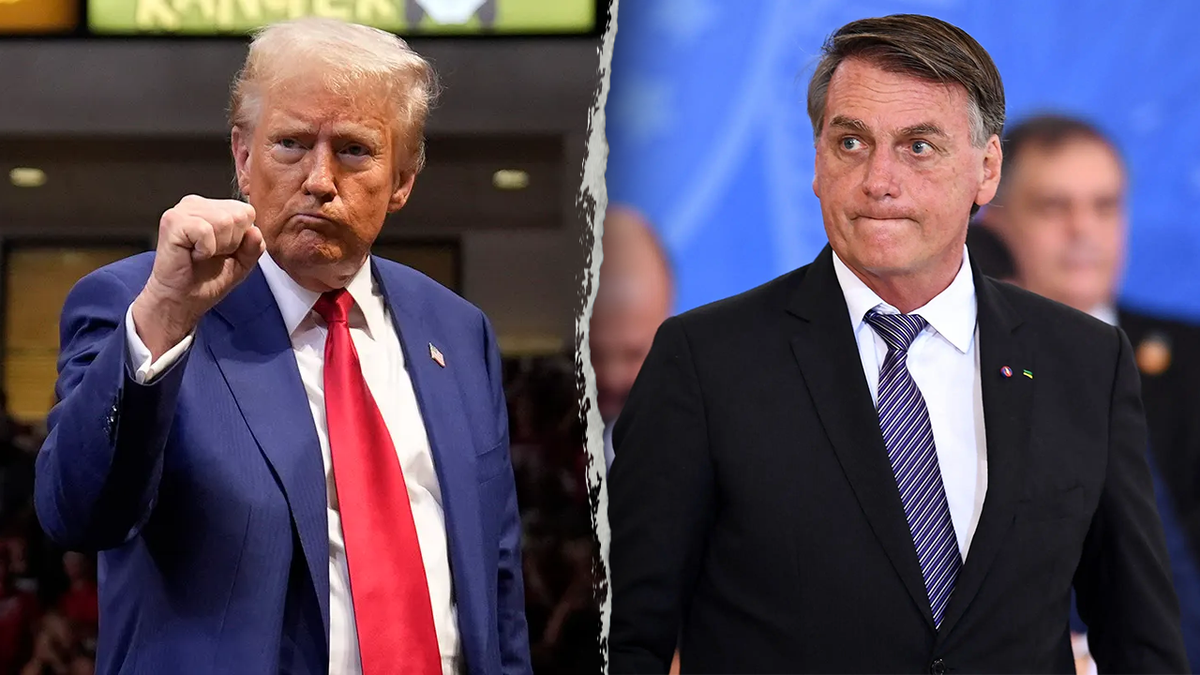
President Trump sent a letter to former Brazilian President Jair Bolsonaro calling for an immediate end to the ‘unjust’ trial against him for allegedly starting a coup. (AP Photo/Evan Vucci and Evaristo Sa/AFP via Getty Images)
Flavio Bolsonaro maintained a close relationship with Donald Trump throughout the campaign. Trump openly signaled his desire to remove Lula, a longtime geopolitical adversary, from power.
The upset marks the latest in a series of right-wing breakthroughs across Latin America, where conservative candidates have recently won power in Chile, Argentina, Peru, Ecuador and Bolivia.
The outcome is also likely to trigger an intense period of reflection on Brazil’s left, including questions over whether Lula should have sought another term.
At 80, after three presidential terms and a bid for a fourth, Lula was widely considered the only figure capable of uniting Brazil’s divided and frequently fractious left.
MORE STORY: Protesters Clash With Police After Migrants Land on South Coast
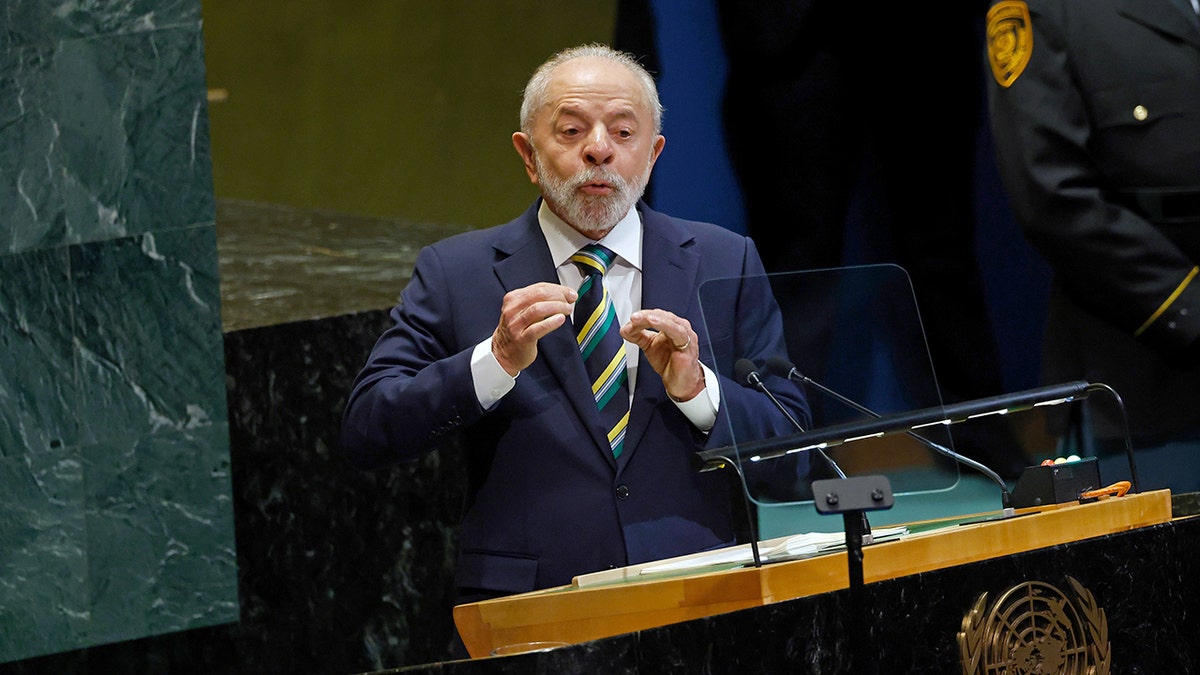
President of Brazil Luiz Inacio Lula da Silva speaks during the 80th session of the United Nations General Assembly (UNGA) at the United Nations headquarters on September 23, 2025 in New York City. World leaders convened for the 80th Session of UNGA, with this year’s theme for the annual global meeting being “Better together: 80 years and more for peace, development and human rights.” (Photo by Taylor Hill/Getty Images)
Lula’s political career has been defined by one of the most remarkable comebacks in modern history. After being imprisoned on corruption charges, he was released when Brazil’s Supreme Court overturned the convictions. He then narrowly defeated Jair Bolsonaro in the bitterly contested 2022 election.
Lula had famously promised in 2022 to serve only a single term, but later reversed course and pursued another campaign. That decision now appears increasingly risky and could mark the end of his electoral career.
Flavio Bolsonaro will now face Lula in the October 25 runoff, entering the decisive phase of the campaign with several important structural advantages.
In addition to vastly outperforming across the country, and proving the pollsters wrong, he is likely to win the majority of the votes of the major third-party candidates: Augusto Cury, Renan Santos, Ronaldo Caiado, and Romeu Zema.
Together, these four candidates received nearly 8% of the vote.
Caiado, Zema, and Santos are generally seen as candidates leaning to the political right, while Cury is a centrist. Caiado, Santos, and Cury have allegedly said they do not plan to make an endorsement in the second round.
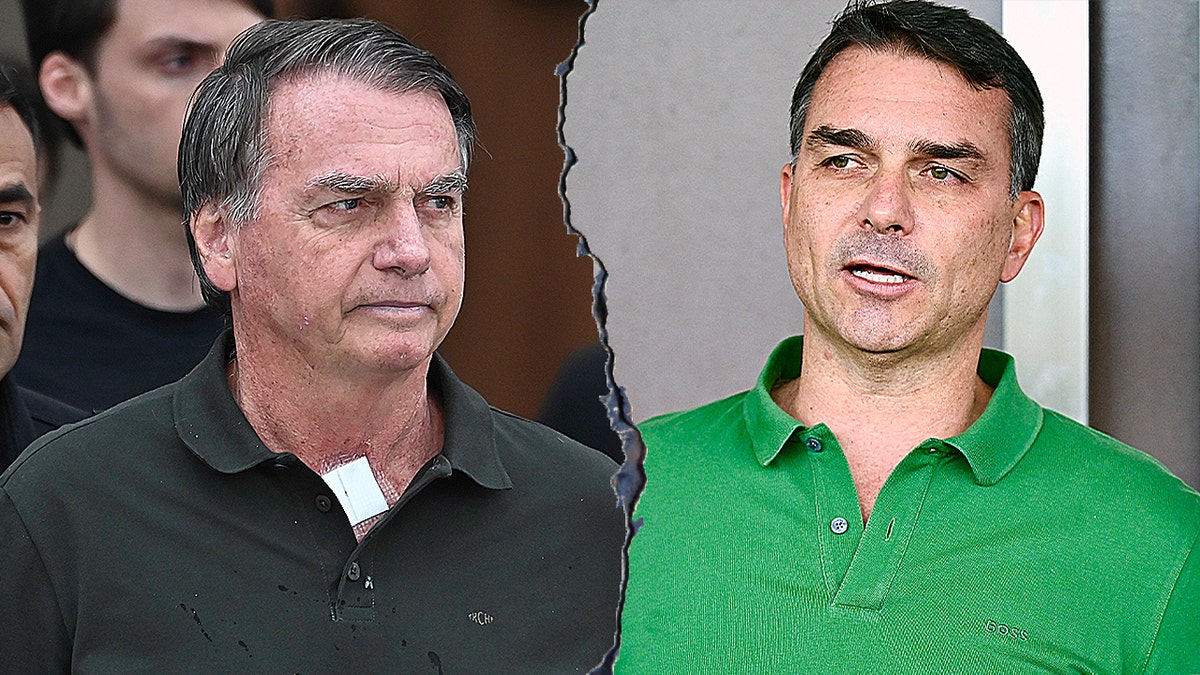
Former Brazilian President Jair Bolsonaro’s son announces biopic while brother Senator Flávio Bolsonaro enters 2026 presidential race from prison endorsement. (Ton Molina/Getty Images/ Evaristo Sa / AFP via Getty Images)
If elected, Flavio Bolsonaro is all but certain to free his father, and senior Brazilian military officers, who are currently jailed on charges of planning a coup to remain in power following the 2022 election.
The election also saw other members of the Bolsonaro family ushered into higher office: Jair Bolsonaro’s wife, Michelly, was elected senator, as was his son Carlos, while another son, Renan, was elected federal deputy.
Bolsonaro’s Liberal Party also turned in strong results in races for both chambers of Brazil’s Congress, particularly in the Senate, where they are expected to hold 29 seats, compared to just 9 for Lula’s Workers Party.
In Brazil’s lower chamber, the Liberal Party is also expected to hold the greatest number of seats, with 121, while Brazil Fe, a left-wing coalition, is on track to secure 78 seats.
Political analyst Flavio Morgenstern argued, “This election was not about Flavio Bolsonaro vs. Lula. It’s about all of freedom-loving Brazil against the Brazilian Supreme Court. People have no voice in the institutions, and all the power in Brazil is concentrated in the Supreme Court.”
The Brazilian right and the Bolsonaro family have long butted heads with the nation’s Supreme Federal Court, which is dominated by justices appointed by the Workers Party.
While Bolsonaro appears to have the wind in his sails, it is too early to count out Lula in the second round election in three weeks. Lula is renowned as a smart and effective campaigner, and still commands a powerful electoral machinery.
Yet, is winning election to an unprecedented fourth term a feat too daunting for even Lula, the great giant of the Latin American left?