
Australia’s net overseas migration intake would be cut to roughly one-third of its current level under a Coalition plan unveiled as the opposition loses support to the anti-immigration One Nation party.
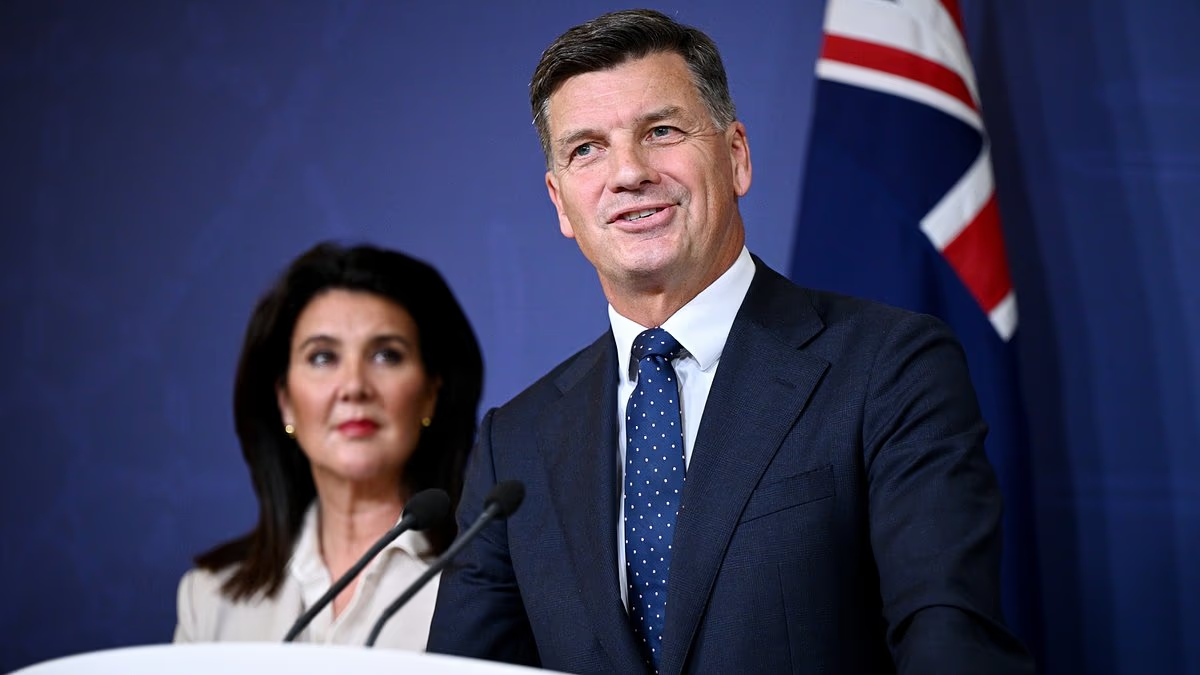
Opposition leader Angus Taylor announced on Tuesday that a Coalition government would reduce annual net overseas migration from almost 300,000 people to about 100,000 in its first year in office.
The intake would then rise to 160,000 people a year after four years—below Labor’s target of 225,000 but above One Nation’s proposed figure of 130,000.
The Coalition would also halve Australia’s annual refugee intake, reducing it from 20,000 to 10,000 people.
“What we are proposing today is the biggest cut to immigration in the history of this country,” Taylor said.
“That is what is necessary right now given the failures of the Labor government.”
Pauline Hanson’s party has gained ground in opinion polls, eroding the Coalition’s voter base and pushing immigration higher on the political agenda.
The Coalition’s proposal adopts elements of One Nation’s platform, including a requirement for prospective migrants to leave Australia and submit new visa applications from offshore.

Australia’s net migrant intake would be cut to roughly one-third of current levels under a Coalition plan announced as it loses votes to the anti-immigration One Nation party.

One Nation leader Pauline Hanson has accused the Liberals of taking her party’s policies.
The policy is intended to curb so-called “visa hopping” by preventing migrants whose visas have expired from applying for another visa in Australia and lodging appeals to prolong their stay.
Bridging visas would consequently be almost eliminated.
“We will regain control of our borders, we will regain control of immigration in this country, and we will ensure that immigration policy is in the interests of our great country and no one else,” Taylor told reporters in Sydney.
YOU MAY ALSO READ: California Fashion Designers Found Shot Dead Amid Family’s Account
According to the Coalition, the plan would reduce the number of temporary visa holders—excluding New Zealanders—by about 650,000 over four years and add roughly $260 million to the federal budget. The figures are based on undisclosed estimates prepared with assistance from the Parliamentary Budget Office.
Taylor said the migration cuts would benefit the economy by focusing on the skills Australia needs and increasing the proportion of skilled workers entering the country.
However, the Coalition will not release its full costings until closer to the 2028 election, after the government confirms further forecasts for net overseas migration.
Temporary graduate visas would be scrapped, while student visa numbers would fall from 528,800 in 2025/26 to 456,200 in 2031/32.
The humanitarian intake would be reduced to 10,000 people a year, and onshore applicants would have a maximum of 30 days to submit an application.

The Liberals have struggled amid One Nation’s rise as voters seek alternatives to Australia’s major parties.
Working holiday-maker visas, which farmers and regional communities rely on heavily, would be cut by 23,700 by 2031/32. Fees would also increase for visitors heading to non-regional areas.
But the Coalition will introduce an extra 15,000 skilled visas for major projects and a new agriculture visa from 2030.
Family reunion visas will be unchanged.
The Coalition will also draw up a list of safe nations to limit the number of vexatious protection visa claims.
Senator Hanson said the coalition was planning to build more homes than bring in more people to compete for them.
‘The coalition has turned up late to the grand final after both teams have headed back to the change rooms, waving a photocopy of One Nation’s immigration policy,’ she said.
‘Who trusts the major parties that created this mess to fix it anyway?’