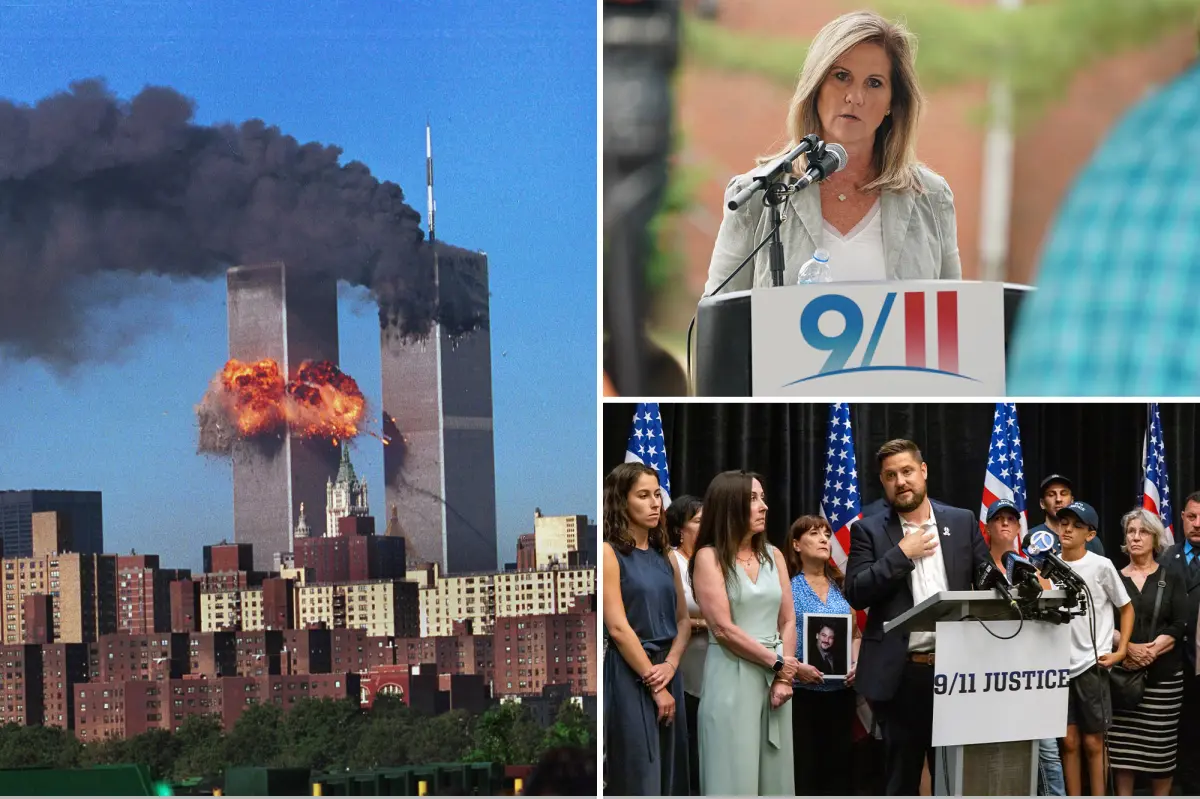

A federal appeals court will hear arguments Wednesday over whether Saudi Arabia can avoid a lawsuit accusing the kingdom of supporting the 9/11 hijackers, with relatives of New Yorkers killed in the attacks closely following the proceedings.
More than 25 years after the terrorist attacks, the 2nd Circuit Court of Appeals in Manhattan is reviewing a bombshell ruling issued in August 2025 by a lower-court judge. That decision left Riyadh potentially liable for damages in the long-running civil case.
Judges Guido Calabresi, William Nardini and Eunice Lee are scheduled to hear arguments from attorneys representing Saudi Arabia and the families of 9/11 victims.
US District Court Judge George Daniels concluded that the families had uncovered “reasonable evidence” suggesting the Saudi government — which has consistently denied any involvement in the attacks — operated a support network for the hijackers.
Daniels also found that a jury could reasonably conclude that Omar al-Bayoumi, a secretive Saudi national who helped arrange California housing for two American Airlines Flight 77 hijackers, may have been working in coordination with the Saudi government.
Al-Bayoumi, a suspected Saudi spy, once hosted a “welcome party” for two hijackers, had flight calculations that could be used to fly a plane into targets and at one point was seen in a chilling video “casing” the US Capitol building, according to court filings.
Saudi officials are challenging Daniels’ ruling and are expected to repeat their argument Wednesday that the kingdom cannot be sued in a US court because sovereign nations are generally protected from litigation.
DISCOVER MORE: Great Sphinx Carved From Rock Rich in Ancient Crocodile Fossils
That position has enraged families who lost loved ones on 9/11.
“The Kingdom continues to lie in court and deny any culpability, when the evidence shows that their agents were directly involved in the attacks,” said Terry Strada, national chair of 9/11 Families United. Her husband, Tom, a bond broker at Cantor Fitzgerald, died in the north tower.
Filed in 2004, the families’ lawsuit alleges that religious extremists with influence inside the Saudi government helped the hijackers and provided them with support.
“Saudi Arabia is a supposed ally and a friend of ours. Friends don’t treat friends like that,” said Brett Eagleson, whose father, Bruce, was killed in the attacks.
The Sept. 11, 2001, attacks claimed the lives of 2,977 civilians. Nineteen al Qaeda terrorists — 15 of them Saudi citizens — hijacked four passenger planes and crashed them into New York’s World Trade Center, the Pentagon and a field near Shanksville, Pennsylvania.
Al Qaeda leader Osama bin Laden came from one of Saudi Arabia’s wealthiest families. The kingdom later revoked his citizenship after he publicly denounced both the United States and the Saudi government.
The case has gone through years of legal reversals and developments, including passage of a law by Congress that made it easier for 9/11 families to sue foreign governments accused of backing terrorism. The litigation eventually incorporated related lawsuits and focused more sharply on claims that Saudi officials assisted the hijackers after they arrived in the United States in early 2000.
Wednesday’s oral arguments are expected to last about 45 minutes. The appeals court is expected to issue its decision in writing at a later date.
IN CASE YOU MISSED IT: Mother Lost Custody of Daughter Before Allegedly Killing Her, Court Details Reveal