
Two cases of Legionnaires’ disease have been identified in Staten Island, just one day after New York City officials said they were investigating two cases in Queens.
The New York City Health Department is examining the hot-water system at Castleton Park Apartments, a residential development in Staten Island’s St. George neighborhood.
Officials said two residents of the complex developed Legionnaires’ disease. In a letter dated September 28, building residents were informed that testing had detected Legionella bacteria—the pathogen responsible for the disease—in the property’s water system.
Legionella bacteria can grow in warm, damp environments. When contaminated water becomes aerosolized, the bacteria may be inhaled, potentially causing infection.
Potential sources of Legionella include central air-conditioning systems, hot tubs, decorative fountains and the extensive plumbing systems found in large buildings.
The building’s water system was tested after two residents were diagnosed over the course of a year.
Officials have not said when the two residents contracted the potentially life-threatening lung infection.
A spokesperson for the NYC Health Department said: “We are evaluating the hot-water system at an apartment complex in Staten Island after two residents were diagnosed with Legionnaires’ disease.

The New York City Health Department is examining the hot-water system at Castleton Park Apartments in Staten Island’s St. George neighborhood

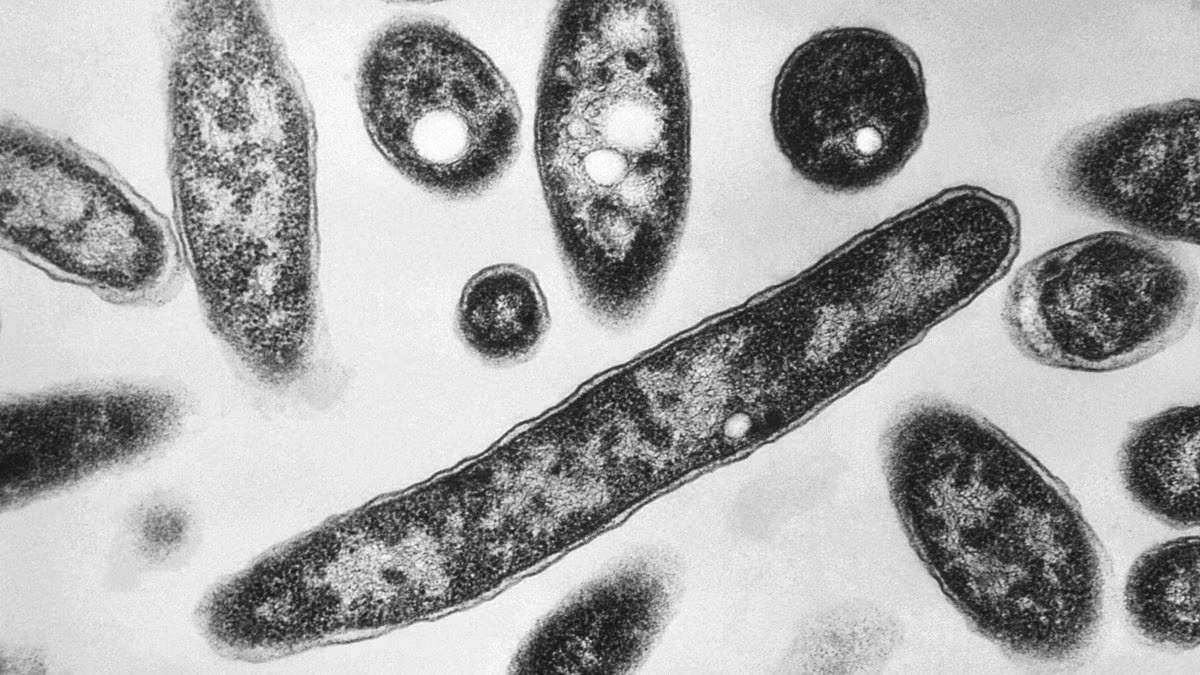
Legionella bacteria causes Legionnaires’ disease
“Although Legionella bacteria has been detected, it is important to note that there is no risk to the surrounding community. The building’s tap water remains safe to drink, but Castleton Park Apartments residents should follow the Health Department’s recommendations for safe water use.
“Remediation is underway, and the Health Department will continue providing residents with updates and guidance.”
Borough President Vito Fossella called on the city to act immediately to prevent additional infections, including by cleaning the building’s water system.
Officials emphasized that the investigation does not involve a cooling tower, unlike previous Legionnaires’ disease outbreaks in New York City. They also said the inquiry is not being treated as a community cluster and that the surrounding area faces no risk.
The Staten Island cases were announced shortly after two Legionnaires’ disease cases were reported in Queens.
Those cases involved residents of the North Shore Towers complex, located alongside a park and an 18-hole golf course near the Grand Central Parkway. Both diagnoses occurred within the past 12 months.
MUST READ: Ex-Marine Nigel Edge Faces Death Penalty in NC Mass Shooting
In a statement, health officials said they were testing the apartment complex’s water systems for Legionella. They added that the water in the buildings remained safe to drink.
No other buildings in the area have so far been connected to the suspected Legionnaires’ contamination.
The latest cases follow a Legionnaires’ disease cluster in the South Bronx that sickened 23 people and resulted in two deaths.
Another outbreak on the Upper East Side in July infected 94 people, including 92 who were hospitalized, and caused seven deaths.
Both clusters were linked to infected cooling towers. These towers have now been cleaned and neither outbreak is ongoing.

Legionnaires’ disease does not spread from person to person.
Infected patients initially suffer from a headache, muscle aches and fever, before the disease also triggers a cough, shortness of breath, chest pain, nausea, vomiting, confusion or other symptoms.
In severe cases, patients can suffer from severe pneumonia and the potentially fatal complication sepsis, when the bacteria spreads to the blood. The disease kills about ten percent of patients.
Doctors can treat the disease using antibiotics but note these drugs are most effective during the early stages of the disease and before its spread in the body.
Those who are over 50 years old, smoke or vape, have a chronic lung disease or a weakened immune system are at higher risk from the bacteria.
Nationwide, infections with Legionnaires’ disease have soared over the last two decades, rising from about 1,100 cases in 2000 to more than 8,000 today.
New York City records between 300 and 600 cases every year, according to data from the city’s health department.
In addition to the Upper East Side outbreak over the summer, in August of last year, seven people died and 114 people were sickened by a Legionnaires’ disease outbreak in Harlem. Ninety people were hospitalized.
Health officials linked that outbreak to the bacteria in 12 cooling towers across 10 buildings, including a city-run hospital and sexual health clinic.
About 90 percent of those infected had underlying risk factors, including being over 50 years old, being a smoker or having a chronic lung disease.