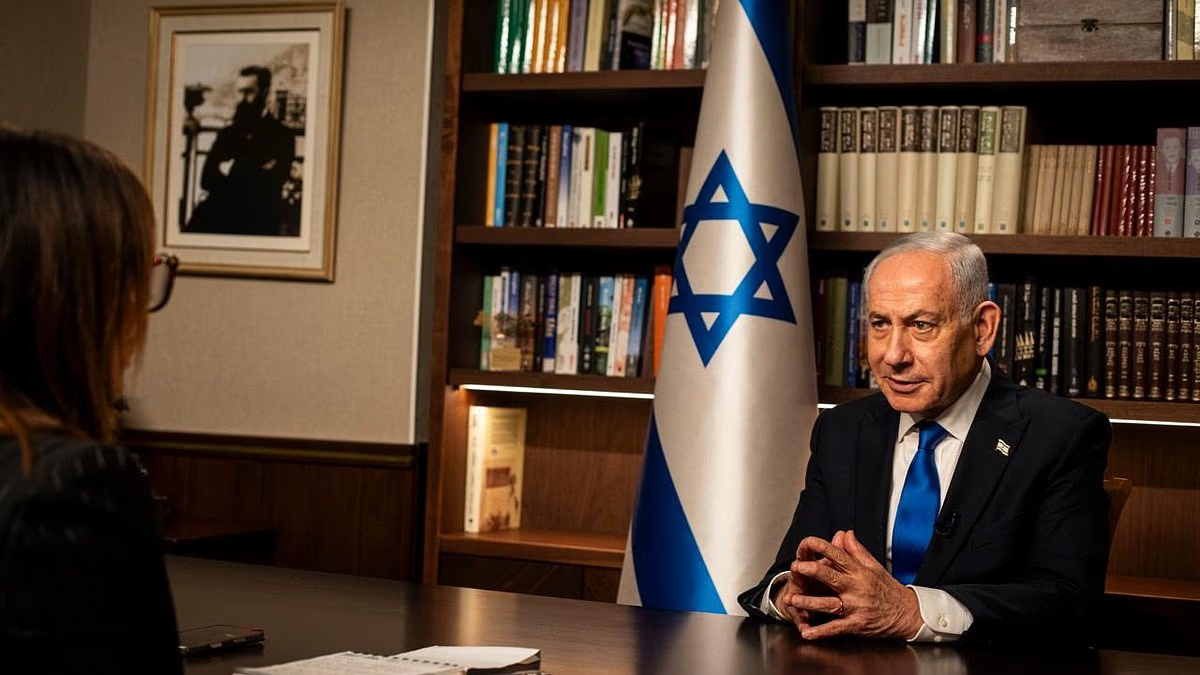

On the latest edition of the Daily Mail’s Deep Dive podcast, host Chris Pleasance speaks with Middle East correspondent Natalie Lisbona shortly after her exclusive interview with Benjamin Netanyahu.
With Israelis due to vote in less than three weeks—and the party led by the country’s longest-serving prime minister trailing in most opinion polls—the episode examines the high-stakes contest over Israel’s political future.
Guy Azriel, a diplomatic correspondent for Israeli broadcaster i24NEWS, joins Lisbona to break down Israel’s electoral system and assess the scale of the challenge confronting Netanyahu.
The podcast also includes previously unaired excerpts from Lisbona’s conversation with Netanyahu, in which he sharply criticises Britain’s Labour government over its recent sanctions targeting Israeli settlements in the West Bank.
Azriel told Deep Dive that Netanyahu is facing “major challenges” as he approaches an election described as one of the most significant in Israel’s history. It will be the first vote since the October 7 terror attacks seriously damaged the prime minister’s long-standing reputation as “Mr Security”.
“Netanyahu is, of course, the magician of Israeli politics—he always seems to find a way to stay in power,” Azriel said.

On the latest edition of Deep Dive, host Chris Pleasance speaks with Middle East correspondent Natalie Lisbona after her exclusive interview with Benjamin Netanyahu.

With Israelis set to vote in less than three weeks and Netanyahu’s party behind in most polls, the episode explores the struggle shaping Israel’s future.
Netanyahu faces former IDF chief in crucial Israeli election
“That said, these are the first elections since October 7, since the outbreak of this major war.
“The campaign will be focused largely on the war: on how Israel is viewed by the rest of the world and on the country’s ability to defend itself.
“For many Netanyahu supporters, the central question will be: ‘Who is best equipped to confront the challenges that emerged after October 7?’ On that point, Netanyahu still has powerful arguments against his political opponents.”
Pollsters are identifying former IDF chief Gadi Eisenkot—who left Netanyahu’s war cabinet over its conduct of the Gaza conflict—as the prime minister’s strongest potential challenger.
Azriel characterised Eisenkot as a “very moderate guy” who could take a less hawkish position than Netanyahu on the conflicts in Gaza and Lebanon.
The correspondent also suggested that Donald Trump would probably prefer Netanyahu to remain in office. The two men share common objectives regarding Iran, even though they have not always agreed on the prospects for a peace deal.
“Trump and Netanyahu have a longstanding friendship and a very strong working relationship,” he said.
“Some Western leaders may believe Gadi Eisenkot would be easier to pressure or steer towards a policy that is less uncompromising. That is not something Israeli voters on the right would want to see.
“Trump and Netanyahu have the same objective when it comes to Iran, even though the Americans ultimately pursued a deal.
“There is no diplomatic answer to the Iranian issue at present. Unless economic pressure succeeds in bringing down the regime, I see no alternative to a return to war. Trump trusts Netanyahu on that matter.”
Lisbona also discussed Netanyahu’s fierce reaction to recent moves by Britain’s Labour government, including its recognition of a Palestinian state and sanctions imposed by Foreign Secretary Ed Miliband on West Bank settlements.
Netanyahu accused Andy Burnham’s government of giving in to pressure at home and appeasing what he called an “Islamist leftist alliance”.

Donald Trump, diplomatic correspondent Guy Azriel suggested, would likely prefer to see Netanyahu continue as Israel’s leader.

On Britain, Lisbona reflected on how scathing Netanyahu was about the government’s recent actions towards Israel, from recognising a Palestinian state to sanctions on West Bank settlements.
Netanyahu reportedly brands Britain a ‘rogue state’
‘He said that under Burnham, Britain was a rogue state, and he really did not mince his words,’ Lisbona said.
‘Netanyahu says that the British government’s behaviour is mind-blowing.
‘At the heart of his argument is what he sees as a contradiction. Britain and Israel have historically had a really, really close relationship, particularly on security and intelligence.
‘He told me that Israel’s intelligence had saved many British lives. Israelis find it mind-blowing that Britain can continue benefiting from Israeli intelligence and security cooperation, while the Government continues to attack them.’
Listen to Netanyahu’s criticism of Labour, plus analysis of Israel’s upcoming election, by searching for Deep Dive wherever you get your podcasts.


