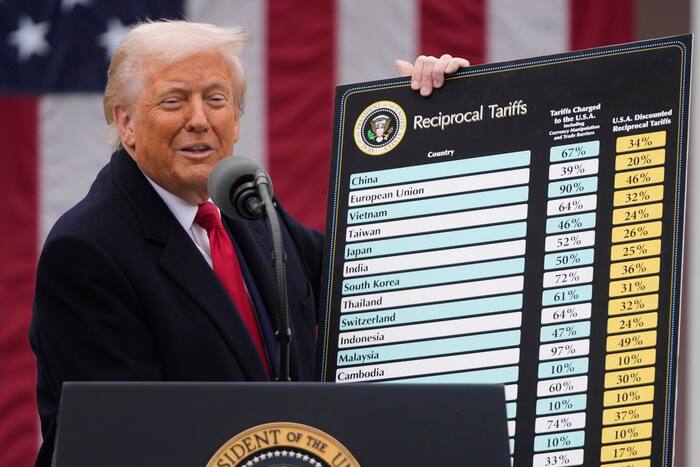

NEW YORK – President Donald Trump may genuinely believe that “tariff” is the most beautiful word in the English language.
Trump has remained committed to imposing the steepest import taxes on U.S. trading partners since the Great Depression, brushing aside rising prices, criticism from trade specialists and growing frustration among voters. He continues to argue that the strategy will ultimately benefit the country.
A new poll indicates that position could carry significant political risks with less than a month remaining before the Nov. 3 midterm elections. A majority of U.S. adults disapprove of Trump’s trade policies, while more than 64% say he has gone too far with the latest tariffs, up from 58% in January.
Here is a closer look at the political, legal and economic obstacles facing the Republican president’s trade agenda.
Where Trump’s shifting tariff policy stands now
The United States now applies import taxes in the low double digits to goods from most countries. Those rates, however, have repeatedly changed following court defeats and Trump’s tendency to revise policy with little warning.
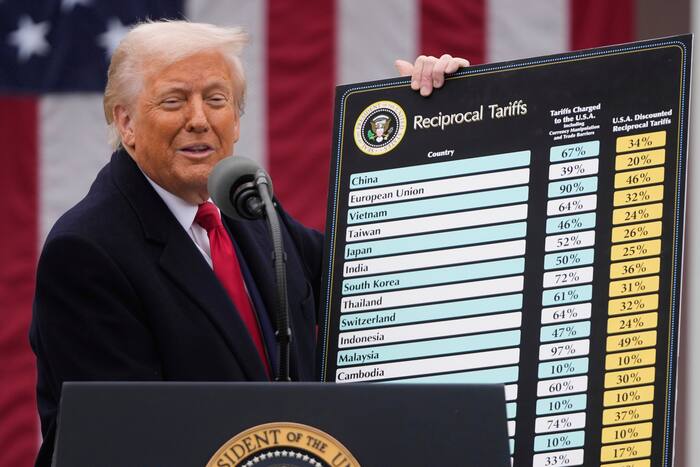
During the largest tariff expansion last year, Trump imposed what he described as “reciprocal” duties, along with other levies, on products from dozens of countries. He relied on a 1977 law that he argued gave the president authority to act without congressional approval during an economic emergency.
After the Supreme Court rejected that approach in February, Trump shifted to a collection of other trade statutes to advance the same objectives.
The main tool now is Section 301 of the Trade Act of 1974. It permits tariffs against countries the administration says engage in unfair trade practices, including inadequate enforcement of bans on forced labor. The latest duties range from 10% to 12.5% on imports from 60 economies, among them major U.S. partners such as the European Union, India, Japan, Canada and Mexico.
Why trade specialists say Trump’s tariffs could do more harm than good
Trump’s approach is disrupting a relatively open global trading system that many mainstream economists credit with strengthening the U.S. economy. That system has supported growth, held down prices and helped American companies compete—and in some industries lead—around the world.
The United States is the world’s second-largest exporter, behind China. It shipped $3.4 trillion in goods and services last year, well above Germany, which ranked third with $2.3 trillion.
Trump says foreign exporters bear the cost of the tariffs, but research suggests American companies and consumers are paying most of the bill. Studies from institutions including the New York Fed and Harvard found that overseas suppliers have generally not cut prices enough to absorb the duties paid by U.S. businesses at the border. Companies are instead absorbing those costs or passing them on through higher prices.
The White House counters that a manufacturing revival is already taking shape. Officials point to data showing that factory employment, which declined last year, has begun to recover, while jobs in some nonresidential construction trades are also increasing.
“Factory construction jobs of today mean more manufacturing jobs down the road once those factories come online,” White House spokeswoman Taylor Rogers said.
The mixed case for claims that other countries are ‘ripping off’ the U.S.
In the four years following China’s entry into the World Trade Organization in 2001, the United States lost nearly 3 million manufacturing jobs, accelerating the country’s shift away from factory employment. Even supporters of global commerce acknowledge the damage. Many American companies struggled to compete with a wave of inexpensive Chinese goods, as Beijing suppressed domestic consumption to promote exports.
There is also evidence that some countries impose higher tariffs than the United States, weaken their currencies to make exports cheaper for American buyers and subsidize key industries.
Still, tariff levels among the United States’ largest trading partners are generally modest—often similar to American rates and sometimes lower.
Before the trade war, the average U.S. tariff on goods from the European Union was 1.47%, only slightly higher than the EU’s 1.35% average duty on American products, according to Bruegel, a Brussels-based think tank. European consumers are also major customers for U.S. goods and services. The European Central Bank estimates that roughly 30% of European imports come from U.S.-owned companies.
The relationship with Canada, America’s big trading partner to the north, was also similar before trade talks broke down this summer. Canada’s effective tariff rate on U.S. imports was about 2.4%, less than half the 5% that the U.S. had on Canadian imports, according to calculations by Oxford Economics.
Now the countries are mired in a tit-for-tat dispute, with both countries escalating tariffs on each other.


