
In discussions about pandemic preparedness, attention usually turns to science: spotting dangerous pathogens, confirming infections, studying how diseases behave and creating vaccines or medicines. These are areas where research, funding and careful planning can make a measurable difference. The World Health Organization (WHO), for instance, convenes specialists to assess emerging threats and gather the evidence required to prepare for them. Yet effective preparedness relies on far more than scientific progress alone.
The events of the past week have highlighted the political dimension that is often left unspoken. Few people would have expected pneumonic plague to become an international news story, or the death of one Russian laboratory worker to attract global scrutiny. The WHO reviews thousands of possible disease signals each month, so the attention may initially seem disproportionate. But this case is different because Russian officials have offered little clarity, while long-standing concerns remain over the country’s biological weapons research.
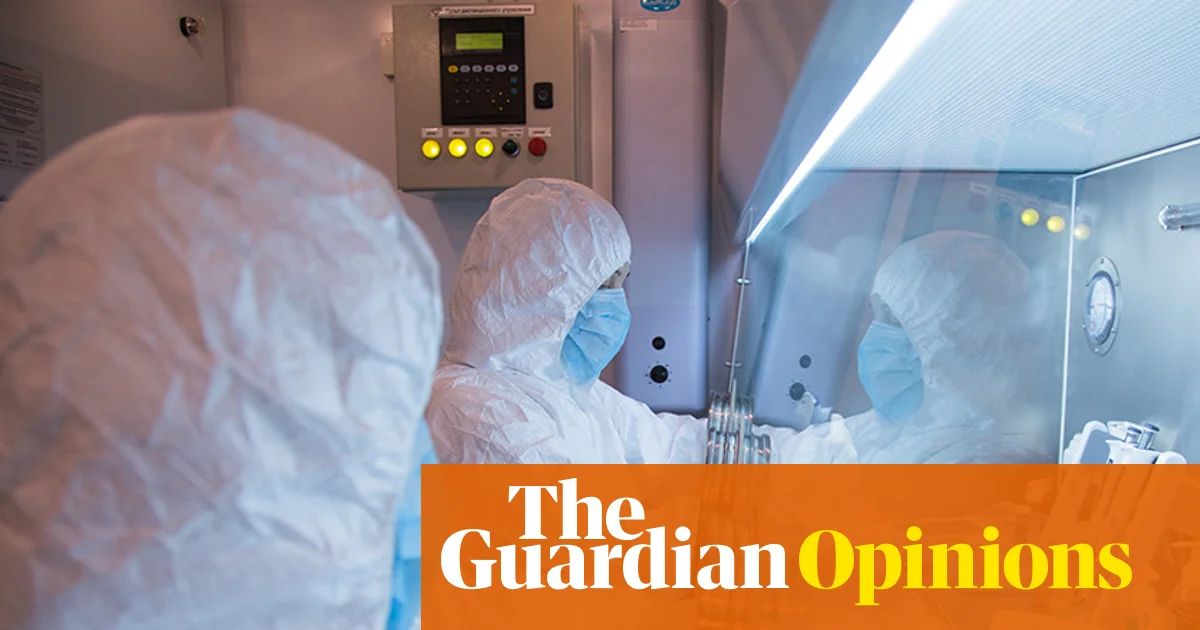
The 28-year-old employee died after developing a severe form of pneumonia. She worked at the Irkutsk Anti-Plague Research Institute, a facility founded in 1934 that investigates plague and other high-risk diseases, including anthrax and cholera. The institute has also been linked by rumours to biological weapons work. Prof Ashish Jha, former coordinator of the US White House Covid-19 response and my co-chair on an Ebola commission, wrote online: “US intelligence assess that Russia’s scientists continue developing biological weapons capabilities. Those programmes operate in secret. Nobody outside inspects them and nobody inside has much incentive to admit when something goes wrong.”
Early reports in local media claimed the worker had contracted pneumonic plague following a laboratory accident, possibly involving a shattered test tube. The illness is caused by the bacterium Yersinia pestis and can pass between people through respiratory contact. Left untreated, it is fatal, but antibiotics are generally effective when administered within the first 24 hours of symptoms, or immediately after exposure in some circumstances. That raises an obvious question: if she knew she had been exposed, why was treatment not started sooner? Pneumonic plague should also be distinguished from bubonic plague, the more familiar form usually spread by flea bites.
Russian health officials rejected the plague diagnosis, describing the illness instead as pneumonia of unknown origin. Even so, around 200 people who had been in contact with the worker were placed in quarantine. Authorities later said testing had found no high-risk pathogens and that monitoring had concluded. The WHO referred to a possible second related case, while Russian officials disputed that account. The precise cause of death has still not been established.
The WHO has asked Moscow to provide more details, including confirmation of the diagnosis, findings from the investigation, an explanation for the extensive quarantine measures and information about the reported second case. So far, those requests have not produced the answers the organisation is seeking.
There is one reassuring sign: if the illness had continued to spread, more cases might have been expected by now. The worker died on 2 October, and the completion of contact testing and the release of people from quarantine suggest that any transmission has been contained. Nevertheless, surveillance remains important because pneumonic plague can have an incubation period of between one and three days.
If we work on the assumption that pneumonic plague was involved, three possible explanations emerge. The first is an accidental exposure during laboratory research. The worker may not have realised what had happened, or may have been too frightened to report it and seek immediate medical care. By the time symptoms appeared, the most effective treatment window may have passed.
A second possibility is that she encountered a strain resistant to antibiotics. That may sound speculative, but senior researchers have voiced concerns in light of the Soviet Union’s biological weapons history and the possibility that pathogens could be modified for malicious purposes.
after newsletter promotion
The third possibility was raised by Dan Singer, a former White House director responsible for countering biological threats. He suggested the worker may have received an obsolete vaccine, one available in Russia but not approved by the WHO or most other countries. It is a live-attenuated vaccine, using a weakened form of the bacterium. Such vaccines do not always prevent infection and, in some cases, can themselves cause illness.
Ultimately, there is not enough reliable information to determine what happened. A proper investigation would require access to clinical and laboratory material, including pathogen identification, genetic sequencing and records of the worker’s research. Without that evidence, speculation fills the gap where scientific certainty is needed.
Russia is legally required to share relevant information with the WHO as a member state. The organisation’s international health regulations cover events that are unusual or unexpected, pose a serious public health threat, could spread across borders or have consequences for trade and travel. The difficulty is that, like much international law, these rules have limited enforcement power. The system depends largely on countries cooperating because transparent disease reporting serves everyone’s interests.
Washington has also demanded answers. Donald Trump said he would raise the matter with Vladimir Putin, while the US state department formally sought information under the international health regulations. The situation carries an added irony: the United States withdrew from the WHO in January 2026, yet is now relying on the global framework associated with the organisation.
Watching these events as a scientist is a reminder that better diagnostics, rapid genomic sequencing, improved vaccines and affordable treatments can only take us so far. None of those advances can replace the basic information needed to recognise and investigate a pathogen. Pandemic preparedness is therefore a political responsibility as well as a scientific one. Without transparency, even major advances risk becoming one step forward followed by two steps back.


