
There is no shortage of bones to discuss.
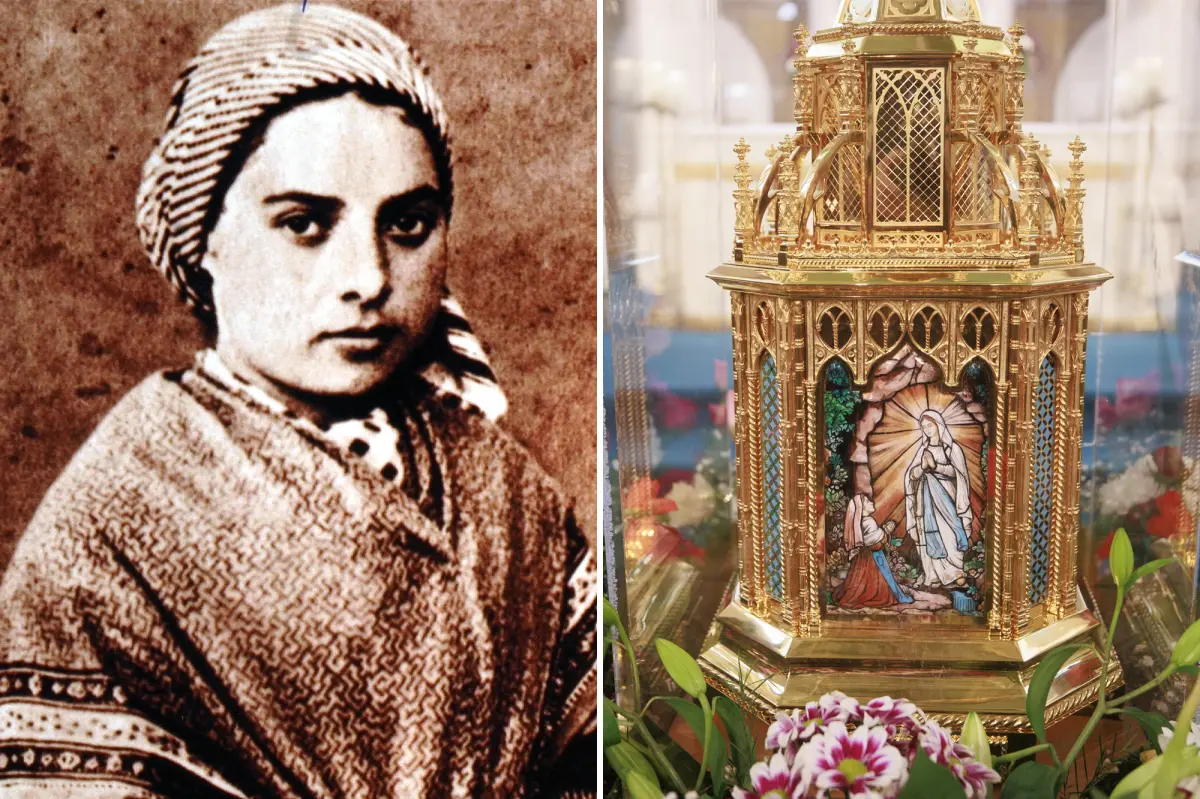
The remains of beloved Catholic saint St. Bernadette Soubirous — who experienced 18 visions of the Virgin Mary in Lourdes, France, at age 14 in 1858 — are traveling across the United States on a 140-stop tour.
Known as the Journey of Grace, the exhibition features a 132-pound, 24-karat gold-plated reliquary. Inside are fragments of Bernadette’s fifth and sixth ribs, kneecaps, strands of hair, muscle from her right femur and pieces of her skin.
Although the display may strike some people as morbid, the Catholic practice of venerating relics — the physical remains or belongings of saints — dates back to 156 A.D.
Rev. Patrick Flanagan, chair of the theology department at St. John’s University, explained to The Post why such relics hold deep meaning for Catholics.
“Roman Catholics believe in the sanctity of human life and concurrently value the body. The body is not merely a shell that contains the soul but an essential part of who the human person is,” he said.
“A bone, a fragment of skin, or perhaps even a heart . . . It is essentially the saints’ presence among us once again. It is comforting and encouraging to realize that heaven has come to Earth in the presence of these relics.”
Flanagan also rejected the idea that Catholics worship saints.
“We do not. We venerate them as holy, virtuous, really remarkable people who served as intercessors for us,” he said.
Bernadette, the Catholic Church’s patron saint of illness, was a teenager when she began seeing visions of the Blessed Mother over several months in Lourdes, a small French town that then had only about 4,000 residents. She died in 1879 at age 35, partly as a result of tuberculosis.
The Catholic Church has recognized 72 miracles attributed to the intercession of Our Lady of Lourdes. Today, Lourdes is the world’s most visited Catholic pilgrimage destination.
The US tour of St. Bernadette’s reliquary includes basilicas, shrines, cathedrals, parishes, hospitals and universities. It began in Washington, DC, on Sept. 18. This weekend, the reliquary will visit Our Lady of Lourdes Church in West Harlem, followed by The Shrine Church of St. Bernadette in Dyker Heights, Brooklyn, on Oct. 19 and St. Patrick’s Cathedral the next day.
MUST READ: Wyoming Graduate Student Arrested While Allegedly Fleeing to China After Tea-Poisoning Accusation
“Hundreds of thousands of people visited the reliquary in the hope of experiencing the same grace, healing, and hope that so many visitors to Lourdes have experienced,” Flanagan said of its first US tour in 2002.
Bernadette’s body was exhumed in 1909 and again in 1919 as part of the process supporting her canonization. In 1925, portions of her remains were removed and preserved as relics. During the first exhumation, 30 years after her death, her body was found to be miraculously incorrupt.
“The face was dull white. The skin clung to the muscles and the muscles adhered to the bones . . . The mouth was open slightly and it could be seen that the teeth were still in place. The hands, which were crossed on her breast, were perfectly preserved, as were the nails,” according to a document signed by examining physicians. The report is kept at the convent of Saint-Gildard in Nevers, according to the National Catholic Register.
New York City is already home to numerous Catholic relics.
About 80% of Mother Cabrini’s skeletal remains lie beneath the main altar at the St. Frances Cabrini Shrine in Washington Heights. The shrine also houses her eyeglasses, shoes, socks and a gold denture spring.
Julia Attaway, executive director of the St. Frances Cabrini Shrine, said the site welcomes as many as 40,000 pilgrims each year.
“We greet visitors every week who come to give thanks for miracles they attribute to Mother Cabrini’s intercession. Some are miracles of healing, others for green cards, and still others for the relief of emotional suffering,” she told The Post.
The arm bone of St. Anne, the mother of the Virgin Mary, is displayed at St. Jean Baptiste Church on the Upper East Side. It was first brought to the church as part of a tour in 1892. After sick visitors said they began feeling better, church officials decided to divide the bone so a portion could remain there permanently.
The Church of the Most Holy Redeemer in the East Village has all the bones of the Roman martyr St. Datian, encased as a wax figure.
The Church of St. John the Baptist in the Garment District pays homage to the Italian friar St. Padre Pio by displaying a linen sock stained with his blood, and the Church of St. Vincent Ferrer on the Upper East Side has a finger joint of its Dominican friar patron saint.
Flanagan said he’s seen a resurgence in Catholics’ devotion to relics.
“People are beginning to recognize how much technology has consumed our lives and distracted us from quality relationships … People are hungry for the tangible, things they can see and touch.”