
Nuts are a popular snack for curbing hunger and managing cravings.
Now, a major review suggests that eating a daily portion may offer another benefit: a potentially lower risk of developing high blood pressure.
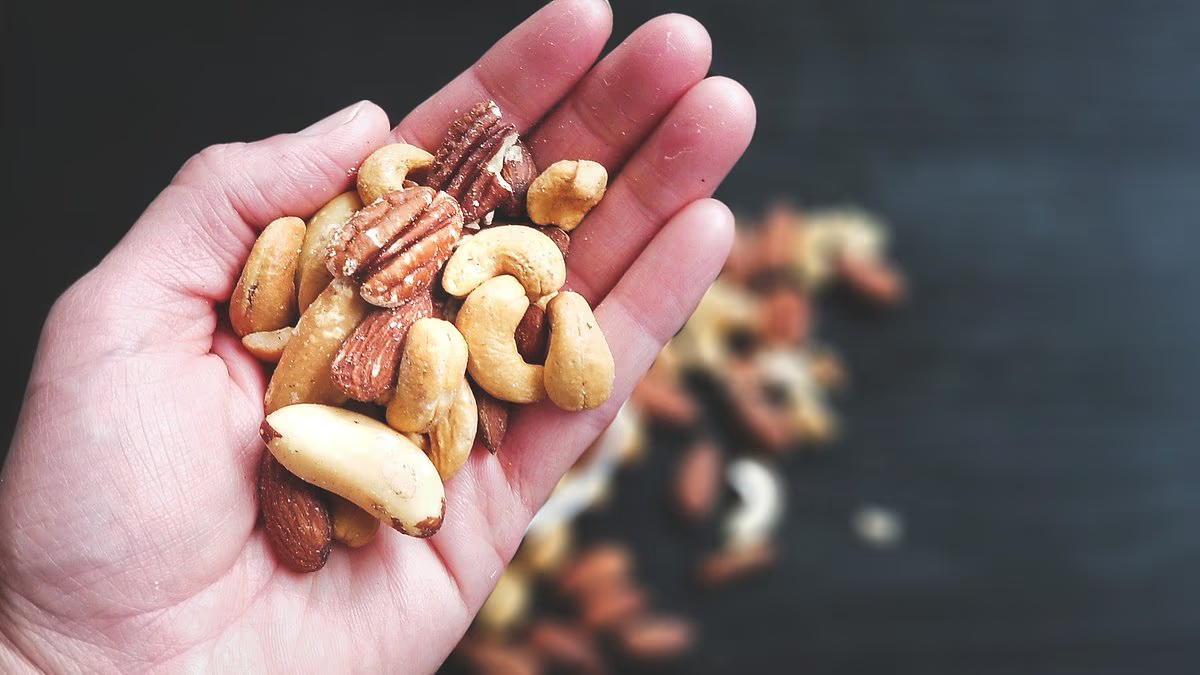
Researchers in the UK and Norway examined data from almost 150,000 people across eight long-term studies. They assessed whether eating one serving of nuts—roughly a palmful—was linked to the risk of being diagnosed with high blood pressure.
People who ate 30g of nuts a day, or about 1oz, had a 26 percent lower risk of high blood pressure than those who did not eat nuts.
The analysis also found that each additional 28g of nuts consumed daily was associated with a 20 percent reduction in the risk of high blood pressure.
However, the study did not investigate whether nuts can lower blood pressure in people who already have the condition. Doctors say a balanced diet, regular physical activity and maintaining a healthy weight can all support healthier blood pressure levels.
Nuts feature prominently in both the Mediterranean diet and the Dietary Approaches to Stop Hypertension (DASH) diet. Both eating patterns have been linked with lower blood pressure and cholesterol.
The studies did not identify which varieties participants ate. Earlier research, however, has linked almonds, cashews, walnuts and peanuts, among other nuts, with a lower risk of high blood pressure.

A daily handful of nuts may be linked to lower blood pressure, according to a new review
It was also unclear whether participants ate salted nuts. Doctors warn that consuming too much salt increases the risk of high blood pressure.
The researchers could not establish exactly why nuts might be protective. They suggested that L-arginine, an amino acid found in nuts, may play a role because the body uses it to produce nitric oxide, which helps blood vessels relax and widen.
Fiber in nuts is also broken down by gut bacteria into compounds associated with lower blood pressure. In addition, their antioxidants may help reduce inflammation, which can contribute to raised blood pressure.
Because the research was observational, it cannot prove that eating nuts directly caused the lower risk. Other lifestyle or health factors may also have influenced the results.
Published in the British Journal of Nutrition, the meta-analysis included eight studies involving 143,380 participants. Of those, 20,665 had been diagnosed with high blood pressure.
Participants ranged from 18 to 87 years old. Three studies were conducted in the US, while France, Spain, South Korea, China and Iran each contributed one study. Six studies included both men and women, and two involved men only.
The highest level of nut consumption was associated with a 16 percent lower risk of high blood pressure compared with the lowest intake.
The researchers estimated that the potential benefit became weaker when people ate 25g or less of nuts per day. They found no additional benefit from consuming more than 35g daily.
Although the team found no evidence of bias in the available research, it acknowledged that the small number of studies limits the strength of the conclusions.
In addition to L-arginine and antioxidants, nuts provide protein and nutrients such as magnesium and potassium, which have been associated with better vascular function.
The findings do not show that nuts can lower blood pressure on their own or replace prescribed medication. However, experts said including them in the diet could provide added support alongside existing treatments.
The team suggested opting for unsalted mixed nuts and considering using them as a replacement for processed snacks like potato chips.


