
As artificial intelligence advances, growing numbers of Americans fear the technology could eventually replace their jobs—a risk that lawmakers in Washington are increasingly preparing to address.
Members of Congress have introduced a series of bills aimed at protecting workers from potential AI-driven disruption. Many of the proposals focus on expanding training and education opportunities for people whose jobs may be eliminated.
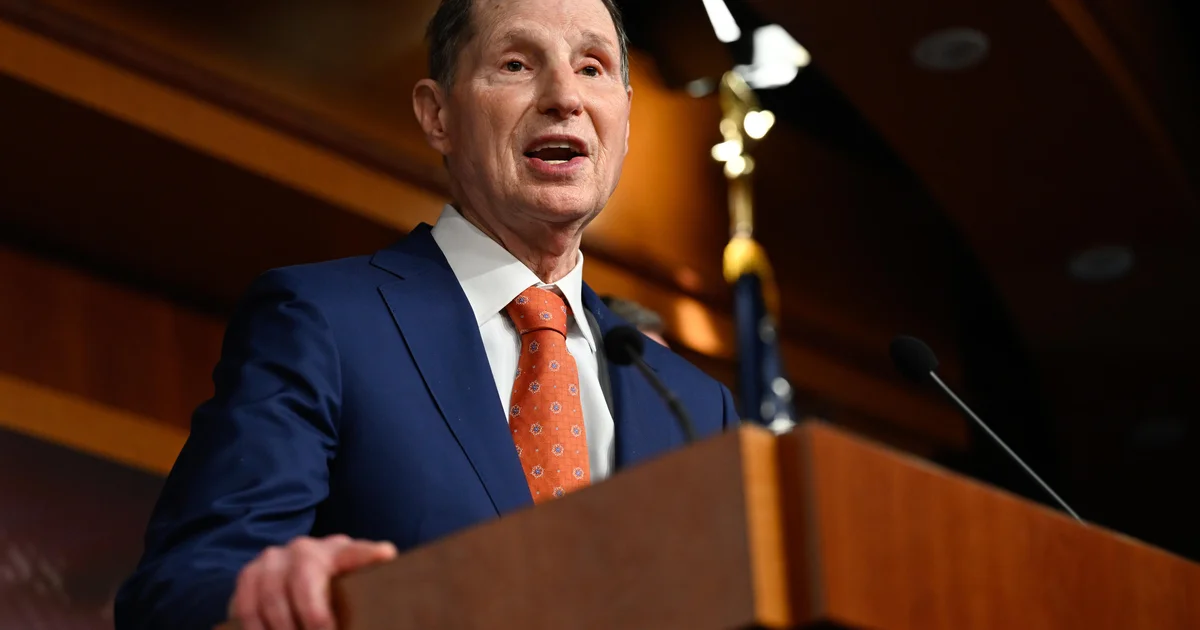
On Friday, Sen. Ron Wyden, an Oregon Democrat, joined those efforts by unveiling the Stability and Opportunity for Workers Act. The measure would increase unemployment benefits during periods of elevated joblessness.
Under the bill, unemployment benefits could last as long as 52 weeks if the unemployment rate reaches 8.5%. That would be twice the current maximum of 26 weeks.
Wyden’s office said the legislation would also help people displaced by AI by offering education and retraining aimed at preparing them for higher-paying work.
The proposals arrive as experts and AI-industry leaders warn that the technology could cause widespread job losses. In an interview with Axios last year, Anthropic CEO Dario Amodei said AI could eliminate half of all entry-level white-collar jobs and push unemployment to between 10% and 20% within the next one to five years.
Other prominent technology executives have issued similar warnings. In a recent essay, Microsoft co-founder Bill Gates said AI could place millions of jobs at risk.
So far, however, those predictions have not come to pass. Economists say AI has yet to trigger large-scale workforce displacement. Although there have been AI-related layoffs, most have occurred within the tech industry.
Here are several proposals lawmakers have introduced in response to those concerns.
Make AI Work for Americans Act
A bill introduced last month by Sen. Mark Kelly, an Arizona Democrat, would impose three excise taxes on the AI industry. The measures include a 5% levy on digital advertising revenue, an AI usage tax and a 50% tax on excess profits.
YOU MAY ALSO READ: Witness Who Helped MP Helen Haines Reveals Suspect’s Reaction After Attack
The resulting revenue would be deposited into a fund that could help retrain workers displaced by AI, among other possible uses.
AI Tax and Work Protection Act
Democratic Reps. Greg Casar of Texas, Valerie Foushee of North Carolina and Sara Jacobs of California introduced another proposal in August. It would tax artificial intelligence companies according to token usage, with the tax rate increasing as the unemployment rate rises.
The funds would support job creation intended to offset AI-related layoffs, according to Casar’s office.
AI-Related Job Impacts Clarity Act
Sen. Mark Warner, a Virginia Democrat, and Sen. Josh Hawley, a Missouri Republican, introduced a separate measure designed to improve transparency around workforce disruption. The bill, introduced last year, would require major companies and federal agencies to report AI-related layoffs to the Department of Labor, which would publish the information.
Democratic Reps. Steven Horsford of Nevada and Sara Jacobs of California, along with James Moylan, the House delegate from Guam, introduced a House version of the legislation in July.