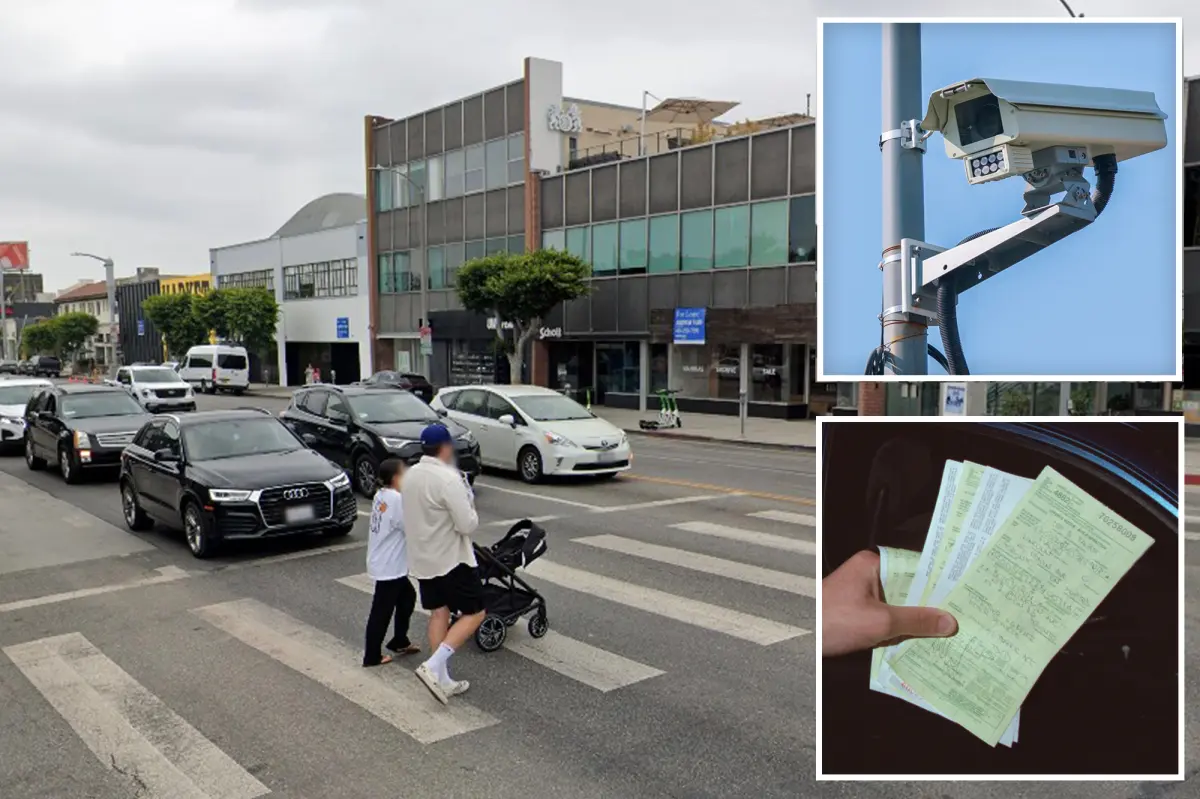

Los Angeles drivers may soon pay a price for speeding as the city prepares to activate its automated speed-enforcement program on Monday.
The cameras will monitor speeding on major streets, with fines climbing as high as $500 for the most serious violations.
The opening phase will use about 20 cameras. By the end of 2026, Los Angeles plans to establish 125 enforcement locations spanning all 15 City Council districts.
Officials have identified four intersections for the initial rollout, placing some of the city’s busiest corridors under surveillance:
Additional cameras are planned for sections of Sunset Boulevard, Olympic Boulevard, Venice Boulevard and Highland Avenue.
The system will capture rear license plates from vehicles traveling at least 11 mph above the posted limit. The city is focusing on areas near schools and senior centers, as well as locations with a history of street racing.
Fines will increase according to how far a vehicle exceeds the limit. Speeds 11 to 15 mph over the limit will bring a $50 fine, while violations of 16 to 25 mph will cost $100. Drivers traveling at least 26 mph over the limit face a $200 penalty, and speeds of 100 mph or higher will result in a $500 fine.
FIND OUT MORE: Katie Zacharia Speaks Out for First Time Since White House Firing
The automated citations will be treated as civil violations rather than criminal traffic offenses. Program officials say they will not add points to driving records or raise personal auto insurance rates.
For the first 60 days, drivers caught speeding will receive warning notices by mail instead of fines. Monetary penalties will begin after that grace period.
The launch follows a unanimous March 24 vote by the Los Angeles City Council approving a five-year pilot program under California Assembly Bill 645. The Los Angeles Department of Transportation is managing the rollout.
The city has not announced a specific timetable for installing the remaining 105 cameras.
Each council district is expected to receive cameras at about eight sites, with further placements aimed at neighborhoods reporting elevated crash rates.
Money collected through the fines must be invested in local safe-street projects designed to improve protection for pedestrians, cyclists and motorists.