
Are you a tree hugger or a climate criminal? A passionate supporter of Net Zero or a sceptic? Public discussion of climate change and the policies needed to address it is often presented as a battle between two uncompromising extremes.
Yet my polling repeatedly shows that voters are far more informed, pragmatic and reflective than that simplistic picture suggests.
With climate policy likely to become a major election battleground, politicians will need to persuade voters that practical solutions are available. My research identifies five distinct “tribes” in the public debate.
Impatient Idealists want faster progress and believe Net Zero is worth the cost. Committed Contributors are the most likely to have changed their own behaviour. Squeezed Sympathisers accept that the climate is changing but say they cannot afford to pay more. Cautious Pragmatists are not opposed to environmental action, yet place greater importance on other priorities. Staunch Sceptics believe the threat has been overstated and resist policies that would increase household bills.
Even inside these groups, attitudes are rarely absolute. Many people who are most concerned about climate change remain anxious about energy costs and question how dependable wind and solar power can be.
Those most doubtful about climate policy question the wisdom of rushing towards Net Zero ahead of other countries. But relatively few deny that climate change is happening or that human activity contributes to it.
The central disagreement is about what should be done, how quickly it should happen and who should bear the cost. Clear answers are difficult to establish, partly because voters have so few sources they genuinely trust.
Many have not forgotten how one government encouraged motorists to buy diesel cars as part of its response to climate change, only for later administrations to penalise them.

Prime Minister Andy Burnham, pictured in 2026, has faced scrutiny over the Government’s hesitant approach to Jackdaw

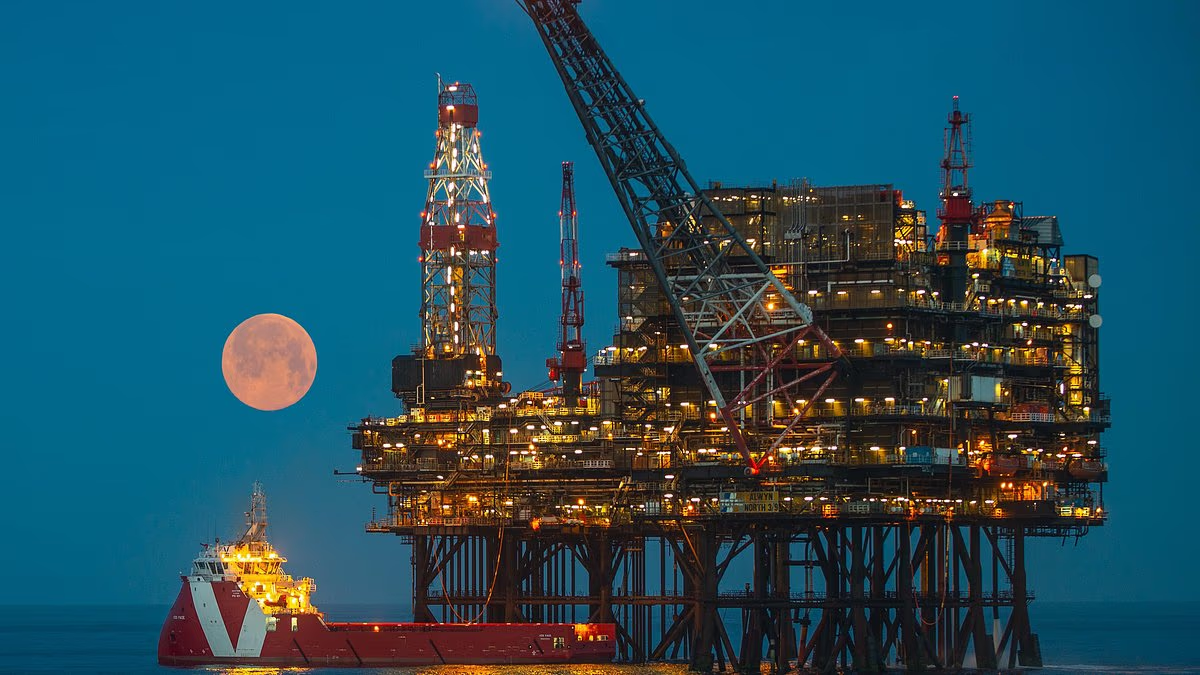
Jackdaw has received production approval after years of legal challenges from environmental campaigners. A decision on Rosebank is still pending. Pictured: a flare burning on a North Sea oil platform

Chancellor John Healey will deliver the UK Autumn Budget 2026 on Wednesday and is expected to approve oil drilling at the controversial Rosebank oil and gas site
For many people, green policies appear to be little more than a justification for higher taxes. Businesses are also suspected of using climate concerns to provide cover for raising prices.
Environmental organisations are naturally seen as inclined to highlight the worst possible outcomes. Even climate scientists are not regarded as beyond question: voters note that their work must be funded and believe their conclusions remain open to interpretation.
Overall, my research found—although the view was far from unanimous—that most people expect achieving Net Zero to increase household costs. When asked about their priorities for energy policy, affordability and independence from foreign suppliers ranked above tackling climate change.
Voters were also more likely than not to support further oil and gas exploration. Last week, the Government approved the long-planned Jackdaw gas field. Today, The Mail on Sunday reports that Prime Minister Andy Burnham and Chancellor John Healey will approve drilling at the more controversial Rosebank site.
The move is likely to prove popular with the public, though less so within the wider Labour Party. My polling found that only one in three voters supported the party’s ban on new exploration. Many considered it illogical to prevent domestic drilling while continuing to import North Sea oil from Norway.
SEE ALSO: NYU Study: Sound Waves May Help Reduce Delusions in Schizophrenia
At the same time, many voters viewed Net Zero as an opportunity rather than simply a burden, pointing to the potential for new industries, additional jobs and, eventually, lower energy costs. The policies required to deliver that ambition were a separate matter.

The Jackdaw gas production platform, 155 miles east of Aberdeen

Drone footage shows the Jackdaw gas field at sea. Energy Secretary Miatta Fahnbulleh has approved production at the field
When presented with hypothetical policies, majorities supported building more wind and solar farms, expanding nuclear power and introducing taxes on frequent flyers and high-carbon goods—provided the resulting revenue was returned to them in some form.
But, perhaps unsurprisingly, the closer to home the ideas got, the more resistance they encountered.
Traffic charges, banning petrol and diesel cars, phasing out gas boilers and charging more for meat and dairy products to reflect their emissions went down considerably less well.
Two things were clear: many have had enough of politicians ‘policing your household’, as one of my focus group participants put it. ‘I’m fed up with the Government going, ‘You’ve got to do this’, ‘you’ve got to do that’,’ they added.
The second conclusion was that people’s patience with ever-rising costs and taxes is at an end. ‘It’s any excuse to put a tax on something,’ said a contributor, who urged firms to ‘be environmentally friendly but don’t charge us extra for the privilege of it’.
Just under half said they didn’t know how much Net Zero policies added to their energy bills, and almost as many said they were unwilling to pay more.
Who, then, should pay for the transition to greener energy? Big businesses, energy companies and high-polluting individuals were the most popular targets, predictably enough.
Some argued that this would soon amount to the same thing: higher business costs would ultimately be extracted from customers, just as government largesse is ultimately paid for by taxpayers.
Looming over this is a question that bothers even some of the most environmentally minded: what is the point of Britain making expensive efforts to cut its small share of global emissions if bigger countries are not doing the same?
Voters overall agree by an 18-point margin that the UK achieving Net Zero will make little or no difference to climate change.
They are more likely to accept that we should do all we can regardless of other countries – but even then, some wonder who we are leading if no one is following.
As far as the electorate is concerned, climate change is not a scientific controversy but a political one. What is the plan? What will it achieve? What will it cost, is it worth it, and who is going to join in? Voters are waiting for answers that sound sensible and fair.
- Lord Ashcroft is a businessman, philanthropist, author and pollster. His research is at LordAshcroftPolls.com.


