
DNA testing has produced a new clue in the case of an unidentified man whose burned remains were found after a suspected self-immolation at a remote California beach. The analysis suggests Middle Eastern ancestry and a possible link to one of the world’s oldest religions.
Yet more than six years after his charred body was discovered inside a beach fire, investigators still have no confirmed identity or clear explanation for his death.
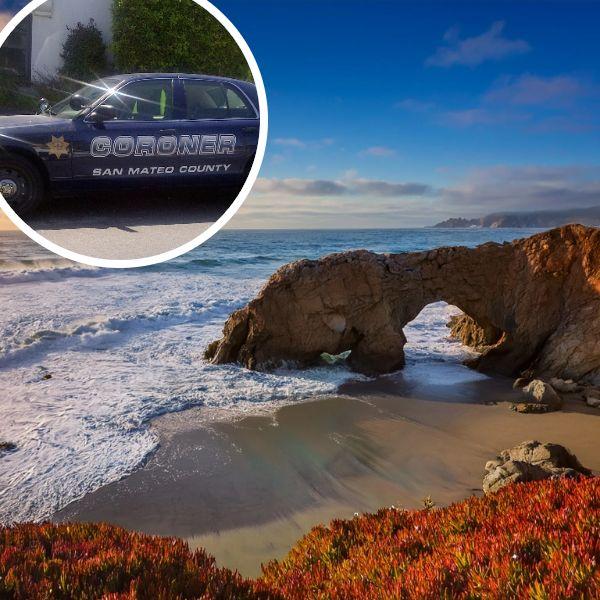
The remains were found at Pescadero State Beach, south of San Francisco, on July 24, 2020, during the height of the COVID-19 pandemic.
The San Mateo County Sheriff’s Office believes the man, thought to have been between 30 and 65 years old, built the bonfire before taking his own life through self-immolation.
The intense fire left the remains too badly damaged for conventional forensic methods to yield meaningful identification clues. Investigators therefore turned to advanced DNA analysis.
Genetic material examined by the nonprofit Wolf Pack DNA points to Iranian ancestry, with possible links to populations in the eastern Mediterranean or the Zoroastrian community in Tehran.
Zoroastrianism began in ancient Iran centuries before Christianity and is regarded as one of the world’s oldest surviving faiths. Once widespread across the Persian world, it is now practiced by relatively small communities, including a minority population in Iran.
Investigators have found no evidence confirming that the unidentified man was Zoroastrian, and they have not linked his death to any religious belief.
The genetic findings create a fresh investigative lead, but experts say turning that information into a name remains difficult.
Genetic genealogy compares DNA from unidentified remains with genetic profiles that people have voluntarily submitted to genealogy databases. Investigators can use shared matches to identify relatives, construct family trees and potentially determine the person’s identity.
IN CASE YOU MISSED IT: Brazil President Lula, 80, Re-Elected for Fourth Term
In this case, none of the available matches has led to a definitive identification. The limited number of DNA profiles from people with the man’s suspected ancestry has made the search even more challenging.
Diana Monnette, assistant director of Wolf Pack DNA, said the organization is now emphasizing public outreach in the hope that someone recognizes the man or recalls seeing him around the time he died.
“By sharing the available information on platforms such as Reddit and Facebook, we hope to reach someone who may recognize this man or remember something about the events that took place on the beach that could lead to his identification,” Monnette told SFGATE.
Investigators are also asking the public about several belongings found near the fire: black boots in European size 4, a green duffel bag, a white metal key on a red keychain, a small Starlight Candle-brand candle, and a black headscarf marked with medium-sized white dots and the letters “GS”.
Authorities have not determined who owned the items or whether they point to a particular individual, group or community.
The circumstances of the man’s journey to the beach remain another unanswered question.
Pescadero State Beach is not served by public transportation, leaving investigators with no obvious explanation for how he reached the isolated coastal site.
His death also occurred during the pandemic, a period when restrictions and widespread disruption had reshaped everyday life throughout California.
Anyone with information is asked to contact the San Mateo County Sheriff’s Office at 650-599-1536 or the San Mateo County Coroner’s Office at 650-312-5562.
People who have taken DNA tests may also assist by uploading eligible profiles to GEDmatch or DNA Justice. Researchers note that GEDmatch users must expressly opt in to law-enforcement matching before their profiles can be considered in eligible investigations.