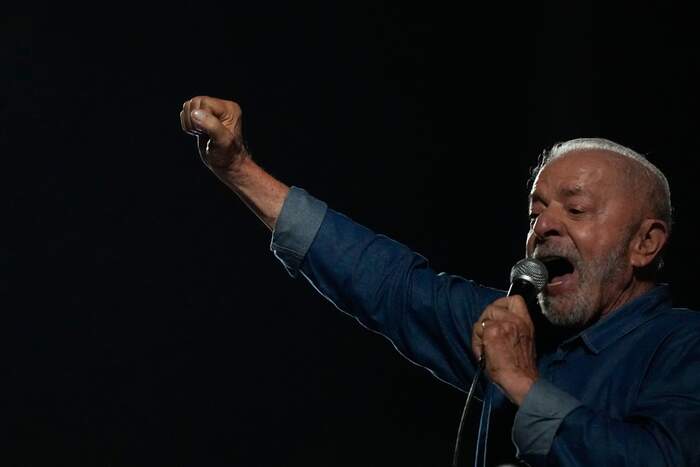

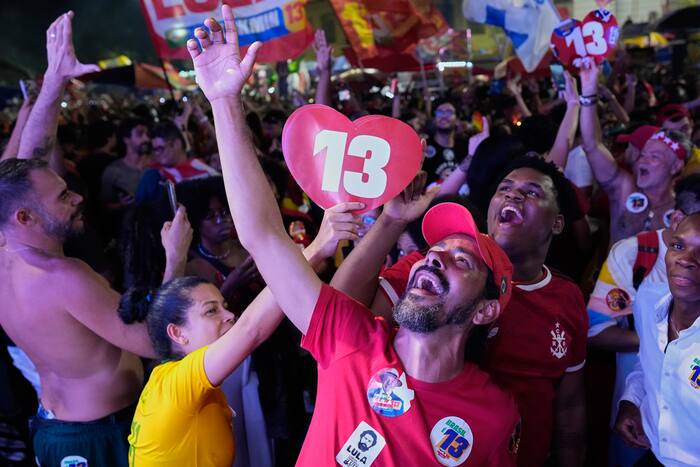
BRAZIL – Luiz Inácio Lula da Silva’s return to power after winning Brazil’s presidential runoff Sunday is already being tested. His rival, Sen. Flávio Bolsonaro, has challenged the result, raising the prospect of a confrontation between the country’s two deeply polarizing political camps.
Lula attracted 10 million additional voters in the runoff and is expected to take office on Jan. 5, 2027, beginning his fourth non-consecutive term. His victory will provide a counterweight in a region where governments are moving rightward and building closer ties with U.S. President Donald Trump. Bolsonaro, the son of former President Jair Bolsonaro, had pledged to strengthen relations with the Trump administration.
At a news conference Sunday, Bolsonaro said he intended to seek an annulment of the election after voting was extended nationwide at the request of both candidates. It remains unclear which legal mechanism he would use. His father similarly disputed his defeat by Lula four years ago and is now serving a 27-year prison sentence for attempting a coup.
Initial reactions from Brazil’s institutions and leaders throughout the region indicate that the result is likely to be accepted at home and abroad. Trump has not yet commented.
Despite the extension, Lula’s victory was decisive. The incumbent, who will soon turn 81, received more than 64 million votes, compared with just under 60 million for Bolsonaro—a margin of nearly 4%.
Kassio Nunes, president of Brazil’s electoral authority and a Supreme Court justice appointed by former President Bolsonaro, was among those who recognized Lula’s victory Sunday.
“This is a really uphill battle for Flavio Bolsonaro. Important Brazilian power brokers are closing ranks behind Lula, sometimes begrudgingly,” said Brian Winter, a Brazil analyst and editor-in-chief of Americas Quarterly.
“I sense that Brazilian power brokers that matter don’t really want to go down the path of a truly contested election,” he added.
Brazil’s voting system and Sunday’s disruptions
Brazil conducts general elections every four years, with electronic voting machines allowing officials to count ballots quickly and securely.
Authorities introduced the machines in the 1990s to combat fraud, and the system has remained largely dependable. Election results are typically announced only a few hours after polls close.
Before the 2022 election, Jair Bolsonaro repeatedly raised unfounded questions about the integrity of Brazil’s electronic voting system. No significant fraud has ever been found.
The normally orderly process was disrupted Sunday when officials made a last-minute decision to extend voting nationwide at the request of both candidates.
Lula sought the extension because of public transportation problems in metropolitan Sao Paulo and the northeastern city of Salvador, both strongholds of his campaign. Bolsonaro made his request after heavy rain affected southern states, where he had won by a wide margin in the first round.
A Supreme Court justice issued the decision just minutes before polls were scheduled to close at 5 p.m. Because Brazil’s counting system moves so quickly, many polling stations did not receive the announcement until they were already preparing to finish voting.
Still, the reliability of Brazil’s voting system and Lula’s substantial margin could make it difficult for Bolsonaro to establish grounds for annulling the results.
Lula will nevertheless face major obstacles in office, including intense political polarization, the possibility of a fiscal crisis and a right-wing Congress in which Bolsonaro’s party will hold more seats than any other.
“We shouldn’t underestimate the power of the Bolsonaro family,” Winter said. “They can make life difficult for Lula for weeks and months to come.”
___
Savarese reported from Sao Paulo.


