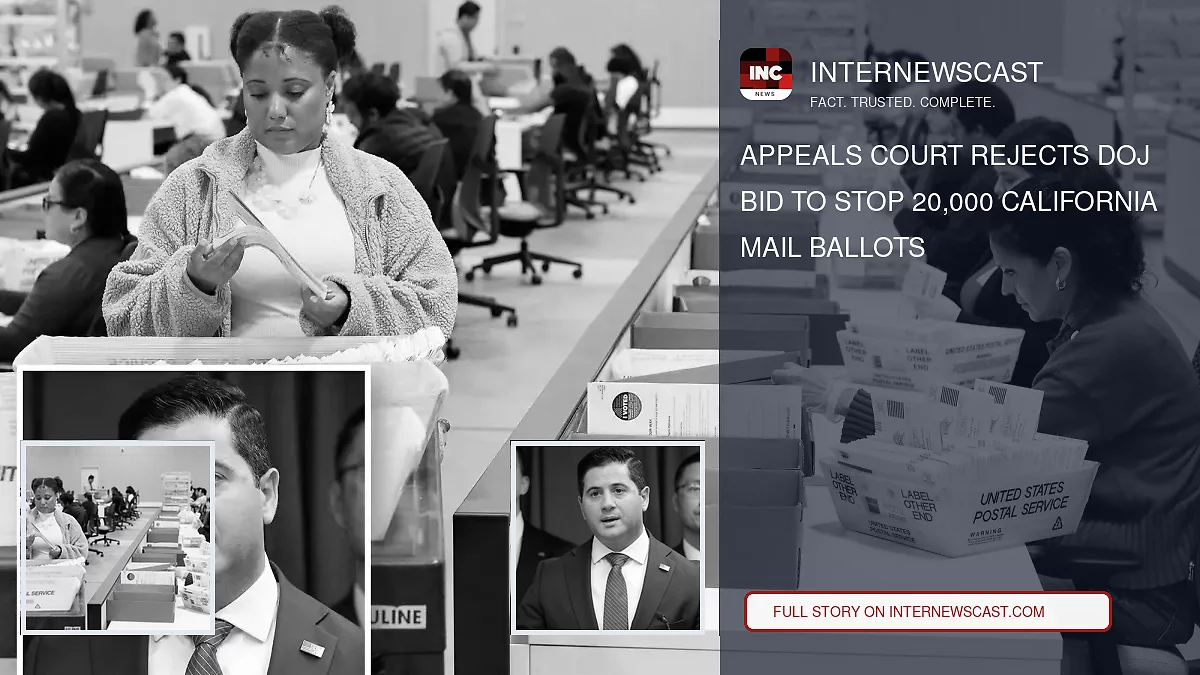

A federal appeals court on Monday declined the Justice Department’s emergency request to prevent California from counting more than 20,000 contested mail-in ballots, issuing its decision just days before the election.
In a 2-1 ruling, the 9th US Circuit Court of Appeals rejected the Trump administration’s effort to temporarily exclude ballots linked to voters whom federal officials suspect may not be US citizens.
Judges Mark Bennett and Gabriel Sanchez said the Justice Department had moved prematurely, noting that it filed the appeal before the lower court had adequate time to fully review the request.
The dispute followed DOJ claims that California election authorities had not taken sufficient steps to investigate and remove suspected noncitizens from the state’s voter registration lists.
The legal fight remains unresolved. A federal judge is scheduled to hear arguments in the case tomorrow.
Dissenting Judge Patrick Bumatay argued that the ballots were already arriving and could soon be impossible to distinguish from other votes once processed. “Those questionable ballots are now rolling in,” he wrote in a filing, adding that they “must be counted in the election.”
Bumatay said California’s legal arguments did not prevent the federal government from intervening to stop what he characterized as a failure to address the possibility of noncitizens voting in federal elections. He wrote that the court should have granted the requested relief because, in his view, allowing the ballots to proceed could encourage unlawful voting.
The Justice Department’s lawsuit alleges that California officials failed to comply with a 48-hour deadline for reviewing nearly 20,000 voter names the administration had flagged as suspicious.

Although the district judge had set a hearing for Oct. 27, the administration bypassed that schedule and took its request directly to the 9th Circuit Court of Appeals.
“If California will make available or submit its records, we can quickly put them through our established systems to determine who’s a citizen and who’s not,” First Assistant US Attorney Bill Essayli told Fox News last week.


