
By early October, Yellowstone National Park crews had removed more than 23,000 pieces of litter from geysers, hot springs, boardwalks and nearby areas. The haul also included an unusual assortment of international coins, golf tees and an inhaler.
The Yellowstone Geology Program recovered far more than paper and plastic waste. According to National Geographic, workers also collected approximately 10,700 rocks and sticks, over 360 hats, along with numerous camera lens caps, hair ties and pacifiers.
Among the more unexpected discoveries were five AirPods, three Delta flight pins, one Uno card, dental retainers and several rubber ducks.
The cleanup has reached a record level this year, with Yellowstone’s geology team overseeing the effort.
Members of the team receive specialized training in safely navigating the park’s hydrothermal areas, the Yellowstone Volcano Observatory said.
The volume of debris reflects Yellowstone’s enormous popularity. More than 4.7 million people visited the national park in 2025, according to the National Park Service.
As visitor numbers rise, litter can accumulate quickly in heavily visited locations, including Old Faithful and the Midway Geyser Basin.
Not every item is deliberately discarded. Food wrappers, maps and other lightweight objects can be caught by Yellowstone’s powerful winds and carried into sensitive areas.
“We believe that most of those are accidental,” Margery Price, a physical science technician with the Yellowstone National Park Geology Program, told National Geographic.
NEXT UP: Storm Boelo: Two Men Killed by Falling Trees as Recovery Efforts Begin
The Yellowstone Volcano Observatory warns that any foreign material can damage a hydrothermal feature by obstructing water flow, contaminating the water or blocking a channel used for runoff.
That risk applies even to natural objects such as rocks and sticks, which can gather together and clog the delicate systems beneath the springs.
Litter may also alter the chemistry of the pools. Chemicals released by microplastics can enter the water and disturb the microbes responsible for the vivid colors seen in Yellowstone’s hot springs.
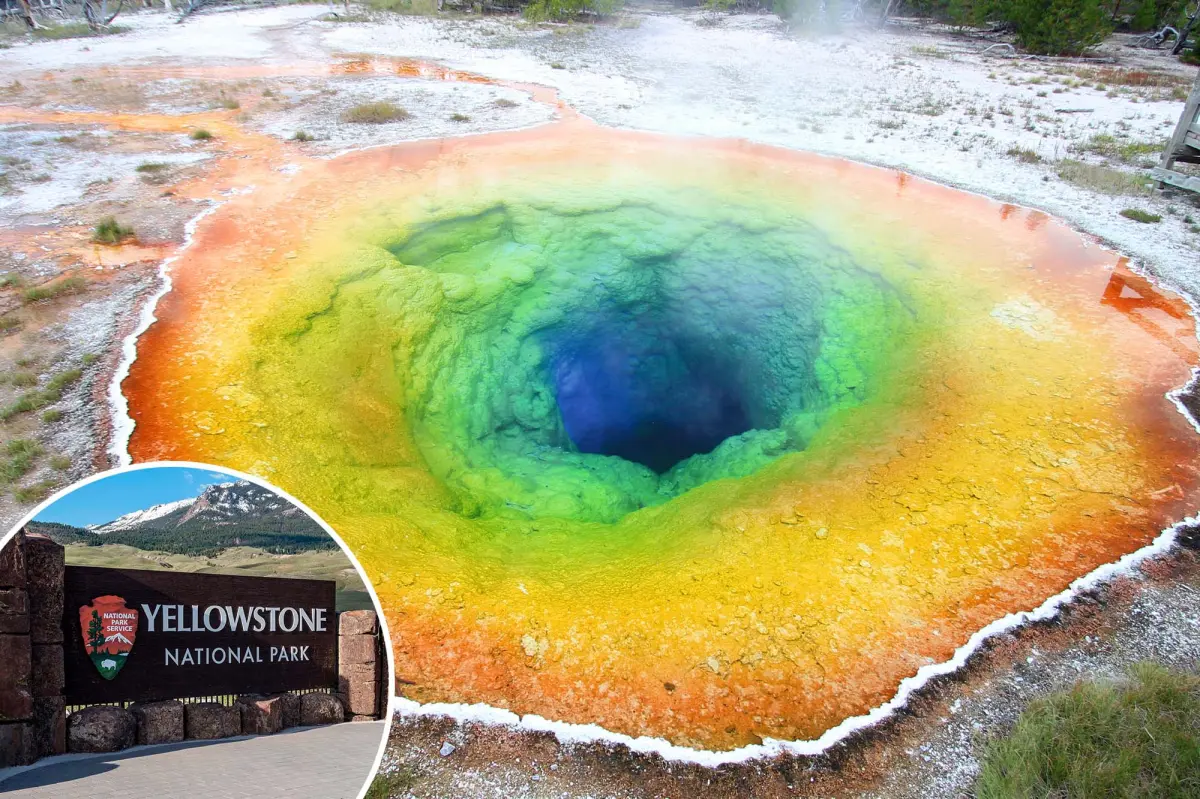
Morning Glory Pool, named for its resemblance to a blue morning glory flower, offers a lasting example of the damage caused by visitor debris. Its color shifted during the 20th century after people tossed trash and other objects into the spring.
Beginning in the 1950s, park staff reportedly referred to Morning Glory Pool as a “garbage can,” according to the observatory.
The accumulated debris lowered the pool’s temperature, creating conditions that allowed orange and yellow bacteria to flourish and gradually replacing its once-clear blue appearance.
Rangers partially drained Morning Glory Pool in the 1970s in an effort to remove the debris and restore its original color.
Despite that work, the pool never completely regained its former blue hue.
Fox News Digital contacted Yellowstone National Park for comment.