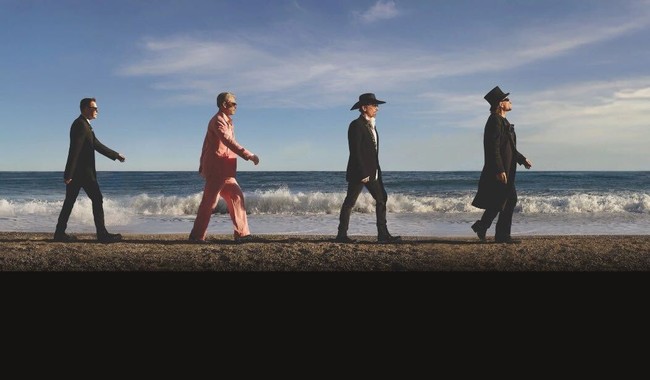
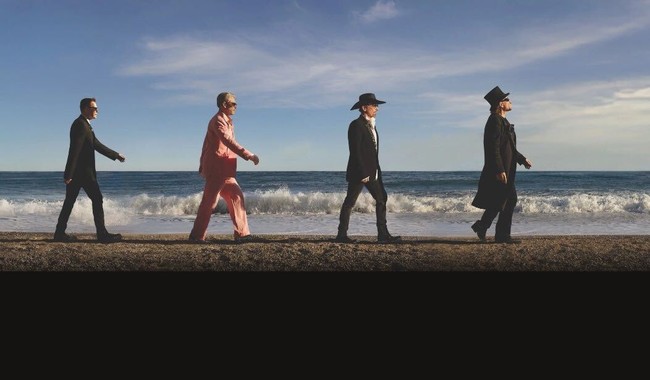
Every decade has its one musical act that, while perhaps not completely defining the decade in question, certainly left an indelible stamp on society as a whole. In the ‘50s it was Elvis. The ‘60s had The Beatles. For the ‘70s there was Led Zeppelin. The ‘80s? U2 owned them. Propelled by The Edge’s signature chime-and-sweep guitar work and Bono’s earnest vocals that were conscious of his conscience, the Irish quartet brushed aside all critics on their way to claiming the title of the biggest band in the world. However, unlike their predecessors to the throne, U2 forgot to either break up or become irrelevant. It can still fill football stadiums with ease, and on the increasingly rare occasions when it releases new material, it still creates a stir in music circles matched solely by the excitement felt by Taylor Swift fans when she puts out something fresh.
Although U2 has long since passed the point of youthful pop-culture relevance, it remains impactful on society as a whole; an integral part of the equation spelled out by the late, great Andrew Breitbart, who noted that politics is downstream from culture. So, yes, it does matter that it has released a new album regardless of whether someone likes them. “Carnaval De Luz” is U2’s first full-length studio album of new songs since 2017’s “Song of Experience.” It was worth the wait.
The members of U2 now range in age from 65 (Larry Mullen Jr.) to 66 (Bono). This is an age group that most musicians who belong to same, provided they found success during their younger days, either are retirees or workers of the golden oldies circuit. U2 apparently didn’t get the message, as “Carnaval De Luz” is replete with innovation as strikingly different from today’s norm as the band’s early works were from anything else previously heard in rock ‘n’ roll.
The album is more a collection of tone poems than traditional pop songs, with ideas allowed to flow and shift inside each tune to a level that should warm the heart of every jam band and progressive rock aficionado. No one is ever going to confuse U2 with the Grateful Dead or Yes, but there is a similar “why not go there” spirit permeating the album. Tunes fit the lyrics rather than the usual other way around, and striking use is made of a cappella vocal interludes between thunderous instrumental underpinnings. The result is less a collection of sing-alongs than listen- and think-alongs.
It’s not that the album is tuneless. Far from it. “Carnaval De Luz” bristles with a superb mix of melody and rock energy, starting with the staccato pulsing vibe of the album’s opening track “Go (Carnaval De Luz).” This is U2 at its most electronically minded, and it works.
YOU MIGHT ALSO LIKE: Democratic Socialists Launch Campaign Against Schumer, Jeffries
Looking for something more forceful and guitar-led? This album has that covered too (language warning).
Familiar elements surface across much of the album, but U2 is hardly coasting on nostalgia or trying to recreate its 1987 sound for a waiting audience. Bono’s lyrics largely avoid direct political commentary this time, turning instead toward spiritual questions, as heard on “Midnight Sunshine.”
You say God no longer cares for us
I say the stars are only there for us
Jacknife Lee’s production gives the record a noticeable edge without becoming exhausting. Its added punch keeps the music grounded as U2 moves across several different styles. “Street of Dreams,” the album’s most recognizably U2-like track, brings those competing strands together with particular confidence.
It is a sobering reminder of time passing that 2026 will mark U2’s 50th anniversary. Still, there is no need to reach for the gold watches just yet. “Carnaval De Luz” makes a persuasive case that, when rock ’n’ roll is done properly, it can keep a band young. U2 does it properly—and then some.


