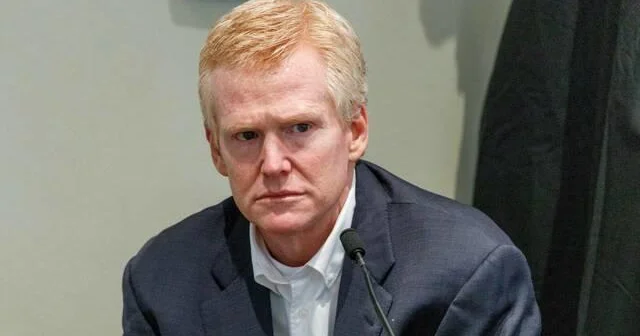

Attorneys for Alex Murdaugh asked a judge Friday to dismiss the indictments accusing him of murdering his wife and son, arguing that the lead investigator misled the grand jury.
Murdaugh is awaiting a retrial after the South Carolina Supreme Court overturned his convictions and life sentence. The court found that a clerk improperly influenced jurors during his 2023 trial.
Even if the judge grants the request, the decision may not derail or delay the disgraced lawyer’s planned April retrial. Prosecutors could simply seek new indictments, and defense attorneys acknowledged they would not oppose that effort.
Judge closes hearing with a pointed question
Judge Debra McCaslin did not rule immediately, saying she would issue a written decision next week. However, one of her final questions appeared to hint at how she may be viewing the case.
“If you had to go back to the grand jury, could you have it all done and ready to go by April 5th?” she asked prosecutor Creighton Waters.
“Your honor, I’m always working ahead,” Waters replied.
Dismissed indictments could bring another setback for investigator
If the indictments are thrown out, it would mark another legal setback for State Law Enforcement Division agent David Owen, the lead investigator in the Murdaugh case.
Last year, a judge dismissed a separate murder case involving Owen after the mother of the woman who died told him that her daughter had threatened suicide days earlier. Owen did not disclose that information to prosecutors or defense lawyers. The woman was later found dead in the same manner she had described to her mother.
Owen retired abruptly in 2024, shortly after being named State Law Enforcement Officer of the Year.
Prosecutors emphasized that the alleged failures in the earlier case involved evidence Owen withheld, while the disputed material in the Murdaugh investigation consisted of reports and evidence that had been available to the defense before the original trial.
Grand jury heard several disputed claims
Prosecutors allege that Murdaugh, 58, killed his wife, Maggie, and their younger son, Paul, at the family’s vast South Carolina Lowcountry property in 2021. He is already serving decades in prison for stealing millions of dollars from clients. In court, Murdaugh has admitted that he was a thief, insurance fraudster, dishonest lawyer and longtime opioid addict, but he continues to deny killing his family.
Defense lawyers said Owen told the Colleton County grand jury that blood spatter had been found on a T-shirt Murdaugh wore on the night of the killings. But an earlier state-agency report said no blood stains were found, and prosecutors did not introduce such evidence at trial.
Owen also allegedly told the grand jury that the unusual ammunition combination used to kill Paul—buckshot in one barrel and large birdshot in the other—was found in weapons throughout the Murdaugh property. Defense attorneys said that claim was inaccurate.
The grand jury may have heard extensive other evidence, including a video recorded by Paul Murdaugh in which Alex Murdaugh’s voice can be heard at the property. The recording contradicted Murdaugh’s claim that he had not been near the kennels around the time Maggie and Paul were killed.
But defense attorney Jim Griffin argued that the allegedly false blood evidence was the only testimony presented to the grand jury that directly connected Murdaugh to the location and timing of the killings.
“A phone call doesn’t put him there. The video doesn’t put him there,” Griffin said. “The blood from his murdered son sprang through the air—it’s raining back on him—puts him there.”
Prosecutors describe claim as an error and point to additional evidence
Prosecutors argued that the murder charges were supported by substantial evidence and wrote in court filings that “a single mistake is not bad faith.”
In addition to the kennel video, Owen told the grand jury about the family’s growing financial problems, guns missing from the property that could have been used in the killings, and Murdaugh’s increasingly desperate theft schemes, which were nearing exposure.
“This is what the agent understood at the time. And it’s ultimately not something that would cause a substantial effect on the grand jury or cast grave doubt when we look at all the other evidence that was presented,” Waters said.
Prosecutors contend Murdaugh killed his wife and son in hopes that the public sympathy surrounding their deaths would give him more time to conceal his financial crimes.
Murdaugh’s attorneys have repeatedly argued that the prosecution’s case contains little physical evidence. No DNA or blood was found on Murdaugh or his clothing, despite the close-range attacks involving powerful weapons that investigators never recovered.
“What we’re asking, your honor, is to reboot—to go back to square one,” Griffin said.
Although his murder convictions were overturned, Murdaugh remains imprisoned under separate sentences for financial crimes. The retrial’s outcome will not determine when he becomes eligible for release.


