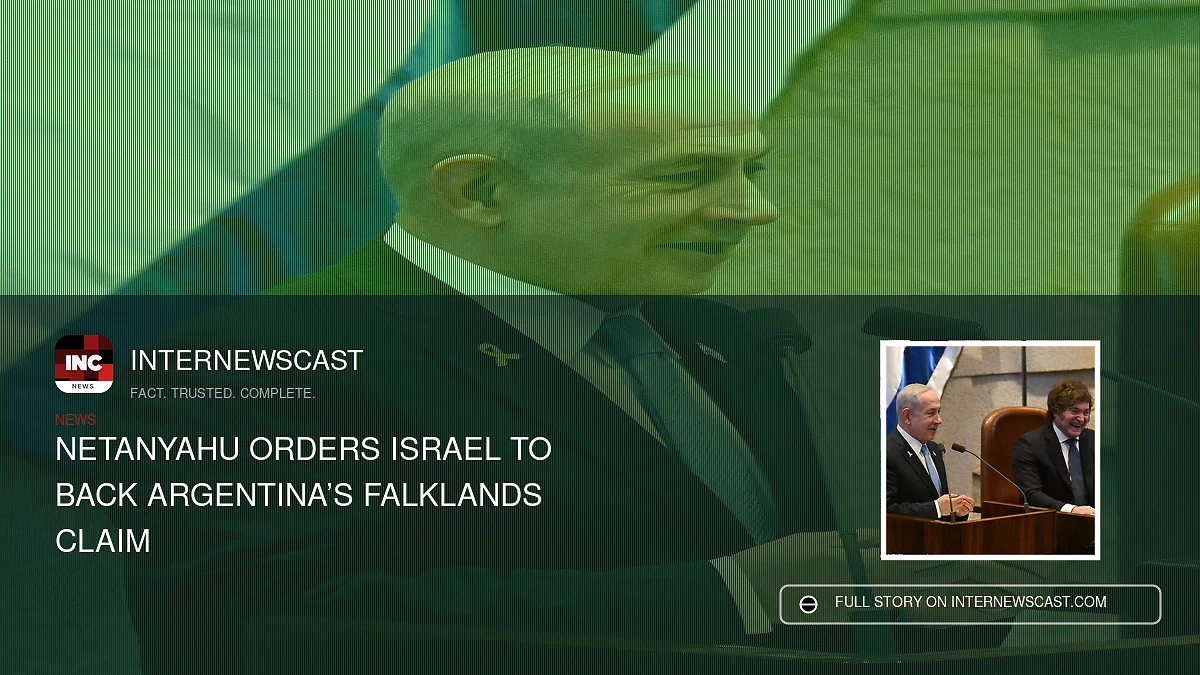

Benjamin Netanyahu has called on Israel to back Argentina’s claim to the Falkland Islands after Foreign Secretary Ed Miliband imposed economic sanctions on Israeli settlements in the West Bank.
According to The Telegraph, the Israeli prime minister instructed diplomats to revise the country’s official position and support Argentine President Javier Milei’s call for direct negotiations over the future of the South Atlantic islands.
Mr Netanyahu has also reportedly urged Israel to recognise Argentina’s historical ties to the disputed territory.
Mr Milei has intensified his campaign to put the Falklands — known in Argentina as Las Malvinas — back on the international agenda. Last month, he reiterated Argentina’s sovereignty claim during an address to the UN General Assembly in New York.
The archipelago lies about 300 miles off Argentina’s coast and has been a British overseas territory since 1833. Argentina’s military junta invaded in 1982, triggering the Falklands War, in which hundreds of service members from both sides were killed.
The reported shift in Israel’s position follows Mr Miliband’s announcement last month of sanctions against West Bank settlements, alongside accusations that Israel was engaged in “ethnic cleansing”.
The measures triggered a diplomatic dispute between Britain and Israel and contributed to the reorganisation of the British consulate in Jerusalem.
Mr Miliband said the sanctions would prohibit imports of all goods produced in the settlements and prevent companies from supplying services there, including finance, construction, infrastructure, property and advertising.

Benjamin Netanyahu has called on Israel to support Argentina’s claim to the Falklands

The archipelago, about 300 miles from Argentina, has been a British overseas territory since 1833, while Javier Milei is demanding direct talks over its sovereignty
Israeli Foreign Minister Gideon Sa’ar denounced the British measures as “despicable”.
He said Israel would remove UK representatives from a joint military centre overseeing the Gaza ceasefire and stop British training for Palestinian Authority security personnel in the West Bank.
Israel also banned a dozen British MPs and other UK citizens from entering the country. Mr Sa’ar accused them of involvement in “anti-Semitic and anti-Israel activity”.
RELATED: Barbara Eden, 95, Looks Youthful During Business Meeting Outing
Settlement building in the West Bank has accelerated under Mr Netanyahu’s ultranationalist coalition government.
The prime minister regards the territory, captured by Israel in 1967, as the biblical and historic homeland of the Jewish people.
Israel has not formally declared its support for Argentina. However, Mr Netanyahu’s reported change in stance has raised concerns that Jerusalem could side with Buenos Aires if Britain expands its sanctions.
Last month, Mr Milei’s government unveiled a wide-ranging security bill that would increase penalties for companies exploiting resources around the Falklands without Argentine approval. The legislation would also establish a national security council chaired by Mr Milei and give the military a larger role in safeguarding critical infrastructure.
Mr Milei has additionally pledged to stop an oil project near the islands. During a meeting on the sidelines of the UN General Assembly, he called on Britain to restart negotiations aimed at reaching “a peaceful solution to the sovereignty dispute”.

File image: Royal Marines guard Argentine prisoners during the 1982 Falklands War

Mr Netanyahu’s reported support for Argentina follows Ed Miliband’s sanctions announcement targeting West Bank settlements
‘Today I come to say that Argentina will not sit and wait for the UN and the international community to live up to their own mandate,’ he said.
He also sharply criticised the UN and its role, accusing it of becoming ‘a useless organisation that serves only to feed a caste of fatally arrogant parasites masquerading as well-intentioned bureaucrats’.
Prime Minister Andy Burnham responded by saying the UK’s position is ‘clear’ and that it will ‘stand firm’ in the face of any threats.
‘We will defend the right of the Falkland Islanders to self-determination and to remain British.’
In a 2013 referendum, the islanders voted overwhelmingly to remain a British overseas territory, with 99.8 per cent voting in favour and just three votes against.


