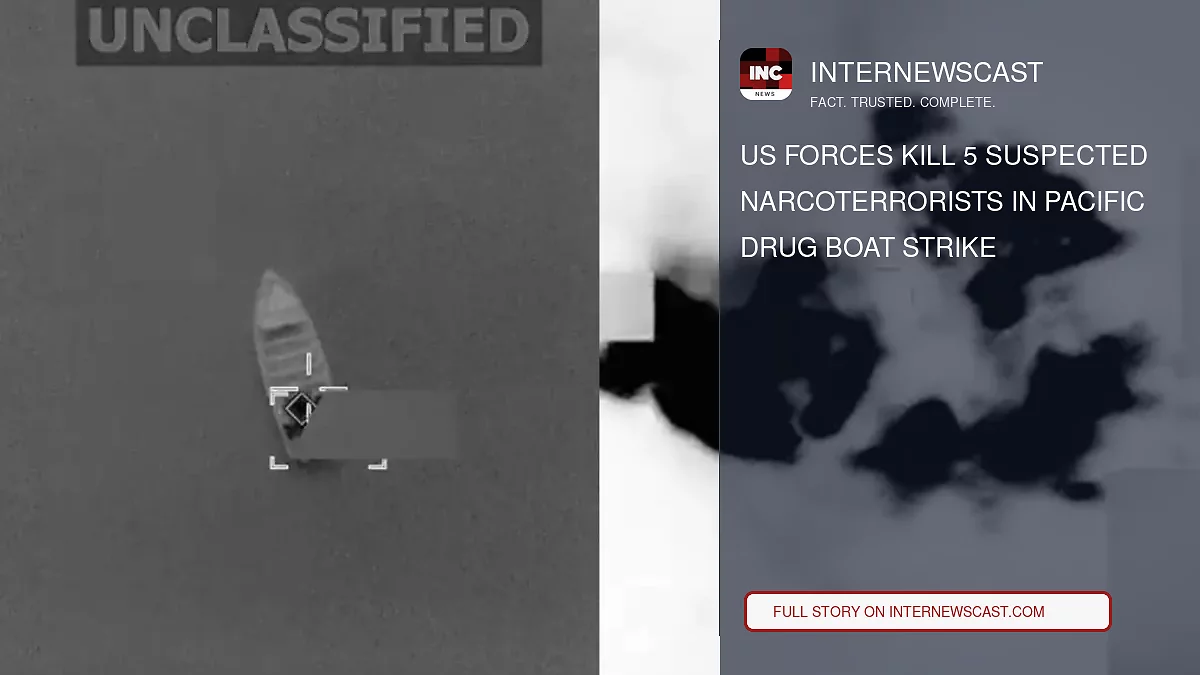

The U.S. military said Tuesday that it struck a boat suspected of drug smuggling in the eastern Pacific Ocean, killing five people. The operation is the latest in the Trump administration’s ongoing campaign against alleged traffickers in Latin America.
The strike raises the reported death toll from U.S. military attacks on boats to at least 240 people across more than 70 operations. The administration began targeting individuals it describes as “narcoterrorists” in September 2025.
As in many previous announcements involving strikes in the eastern Pacific and Caribbean, U.S. Southern Command said the operation took place along established smuggling routes. The command added that intelligence indicated the vessel was actively involved in narcotrafficking.
The military did not release evidence showing that the boat was carrying drugs. A video posted on X appeared to show a small vessel on the water before it was consumed by an explosion.
President Donald Trump has characterized the U.S. confrontation with Latin American cartels as an “armed conflict.” He has defended the strikes as a necessary escalation to slow the flow of drugs into the United States and prevent fatal overdoses. However, his administration has provided little evidence to substantiate its claims that those killed were “narcoterrorists.”
DISCOVER MORE: LA Probe: Teachers Created Hostile Climate for Jewish, Israeli Students
The operations have faced questions over both their legality and their effectiveness. Critics note that fentanyl linked to many fatal overdoses generally enters the United States overland from Mexico, where it is made using chemicals imported from China and India.
Democratic lawmakers and military legal scholars have subjected the strikes to intense scrutiny. In May, the Pentagon’s watchdog said it intended to examine whether the military followed its established framework for lethal targeting, including a commander’s intent, target development and operational execution.
The review, however, will not assess whether the strikes themselves were legal.
Tuesday’s operation was one of only a few to follow Secretary of State Marco Rubio’s September pledge to pursue approval from regional allies before conducting similar attacks.
Rubio told reporters that the United States had “the capacity to act unilaterally,” but argued that cooperation with allies was “the most effective way to do it.”
Comments Rubio made in Peru last month appeared to indicate a possible shift in policy. At the same time, he warned that the U.S. military would “still blow up ships if need be,” saying each action would be decided “strike-by-strike or operation-by-operation.”
EXPLORE MORE: Press Secretary Katie Zacharia Defends Calling Herself a Lawyer


