
For many prospective students, business school is no longer an automatic career move.
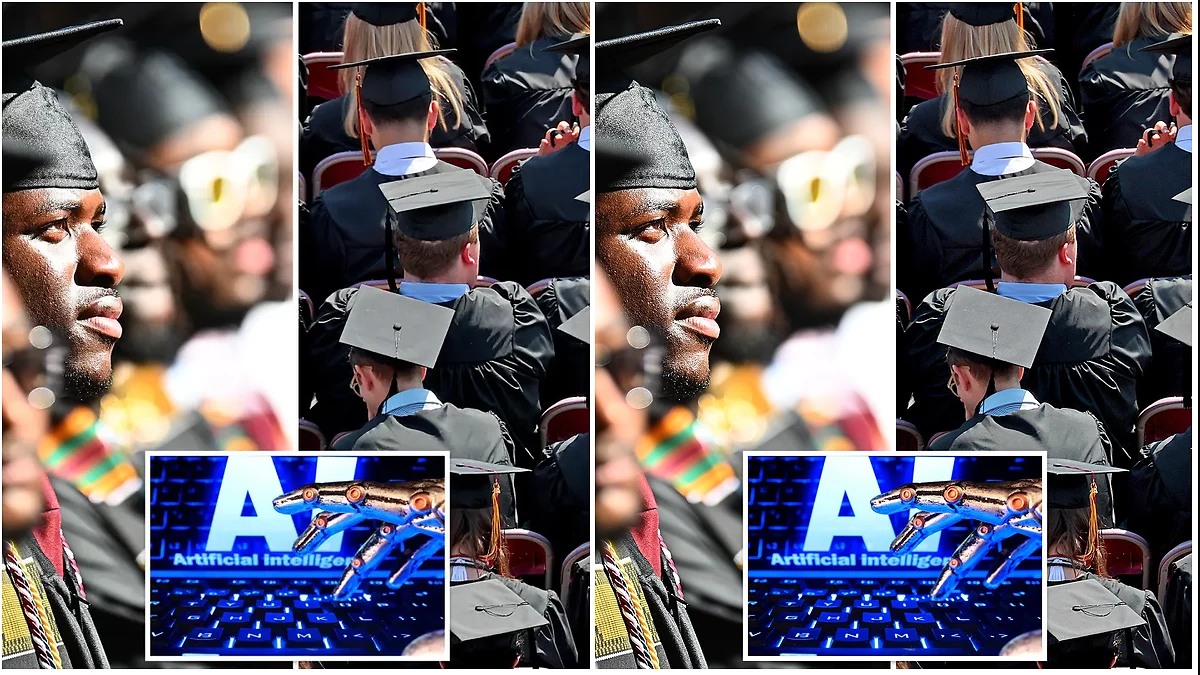
Applications to US MBA programs collapsed in 2026 as members of Gen Z grew more cautious about the economy and increasingly worried that artificial intelligence could eliminate traditional entry-level jobs.
Applications for full-time MBA programs enrolling the class of 2028 this fall fell 27% from the previous year, according to data released Tuesday by the Graduate Management Admission Council (GMAC).
The decline in the United States was significantly sharper than the worldwide downturn, where MBA applications dropped 13% year over year, the figures show.
More selective schools were affected less severely. Programs with acceptance rates below 40% recorded a 9% global decline in applications, while schools accepting more than 85% of applicants saw applications fall 21%.
Experts point to several factors behind the retreat, including changing visa rules and geopolitical uncertainty. However, 90% of the graduate business programs surveyed identified economic conditions as the primary reason for weaker demand, Fortune reported.
Recession concerns, corporate layoffs and a rapidly changing labor market were among the issues cited. Overall, 73% of programs said those developments had a moderate or major effect on applications, according to the study.
The shift represents a major departure from the traditional view of an MBA as a recession-resistant investment. In previous downturns, professionals often returned to school to strengthen their credentials and improve their chances of finding work.
That calculation may be changing as artificial intelligence reshapes the workplace. According to GMAC’s Corporate Recruiters Survey, one in three employers say they are replacing entry-level positions with AI. The survey included about 600 respondents, more than half of whom recruit for Fortune 100 or Fortune 500 companies.
There is still strong evidence that elite MBA programs can lead to lucrative careers. About 90% of 2025 graduates from the prestigious “M7” schools — Harvard, Stanford, Columbia, the University of Pennsylvania’s Wharton School, MIT Sloan, Northwestern Kellogg and the University of Chicago Booth — received job offers. At every one of those institutions, graduates who accepted positions reported median base salaries of at least $175,000.
Even so, tuition at leading MBA programs can exceed $300,000, prompting more prospective students to question whether the degree delivers enough value to justify the cost.
“[Gen Z] want a return on their investment that goes beyond salary: careers that feel stable and fulfilling, the flexibility to keep their options open, and work that makes a positive impact,” GMAC CEO and Stanford MBA graduate Joy Jones told Fortune. She urged business schools to provide greater transparency about the return on investment they offer.
“I believe the question isn’t whether business school rebounds, but which programs earn the trust of a generation that wants proof of value up front,” she added.