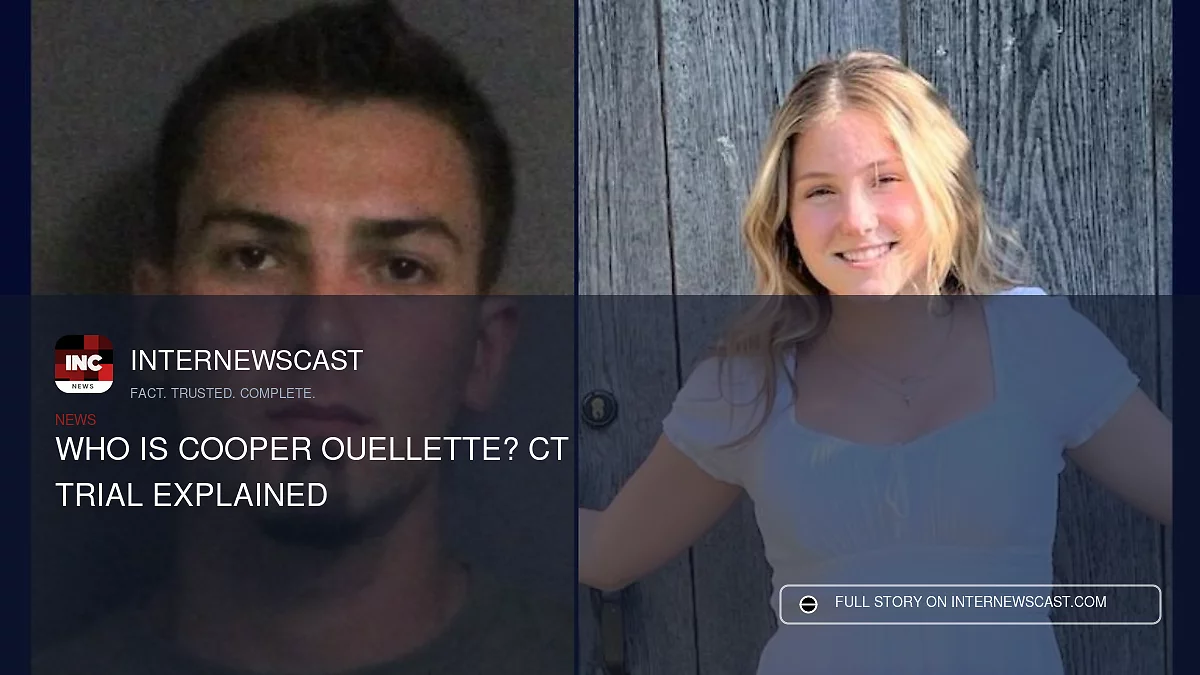

Cooper Ouellette is a Harwinton, Connecticut, man facing trial in connection with the 2023 death of 17-year-old Sophie Ringquist. Prosecutors allege that Ouellette drove a pickup truck recklessly after the pair left a party, causing Ringquist to fall or be thrown from the vehicle and later suffer fatal injuries. Ouellette has pleaded not guilty.
The case is sometimes described online as a “murder case,” but Ouellette has not been charged with murder. The criminal case, identified in coverage as State of Connecticut v. Cooper Ouellette, centers on charges of first-degree manslaughter and delivery of alcohol to a minor. The trial began in New Britain Superior Court on October 29, 2026, and testimony was continuing as of October 30.
Who is Cooper Ouellette?
Ouellette is a Connecticut resident from Harwinton. He was 18 when Ringquist died in May 2023 and is now 21. Public reporting about him has focused almost entirely on the criminal prosecution and the events surrounding Ringquist’s death.
According to police and court reporting, Ouellette and Ringquist had been in an on-again, off-again relationship. They attended a party in Terryville on the night of May 20, 2023, before leaving together in Ouellette’s Chevrolet pickup truck.
Ouellette was arrested in July 2024, more than a year after Ringquist’s death. He was released on a $50,000 bond and pleaded not guilty in New Britain Superior Court. The charges remain allegations unless and until they are proven beyond a reasonable doubt.
What happened to Sophie Ringquist?
Sophie Ringquist died shortly after midnight on May 21, 2023. Her parents took her to Bristol Hospital after she was brought home in Ouellette’s truck. She was pronounced dead at approximately 12:51 a.m.
The medical examiner described her fatal injuries as blunt-impact injuries to the torso. State police later classified the investigation as involving domestic violence, according to reports about the arrest and investigation.
The prosecution’s account is based on the arrest warrant, digital records, witness interviews, surveillance footage and evidence presented during the trial. Police allege that Ouellette and Ringquist argued at the party, then left together despite the conflict.
Investigators say Ringquist attempted to document part of the drive using her phone. The arrest warrant described video and audio that prosecutors interpret as showing the truck accelerating while the passenger-side door was open. Police allege that Ringquist fell or was forced from the moving truck, was struck, and was later brought back into the vehicle.
The warrant further alleges that Ouellette later stopped abruptly and ran over Ringquist with a tire after she became separated from the truck a second time. Police say he then drove her to her home and asked her family for help.
Ouellette reportedly told the family that Ringquist had been drinking, became sick and fell from the truck. His defense disputes the prosecution’s interpretation of the events and has challenged aspects of the state’s digital evidence.
What is the prosecution alleging?
The state’s case focuses on whether Ouellette’s conduct amounted to first-degree manslaughter under Connecticut law. Prosecutors allege that he engaged in behavior creating a grave risk of death and acted with extreme indifference to human life.
Evidence described in pretrial reporting includes:
- Messages Ringquist sent to a friend during the night, including one stating that she was scared.
- Snapchat activity and a selfie video recorded during the drive.
- Images that allegedly showed Ringquist with a bloody nose.
- Surveillance video from locations along the route and at Ringquist’s home.
- Life360 location data from the phones associated with Ouellette and Ringquist.
- Statements from people who attended the party.
- Physical evidence, including Ringquist’s clothing.
- Ouellette’s statements to Ringquist’s family and investigators.
During the first day of trial, prosecutors presented testimony from Ringquist’s mother, father and older brother, as well as Connecticut State Police detectives. The jury also heard audio from a phone video that prosecutors said captured a scream and the sound of a roaring engine.
Those details are part of the evidence being presented by the state. They do not, by themselves, establish guilt. The defense will have the opportunity to challenge the evidence, cross-examine witnesses and present its own account.
What does the defense say happened?
Ouellette’s reported position is that Ringquist fell or jumped from the moving truck rather than being intentionally struck. His defense has questioned the reliability of the Life360 data and other technical evidence used by investigators to reconstruct the drive.
The defense has also challenged the state’s interpretation of the phone video, location data and the sequence of events. Because the trial is ongoing, the full defense case and whether Ouellette testifies remain matters for the proceedings themselves.
It is important to distinguish between the arrest warrant and proven trial evidence. An arrest warrant presents the police version of events and is used to establish probable cause. The jury must decide whether the evidence admitted at trial proves each charge beyond a reasonable doubt.
FIND OUT MORE: Eight Young Girls Abducted in Mysterious 1980s Kidnapping Cases
Why is Life360 evidence important in the trial?
Life360 is a location-sharing application that can provide movement data from connected mobile phones. Investigators had the data from Ouellette’s and Ringquist’s phones analyzed as part of their effort to reconstruct where the pair traveled that night.
The prosecution argues that the location data helps establish the timing and route of the truck, including stops, movements and the points at which Ringquist may have been outside the vehicle.
Ouellette’s defense argued that the data could not reliably determine details such as the truck’s exact speed or position at every moment. After a pretrial hearing, Judge Chris Pelosi ruled in October 2026 that prosecutors could present the Life360 evidence to the jury.
The ruling does not determine whether the data is accurate or persuasive. It means only that the evidence may be considered by the jury, which will decide how much weight to give it.
What charges does Cooper Ouellette face?
Ouellette faces two central criminal charges:
- First-degree manslaughter: The charge concerns the circumstances that led to Ringquist’s fatal injuries.
- Delivery of alcohol to a minor: Prosecutors allege that alcohol was supplied during the events preceding Ringquist’s death.
Some coverage has used the phrase “vehicular manslaughter,” but Connecticut case reporting and pretrial coverage have generally identified the principal charge as first-degree manslaughter. Regardless of the wording used in headlines, Ouellette is not facing a murder charge in the case described by the available court coverage.
What is the current status of the CT v. Cooper Ouellette trial?
The trial began on October 29, 2026, in state Superior Court in New Britain. Testimony continued on October 30, with additional evidence from police investigators following emotional testimony from Ringquist’s family.
As of October 30, 2026, there was no reported verdict. The proceedings remained active, and the court was expected to hear further testimony about the investigation, the digital evidence and the events surrounding Ringquist’s death.
Separately, Ringquist’s family filed a wrongful-death lawsuit naming Ouellette, a liquor store and people connected to the party. That civil action is separate from the criminal prosecution and involves a different legal standard and different potential remedies.
Frequently Asked Questions
-
Who is Cooper Ouellette?
Cooper Ouellette is a Harwinton, Connecticut, man charged in connection with the 2023 death of 17-year-old Sophie Ringquist.
-
Was Cooper Ouellette charged with murder?
No. The case is sometimes described online as a murder case, but the reported criminal charges are first-degree manslaughter and delivery of alcohol to a minor.
-
What happened to Sophie Ringquist?
Ringquist suffered fatal blunt-impact injuries after a night involving a party, alcohol and a drive in Ouellette’s truck. Prosecutors allege she was struck by the vehicle. The defense disputes the state’s account.
-
When did Sophie Ringquist die?
Ringquist died shortly after midnight on May 21, 2023, after being taken to Bristol Hospital.
-
When was Cooper Ouellette arrested?
Ouellette turned himself in and was arrested in July 2024, more than a year after Ringquist’s death.
-
What evidence is central to the trial?
The case includes phone video, text messages, Snapchat activity, surveillance footage, Life360 location data, witness statements and physical evidence.
-
What does the defense argue?
The defense has challenged the state’s reconstruction of the incident and questioned the reliability of digital location evidence. Ouellette’s reported account is that Ringquist fell or jumped from the truck.
-
Has Cooper Ouellette been found guilty?
Not as of October 30, 2026. The trial was still underway and no verdict had been reported.
The Cooper Ouellette case concerns a disputed reconstruction of the final minutes of Sophie Ringquist’s life. Prosecutors say Ouellette’s driving and conduct created the deadly circumstances; the defense contests that interpretation and the reliability of key digital evidence. Until the jury reaches a verdict, the allegations remain unproven.


