
Donald Trump has authorized defensive strikes against Iranian targets on Qeshm Island in the Strait of Hormuz, a U.S. official said, just one day before the midterm elections.
Iranian state television reported hearing explosions on the island. The U.S. official, who was not authorized to speak publicly and requested anonymity, said the strikes targeted Iranian personnel using surface-to-air missiles against American assets.
The action appeared limited rather than the start of a renewed full-scale conflict. It nevertheless came after Trump had said the United States would not launch new strikes against Iran before Tuesday’s midterm elections.
The unpopular war, along with its effects on U.S. gasoline prices and the broader economy, has left Republicans vulnerable as they seek to retain control of Congress.
Tensions are already high across the region, where governments are watching closely for signs that the United States could resume major military operations against Iran. The latest strikes, first reported by The Wall Street Journal, are likely to intensify those concerns.
Behind the scenes, backchannel negotiations are continuing as Israel and several Middle Eastern allies press Trump over the next steps in the more than eight-month-old conflict, which has shaken global markets and devastated Iran.
Iranian state television also reported explosions on Qeshm Island. The U.S. official said Iranian forces using surface-to-air missiles against American assets were among those targeted.
The strikes appeared narrowly focused and did not signal an immediate return to full hostilities. They came, however, on the eve of closely watched American midterm elections.

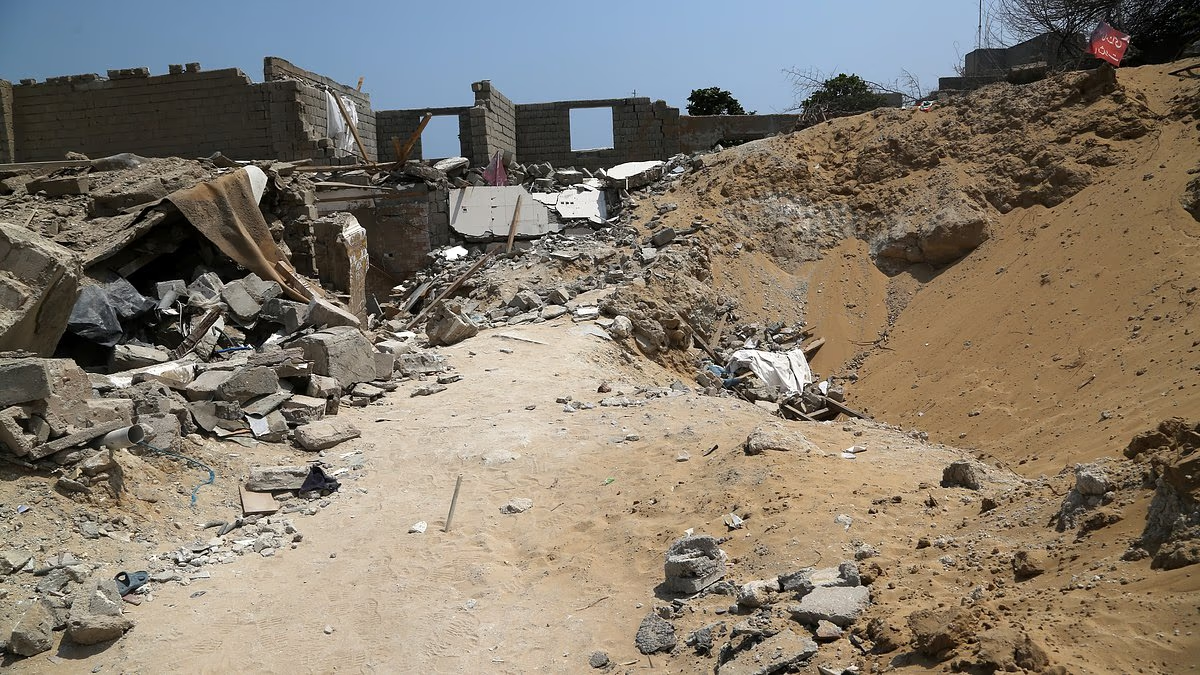
Donald Trump authorized defensive strikes against Iranian targets on Qeshm Island in the Strait of Hormuz just one day before the midterm elections, according to a U.S. official. Pictured: A building on the island destroyed in September

Trump had previously said the United States would not strike Iran before the midterm elections
Trump had previously insisted that the United States would not launch strikes against Iran before the midterms.
“We had a war with Iran. We won,” the president said Monday.
“I don’t know if you even call it a war because we haven’t been doing any fighting for months.”
During an appearance with Sean Hannity on Monday night, Trump similarly suggested that active combat had ceased months ago.
“I mean, what’s a war? A war is a war, a war is fighting. Take a look at World War I, World War II, there’s fighting. When was the last time you saw us fighting with them? We go months and months.”
He later argued that the ongoing confrontation should not be described as a war.
“This isn’t a war. It’s a very soft war. But this isn’t like a war that’s going on. There’s no war raging. It could happen if they don’t make a deal,” he said.
Officials told The Wall Street Journal that the strikes were intended to prevent Iran from attacking allied vessels in the Strait of Hormuz.
YOU MIGHT ALSO LIKE: Demi Moore Stuns Among Best-Dressed Stars at CFDA Fashion Awards

The Ateela 2 oil tanker navigates the waters off Qeshm Island, Iran, in the Strait of Hormuz, on April 28, 2026

Earlier Monday, Vice President JD Vance expressed cautious optimism that an agreement could still prevent Trump from carrying out his threat to order additional strikes against Iran after the midterm elections
This news outlet has contacted the White House, U.S. Central Command and the Pentagon for comment.
The politically damaging Iran war, and its impact on U.S. fuel prices and other parts of the economy, has become a significant concern for Republicans fighting to preserve their congressional majority.
The administration was last known to have conducted attacks in early September. Thousands of American troops, however, remain in waters near Iran enforcing a naval blockade designed to stop tankers carrying Iranian oil from reaching global markets.
A third aircraft carrier and thousands of additional troops are also being deployed to the Middle East.
Earlier Monday, Vice President JD Vance voiced guarded hope that negotiators could still reach an agreement and avert Trump’s threat to order fresh strikes after the midterm elections.
Vance sent a letter last week to Iran’s security chief, Mohsen Rezaei, though the White House has disclosed little about its contents.
Trump told reporters that the letter concerned assistance for Iran, including “medical supplies and various things.”
Vance nevertheless indicated Monday that there were reasons to believe Washington and Tehran might still reach a deal.
“We’ve had a number of good conversations with the Iranians,” Vance told reporters when asked about the letter.
“I actually just spoke with the president of the United States about an hour ago about this. Look, the president and I both feel pretty good about the prospects for potentially coming to a negotiated settlement. We’re going to keep on working at it.”
Vance spoke as governments across the region remained deeply concerned that the United States could return to full-scale military operations against Iran.
The confidential diplomatic efforts are unfolding as Israel and several Middle Eastern allies urge Trump to adopt a particular course in the eight-month-old conflict, which has disrupted global markets and inflicted heavy damage on Iran.
Iran is seeking guarantees that the United States will honor its commitments under any future agreement.
The United States and Israel have each attacked Iran twice while Tehran was engaged in negotiations over its contested nuclear program.
Iranian officials have publicly maintained that the country is prepared to pursue either war or diplomacy.
Iran’s new supreme leader, Ayatollah Mojtaba Khamenei, met with senior military commanders and said any response to “any kind and level of threat” from the United States or Israel must be immediate and extend beyond “geographic limits.” He also called for expanding the list of possible targets.


