
Nathalia Filgueiras, the co-pilot of a Learjet that erupted into flames after crashing in Palm Beach, Florida, told her boyfriend she was encountering turbulence just moments before the aircraft went down, according to her family.
The 20-year-old pilot was messaging her boyfriend Justin, who is also a pilot, about severe weather in the minutes before Sunday’s crash, which killed nine people.
Her family told the New York Post that Filgueiras warned him: “I’ve got turbulence, I’ve got ice.”
Filgueiras was a passionate aviator who earned her pilot’s license at just 17. Despite her age, she had already logged more than 1,300 hours of flight time.
She regularly posted photographs on social media showing herself flying alongside her pilot boyfriend.
The cause of the Learjet crash remains unknown. The National Transportation Safety Board has opened an investigation into the disaster.
An early review of flight data and radar imagery suggests the Learjet entered a rapidly intensifying thunderstorm, according to The Palm Beach Post.
Meteorologist Matthew Cappucci told the newspaper that the storm developed at remarkable speed on Sunday morning, with its clouds rising 15,000 feet in only 20 minutes.
By the time of the crash at 12:50 p.m., the storm clouds had reached 48,300 feet. Just minutes earlier, the pilot had asked air traffic control to raise the Learjet’s altitude from 35,000 feet to 37,000 feet because of heavy rain.

A meteorologist said the doomed Learjet may have flown directly into the eye of a thunderstorm before crashing in Palm Beach, Florida

Co-pilot Nathalia Filgueiras, 20, was heard warning air traffic control about the unfolding emergency moments before the jet crashed
The aircraft issued a mayday call moments later. In audio recordings, Filgueiras can be heard urgently warning ground controllers that the plane was descending.
“Descending 20,000ft per minute… we’re going to crash into the ground,” the co-pilot said. In the background, the pilot, whose identity has not been released, could be heard reciting the Lord’s Prayer.
Filgueiras was identified as the aircraft’s co-pilot on Monday. Her family said she grew up in Palm Beach County and developed a deep passion for aviation.
After receiving her pilot’s license at 17 in 2023, Filgueiras appeared on local television to mark the achievement.
She told CBS12: “I definitely do brag because people say, ‘Oh, you can’t drive,’ and I’m like, ‘Yeah, but I can fly.’”
Her mother, Camila, frequently shared photographs of Filgueiras and her siblings traveling on private jets. Her father, Allan, also held a pilot’s license.
RELATED: South Korea Sets Sights on World-Leading Sovereign AI Model
“She loved the freedom. It was completely different seeing the world from the top,” Camila told The New York Times.
Cockpit audio captured the young co-pilot trying to explain the emergency aboard the Learjet 60 as it approached its final moments.
She appeared to say that the aircraft had banked 60 degrees, indicating an extreme sideways tilt, while also reporting changes in altitude. Beside her, the distressed pilot continued reciting the Lord’s Prayer.
Our News Outlet has chosen not to publish the final seconds of the recording because the audio is extremely distressing.

Nathalia Gadelha Filgueiras, 20, was co-piloting the Learjet 60 when it crashed near West Palm Beach on Sunday

Aviation experts have suggested that the $2 million jet may have been brought down by a phenomenon known as coffin corner
Flight data shows that the Learjet had departed Austin, Texas, bound for North Eleuthera in the Bahamas. Its journey came to an abrupt end near West Palm Beach.
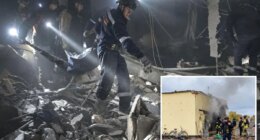
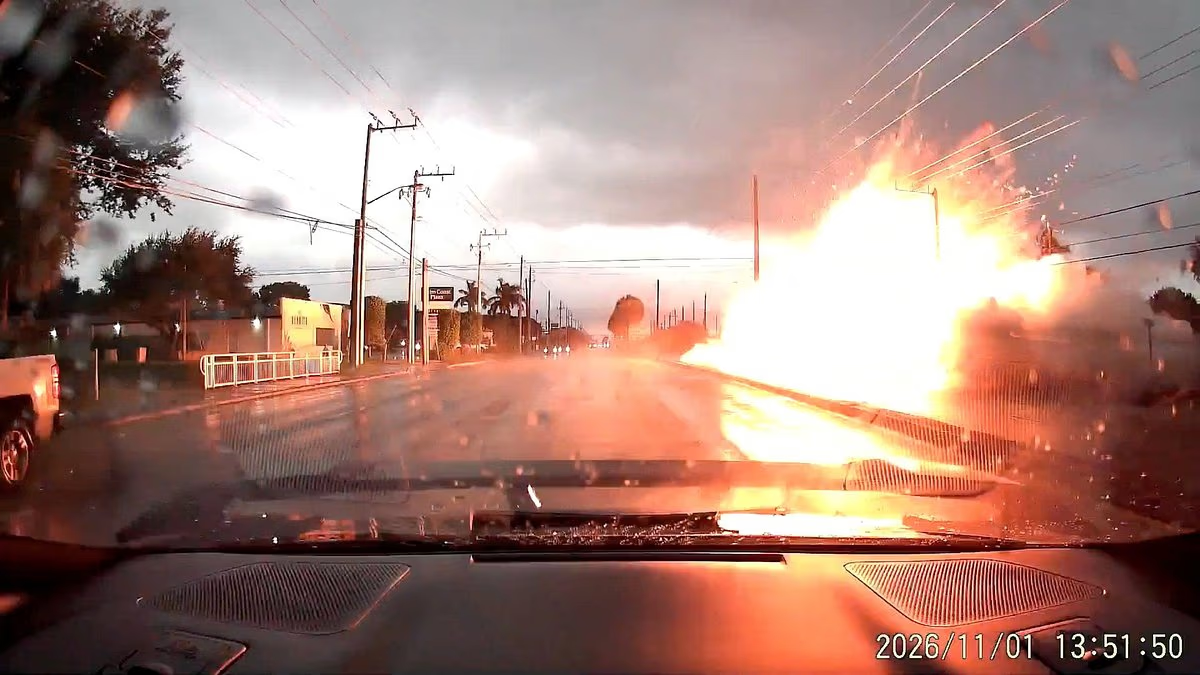
The crash scattered debris over a wide area and tore a huge crater into the road. Authorities said no one on the ground was injured or killed.
The aircraft came down about eight miles from President Trump’s Mar-a-Lago country club. The president and Air Force One had departed Palm Beach International Airport roughly an hour before the crash.
Investigators have yet to determine what caused the tragedy. Some aviation specialists have suggested the Learjet may have encountered “coffin corner” while attempting to climb above two storm systems, or cells.
Coffin corner occurs at high altitude when an aircraft’s minimum safe speed and maximum safe speed become dangerously close, leaving pilots with only a narrow margin in which to operate.
If the aircraft slows too much or accelerates beyond the safe range, it can stall and rapidly become uncontrollable.

The crash carved a huge crater into the middle of the road and damaged nearby infrastructure

Officials do not expect the road where the plane crashed to reopen for another month
Former pilot Martin Varsavsky, who now runs an artificial intelligence company, wrote on X that severe weather may have contributed to the fatal incident.
“The radars clearly showed those cells; in light jets, the rule is to deviate with a good margin, not to fly through them – this could be an error by the woman who was piloting,” he wrote.
“What storms do by changing the outside temperature is that airplanes can no longer stay aloft at the same speed. It’s called the coffin corner. Or they become very difficult to keep under control.”