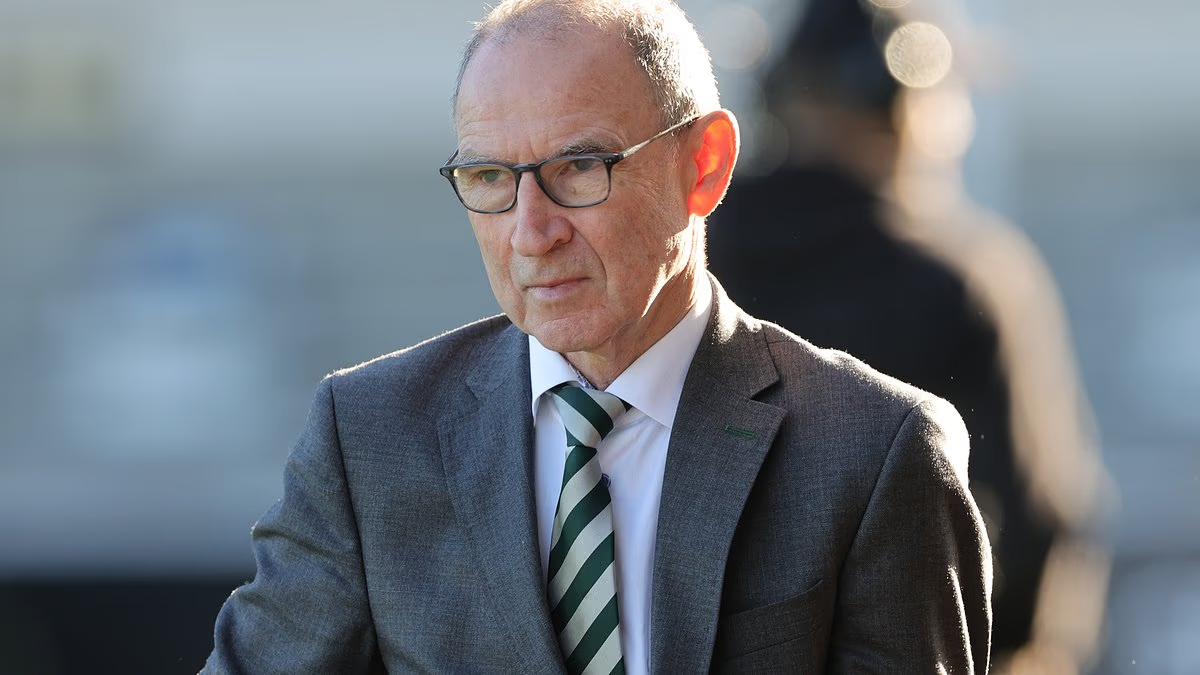

After leading Celtic to a dramatic league triumph on the final day of last season, Martin O’Neill should perhaps have recognised that he had reached the perfect closing scene.
It had been a turbulent campaign in which he rescued Celtic from crisis not once, but twice. That victory offered the ideal moment for the story to end.
It was the kind of Hollywood finale every manager dreams of: a glorious departure, a legacy secured and a chance to walk away at the absolute peak.
Instead, O’Neill chose to remain in charge for another season, and the decision increasingly looks like a serious mistake. Deep down, he must surely recognise that the current situation is no longer sustainable. The chapter appears to be over.
Following last weekend’s 2-0 defeat by Falkirk, O’Neill’s continued presence at Celtic is now beginning to threaten the reputation he built during his first spell at the club.
Supporters are turning against him. The achievements of more than two decades ago no longer carry the same weight, while his humour and familiar stories about Celtic’s past are doing little to ease the frustration.
The fans are focused on the present and on the football unfolding in front of them. With just three victories from their last ten matches, O’Neill’s Celtic side appear to be losing momentum rather than recovering it.
His repeated insistence that Celtic remain top of the league feels less like reassurance and more like an attempt to deflect attention from the team’s problems. For many supporters, that argument is increasingly difficult to accept.

Martin O’Neill’s Celtic team lead the table but have struggled to convince
That is the heart of the issue. If there is genuine evidence that O’Neill has lost the confidence of his players, he is now also in danger of losing the backing of the Celtic support.
There is an undeniable sadness to the way events have unfolded. O’Neill is 74 and did not initially seek a return to such intense scrutiny.
Twice last season, he responded to emergency appeals from Dermot Desmond. On both occasions, he answered the call and delivered precisely what Celtic needed from him.
Had the club possessed a clear succession plan, O’Neill’s future would not even have been a major issue after last season. The natural conclusion would have been to thank him for a remarkable rescue mission and give him a final celebration after securing a league and cup double.
Yet by the closing weeks of the campaign, it was obvious that O’Neill had rediscovered his appetite for management. He was unlikely to walk away voluntarily, and the board seemed equally unwilling to reject the opportunity to keep a club legend in the dugout.
The situation ultimately required one of two things. O’Neill needed to step back and consider whether remaining in the role was genuinely best for Celtic, or the club needed to show ambition by appointing a manager for the long term.
Neither happened. O’Neill stayed in the hope of making another impact in Europe, while Celtic’s board appeared to believe that retaining an iconic figure offered protection from criticism.
The justification repeated throughout the summer was that winning the title had earned O’Neill the right to continue.
Technically, that was true. He is Martin O’Neill, and only Jock Stein occupies a higher place in Celtic’s managerial history.
The supporters once adored him. But earning the right to stay and it being wise to stay are two entirely different questions.

Celtic manager Martin O’Neill lifts the league trophy back in May
Imagine, for argument’s sake, that Manchester United eventually dismiss Michael Carrick and Sir Alex Ferguson returns for a short spell.
Suppose the results improve, the team start winning again and supporters feel the old excitement returning.
Would that automatically make it sensible to hand Ferguson the job for another full season? Clearly not.
Celtic made a damaging mistake by allowing affection and nostalgia for O’Neill to overshadow the practical demands of building a team for this season.
The club had no convincing plan for the summer, and it appears no better prepared to identify a replacement now should O’Neill be removed.
Celtic have previously parted company with Tommy Burns and Billy McNeill. The notion that O’Neill is somehow beyond the possibility of dismissal is deeply unrealistic.
A growing number of supporters now see him as little more than an extension of Desmond’s influence. As a result, his once-unquestioned standing as a Celtic icon is beginning to erode.
Over the weekend, attention also returned to articles published several years ago, following O’Neill’s dismissal as Nottingham Forest manager in 2019.
Those reports described a manager who had lost the dressing room and whose players were reportedly puzzled by what they viewed as a lack of tactical detail.

Some Celtic fans view O’Neill as little more than an extension of major shareholder Dermot Desmond
The similarities with the current Celtic situation are difficult to ignore, particularly when considering recent comments from Callum McGregor and Cameron Carter-Vickers.
At present, the team appear to lack a clear tactical identity. It is difficult to see how that will change while O’Neill, Shaun Maloney and Mark Fotheringham remain responsible for the coaching operation.
On Monday evening, O’Neill joined chief executive Michael Nicholson and chairman Brian Wilson at a question-and-answer event hosted by a supporters’ club in Greenock.
Celtic issued an unusual statement yesterday describing the questioning as “hard but fair” as fans raised concerns about the club’s current decline.
The person who continues to avoid that level of public scrutiny is Dermot Desmond, Celtic’s largest shareholder and the figure widely regarded as the club’s ultimate authority.
That leaves Celtic facing an increasingly unavoidable question: what convincing reason remains for Martin O’Neill to continue as manager?


