
Ending the long-running educational disadvantage faced by white working-class pupils will require action across society, according to the chair of an inquiry into the issue.
Baroness Morris has launched the next stage of her landmark review, warning about the consequences of failing to address the problem.
The Independent Inquiry into White Working Class Educational Outcomes was commissioned by the multi-academy trust Star Academies and is supported by the Department for Education.
The review’s first phase, published during the summer, found that 36 per cent of white British pupils eligible for free school meals achieved grade 4 or higher in English and maths GCSE. That compared with 72 per cent of pupils who were not receiving free school meals.
The inquiry also found that 52 per cent of white working-class pupils believed they were likely to attend university, compared with 82 per cent of their peers.
It concluded that once-in-a-generation reforms were needed to repair an education system that was “not serving the interests of white working-class children”.
The next phase will examine practical ways to give children a stronger start in primary school, while improving routes into qualifications and employment for teenagers aged between 14 and 19.
Baroness Morris, the inquiry’s co-chair and a former Labour education secretary, said: “Our report on white working class educational achievement clearly highlighted the extent of the challenge and the consequences of failing to do anything about it.

Baroness Morris, who is chairing the inquiry, said white working-class pupils need “action across society” to tackle their chronic underachievement at school
“We can’t stop there. Our next phase of work will be led by experts in the field and will consider what needs to be done. This isn’t just the responsibility of schools; it requires action from across society. The partnerships we bring together can play a powerful role in starting this work.”
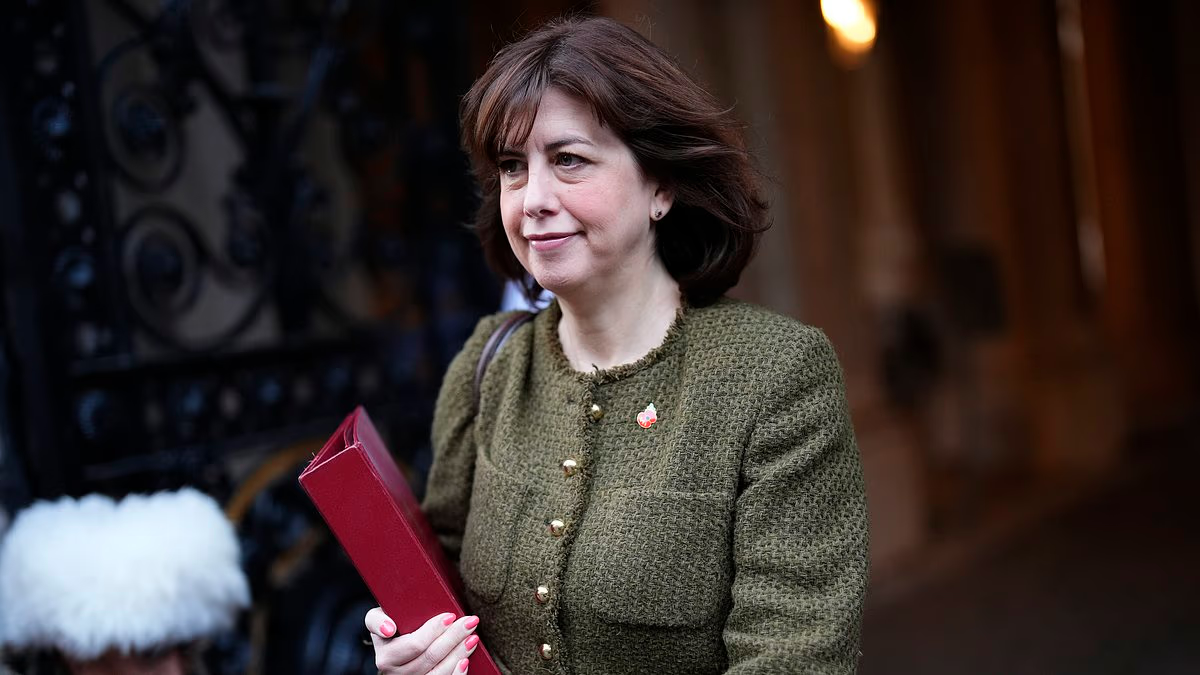
Education Secretary Lucy Powell said: “A child’s background should never mean that opportunity belongs to someone else. But right now, too many white working-class children are falling behind at every stage of their education.
“That is why I am backing this independent inquiry to get to the heart of the barriers holding children back—from their first steps into school to the opportunities and choices available to them as teenagers, including further study, training or work.”
The inquiry gathered evidence from thousands of young people and their parents, as well as hundreds of teachers.
As part of the year-long review, researchers also analysed education data relating to the 1.25 million white British young people in England who receive free school meals.
The inquiry, co-chaired by Sir Hamid Patel, found growing scepticism among white working-class families about whether education can deliver future success.

Education Secretary Lucy Powell backed the independent inquiry, saying: “A child’s background should never mean opportunity belongs to someone else”
It found that many families place greater value on the social experience of school and want vocational choices, including apprenticeships, to receive more emphasis. However, the education system has often prioritised academic progression towards higher education.
The inquiry said the real extent of white working-class disadvantage is “likely to be substantially larger”, because the data examined did not include low-income families who were not eligible for free school meals.
Since then, eligibility for free school meals has been extended to all families receiving Universal Credit.
The project’s next stage will produce practical advice for the Government, schools and other organisations working with white working-class pupils.
It will consider how to establish clearer routes for teenagers and help them move into sustained employment.
The work follows Prime Minister Andy Burnham’s announcement over the summer of plans to open new technical routes for pupils from the age of 14 in England.
He said he was “on a mission” to reduce the number of young people not in education, employment or training—a group commonly known as “Neet”.
Nearly one million young people are currently classified as Neet.
On Sunday, Ms Powell announced that schools would be instructed to stop teaching GCSE content to pupils in Years 7 to 9, which make up Key Stage 3, under planned reforms to the national curriculum.
The revised national curriculum is due to be introduced in September 2028 and will state that schools should wait until Years 10 and 11 before teaching the GCSE syllabus.
Although GCSE courses are officially introduced in Year 10, many schools begin covering parts of the syllabus in Years 7, 8 and 9, when pupils are aged between 11 and 14.
Ms Powell said GCSE content had increasingly been “dragged” into Key Stage 3 and that she opposed the creation of “early exam factories”.
She said: “The pressures of GCSEs and an overcrowded curriculum are resulting in too many children receiving a narrower offer during Key Stage 3 and being rushed towards exams without grasping the fundamentals or developing deeper understanding. I’m putting a stop to that.”