
ANTALYA – Countries seeking to break their dependence on the fossil fuels driving climate change will receive a road map Tuesday for reshaping their economies around renewable energy at the U.N. climate talks.
Brazil, host of last year’s U.N. climate conference, will unveil its long-awaited plan for a “transition away from fossil fuels” during COP31, which is being held in Turkey.
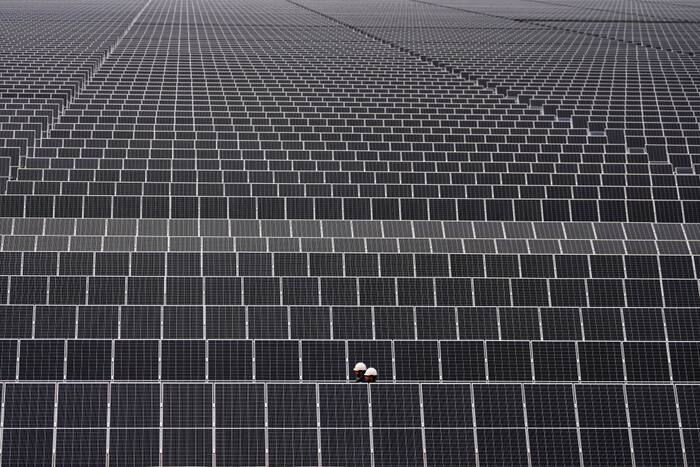
The detailed framework outlines a series of “levers” countries can use to move from coal, oil and gas toward energy sources such as wind and solar, which do not produce the heat-trapping emissions responsible for global warming. Although nations agreed three years ago to “transition away from fossil fuels” in a landmark climate deal, the accord offered few practical details on how to achieve that goal.
Brazil hopes its new plan will begin filling that gap.
“What we hope to achieve with the road map is to take a major challenge — transitioning away from fossil fuels — and translate it into smaller, actionable solutions,” Ana Toni of Brazil, who served as CEO of last year’s climate talks, told The Associated Press. “What we want is to be very pragmatic, helping countries move forward.”
Since nations face different economic and energy circumstances, the framework is designed to be flexible. Countries can assess the available tools and choose the measures best suited to reducing their reliance on fossil fuels, Toni said.
Some may regard the transition as unrealistic, she said, but the road map argues that a shift to renewable energy is both achievable and inevitable.
“In fact, many countries are already taking many steps,” she added.
Toni said governments must also stop approving new fossil fuel power plants and related infrastructure, warning that such projects could eventually become “stranded assets” as the energy system changes.
Another fundamental lever, she said, is eliminating subsidies that make fossil fuels cheaper and more accessible than cleaner alternatives.
Brazil is a major oil exporter with significant reserves, even though hydropower supplies most of the country’s domestic energy. Toni declined to directly address Brazil’s oil exports.
“We’ll create a road map that is good not only for Brazil, but for the world,” Toni said.
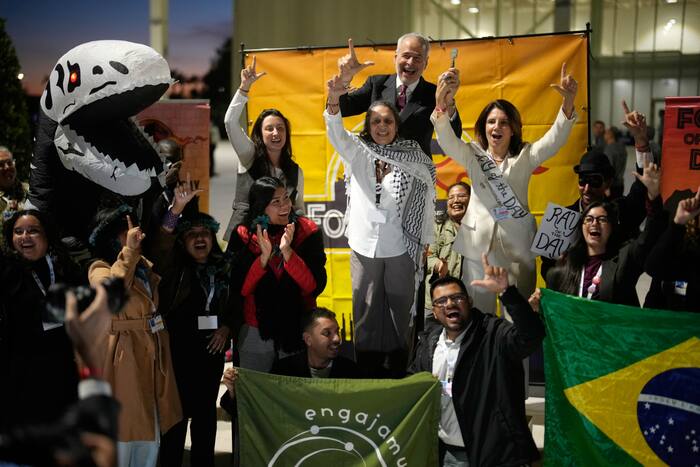
The environmental group Climate Action Network praised Brazil and President Luiz Inácio Lula da Silva on Monday “for doing something that feels increasingly revolutionary at a climate summit: working out how to deliver what was agreed.”
Brazil is introducing two additional road maps at the conference. One focuses on deforestation, while the other seeks to clarify how to provide the $1.3 trillion in climate financing that wealthy nations have promised to poorer countries.
“The road maps make clear that, although every country has a different starting point, all countries can start their own path,” said Stela Herschmann, international policy lead for Observatório do Clima, a network of Brazilian environmental organizations. “Brazil has demonstrated the courage and leadership to start this conversation.”
___
Borenstein reported from Kensington, Maryland, and Arasu reported from Bengaluru, India.
___
The Associated Press’ climate and environmental coverage receives financial support from multiple private foundations. AP is solely responsible for all content. Find AP’s standards for working with philanthropies, a list of supporters and funded coverage areas at AP.org.


