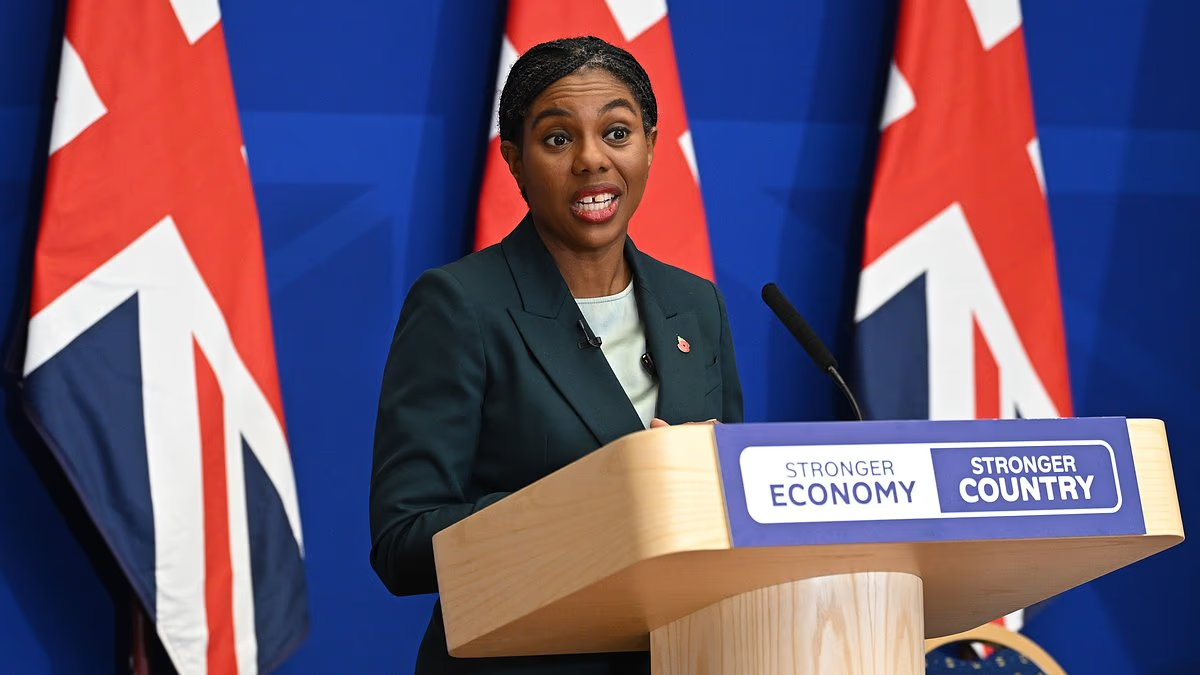

Young people with ADHD should be encouraged into work rather than left dependent on benefits, Kemi Badenoch said today.
Unveiling Conservative proposals to cut £36billion from the welfare bill, the Tory leader pointed to people with physical and mental disabilities who had overcome significant challenges through work.
In a major speech this morning, she warned that the cost of the benefits system is ‘crushing our economy’. She pledged to remove sickness and disability benefits for people with low-level mental health conditions and back pain, taking 2.5 million people out of the system.
Mrs Badenoch said a safety net must remain in place for those who ‘genuinely cannot work’.
But she added: ‘The reality is that millions of people can work and do contribute – to our economy, their families and their communities – even when they face serious challenges.
‘Double amputees run marathons. People who are housebound produce remarkable creative work from home. People with autism run some of the world’s biggest technology companies.
‘If you tell a young person that their ADHD makes them defective and incapable of achieving anything, that could do more damage to their future than the condition itself.
‘Yet that is what our welfare system is doing at present. We are going to change it.’

The Tory leader said the cost of the benefits system is ‘crushing our economy’
Mrs Badenoch published a 52-page report outlining the case for welfare reform and setting out the party’s proposals.
Under the plans, foreign nationals from outside the EU would also be prevented from claiming benefits in the UK.
The two-child benefit cap scrapped by Labour would be restored, raising an estimated £3.1billion a year for taxpayers.
Mrs Badenoch rejected the suggestion that the Conservatives were blaming young people for their welfare proposals. She said: ‘No one is blaming young people.
‘What we are blaming is a system in which too much money is being spent on welfare while the Government appears unwilling to address it.’
In her speech, the Tory leader cited the latest official figures, which show that welfare for people of working age now costs the country £180billion a year.
That amounts to about £500million a day, exceeding UK spending on defence, education and policing combined. The bill costs the average taxpayer more than £4,000 a year and is larger than the entire GDP of Ukraine.
‘The weight of this welfare burden is crushing our economy and pushing us further and further into debt,’ she said.
DISCOVER MORE: How Ariel Winter Says Hollywood Blacklisted Her Over a ‘Trampy’ Mistake
‘There is no scenario in which the current system is sustainable – and that is not only because of its cost.’
Mrs Badenoch said the approach to welfare revealed a ‘fundamental difference’ between the Conservatives and Labour, which she claimed believed that ‘cutting welfare is always cruel’ and that there is nothing wrong with a life of dependency.
She contrasted the Conservatives’ detailed welfare reform work with the latest delays affecting Andy Burnham’s ten-year plan for government, which he first promised in the summer.
‘It is too late to decide what you believe once you are in government,’ she said. ‘If you want to change this country, you need to know exactly what you want to do and how you are going to do it.’
The new Conservative blueprint, titled Welfare That Works, contains a series of proposals aimed at curbing the rising welfare bill.
The measures include cutting £4.5billion from housing benefit, which is forecast to reach £42billion by the end of the parliament – a £10billion rise over five years. In future, payments would be linked to rents in the cheapest 10 per cent of the market, rather than the cheapest 30 per cent.
The package also includes a back-to-work programme, lifting the cap on apprenticeships and halving employers’ National Insurance payments for workers under 25.
The Tory document accepts that the reforms will face ‘fierce resistance’, noting that welfare reform is ‘not easy’.
However, it argues that further action can no longer be avoided.
Shadow welfare secretary Helen Whately said the bill was ‘out of control’. She added: ‘Beveridge’s welfare state was a noble ambition: to stand by those who could not stand on their own. But today’s system has grown far beyond anything he envisaged. A safety net designed for a country emerging from war now funds free cars for people claiming for acne and tennis elbow.’
The Government was forced to abandon plans to reduce the welfare bill by £5billion last year after a revolt by Labour MPs.
The Prime Minister has said he is determined to curb welfare spending ‘in a Labour way’ while avoiding ‘crude cuts’.
Reviews into youth unemployment and disability benefits are expected in the coming weeks. Neither is likely to produce immediate savings, however, with ministers acknowledging that Alan Milburn’s plan to tackle the youth unemployment crisis is expected to involve substantial upfront costs.
Chancellor John Healey has warned that the welfare bill will not be reduced before the election.
A Labour Party spokesman said: ‘The Tories’ so-called ”plan” is a charter for homelessness and human misery. It would push people into hardship and ultimately cost the state more.
‘The crude cuts they are proposing would repeat the mistakes made while they were in government, when the welfare bill soared by nearly £114 billion and the country faced a NEETs crisis.’


