
Israel’s newly elected parliament was sworn in Tuesday, opening a political transition that could bring Prime Minister Benjamin Netanyahu’s long period in power to an end. Yet despite gains by the opposition, Israel still has no new government, and efforts to build a coalition face major hurdles.
Former Israeli military chief Gadi Eisenkot is at the center of those negotiations. President Isaac Herzog tasked him Sunday with forming the next government after 67 lawmakers recommended him for the mandate, compared with 46 who backed Netanyahu.
Eisenkot’s Yashar party won 21 seats in the Oct. 27 election. He is negotiating alongside former Prime Minister Naftali Bennett, whose B’Yachad party, formed with former Prime Minister Yair Lapid, won 12 seats.

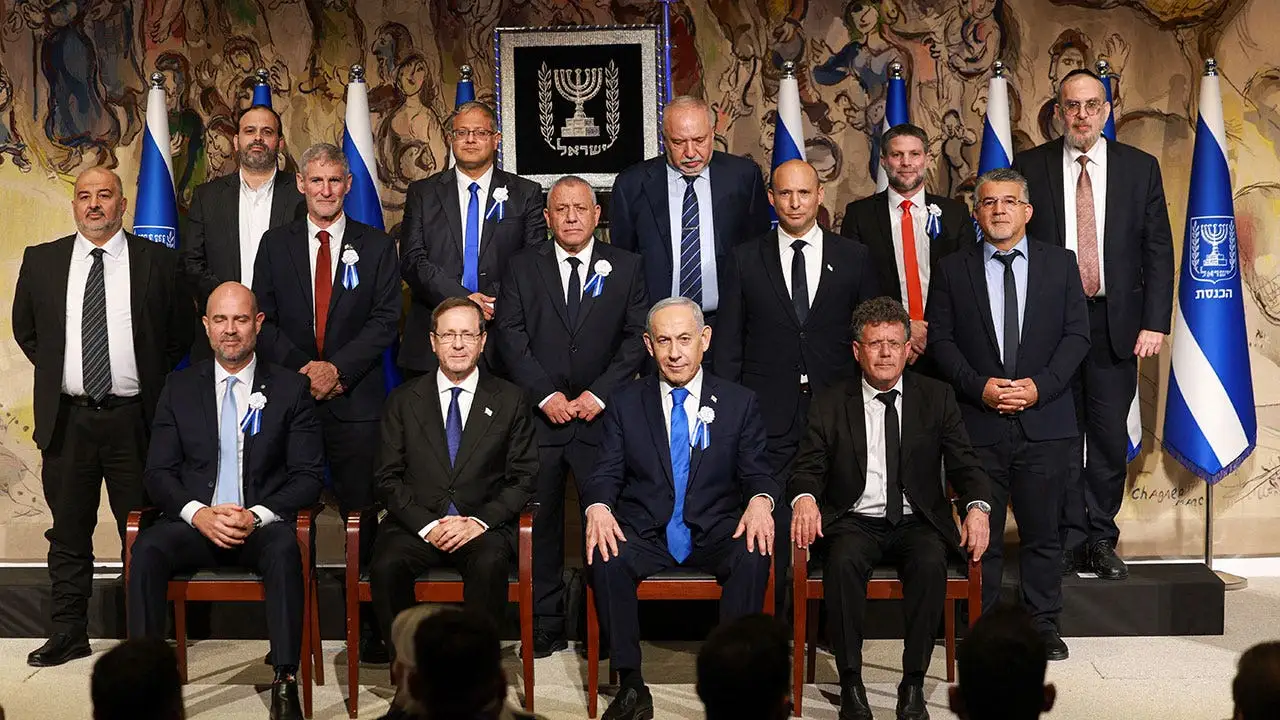
Former military chief Gadi Eisenkot, Israeli Prime Minister Benjamin Netanyahu, Israeli President Isaac Herzog and other Israeli officials pose for a photo on the day of the inauguration of Israel’s 26th parliament, at the Knesset in Jerusalem, Nov. 10, 2026. (Ronen Zvulun/Reuters)
The two parties remain separate, but their cooperation gives Eisenkot the backing of 33 lawmakers in coalition talks — more than Netanyahu’s Likud, which is still the Knesset’s largest single party with 27 seats.
A source familiar with discussions among the parties seeking to replace Netanyahu told News Outlet that Bennett has chosen to serve as a political kingmaker. Rather than pursue the premiership himself, he is backing Eisenkot’s bid to lead the government.
According to the source, Bennett plans to coordinate closely with Eisenkot during the negotiations while maintaining his party’s separate leadership and parliamentary identity.

Parliament members attend an opening ceremony on the day of the inauguration of Israel’s 26th parliament, at the Knesset in Jerusalem, Nov. 10, 2026. (Ronen Zvulun/Reuters)
The arrangement does not form a new 33-seat party, nor does it ensure that the two leaders will support every possible coalition deal. It does, however, give Eisenkot greater negotiating leverage than his party’s 21 seats alone would provide.
During Tuesday’s swearing-in ceremony, Netanyahu called for a national unity government, pointing to Israel’s security challenges. He also launched a sharp attack on Arab parties, accusing them of backing terrorism and warning against a government that depended on their votes.
Bennett, usually a prominent and outspoken political figure, has mostly stayed out of the public eye during the coalition talks. He broke that silence during Netanyahu’s address, repeatedly challenging the prime minister.

Israeli Prime Minister Benjamin Netanyahu delivers remarks during a toast by heads of Israel’s political factions, at the Knesset in Jerusalem, Nov. 10, 2026. (Ronen Zvulun/Reuters)
“What about your Qatari advisors?” Bennett shouted, referring to an investigation into allegations that members of Netanyahu’s inner circle had financial connections to Qatar while working in the prime minister’s office. Bennett also questioned why Netanyahu had not created a state commission of inquiry into the Oct. 7, 2023, Hamas attacks and challenged him to designate Qatar an enemy state.
The exchange interrupted Netanyahu’s speech. Other lawmakers joined the shouting as the prime minister continued to warn against relying on Arab parties to support a government.
Eisenkot issued an unusually forceful rebuke. “I sat and listened to the outgoing prime minister’s delusional, divisive, hate-filled and shameful speech,” Eisenkot said in a statement provided to News Outlet on Nov. 10. “I am now even more convinced that he is unfit to remain in office for even one more minute.”
Eisenkot then ordered his negotiating team to call off a meeting with Likud representatives that had been scheduled for Wednesday.
Yashar said separately that the meeting was meant to examine possible coalition arrangements based on Eisenkot’s four governing principles. Netanyahu’s speech, the party said, made the planned talks impossible.
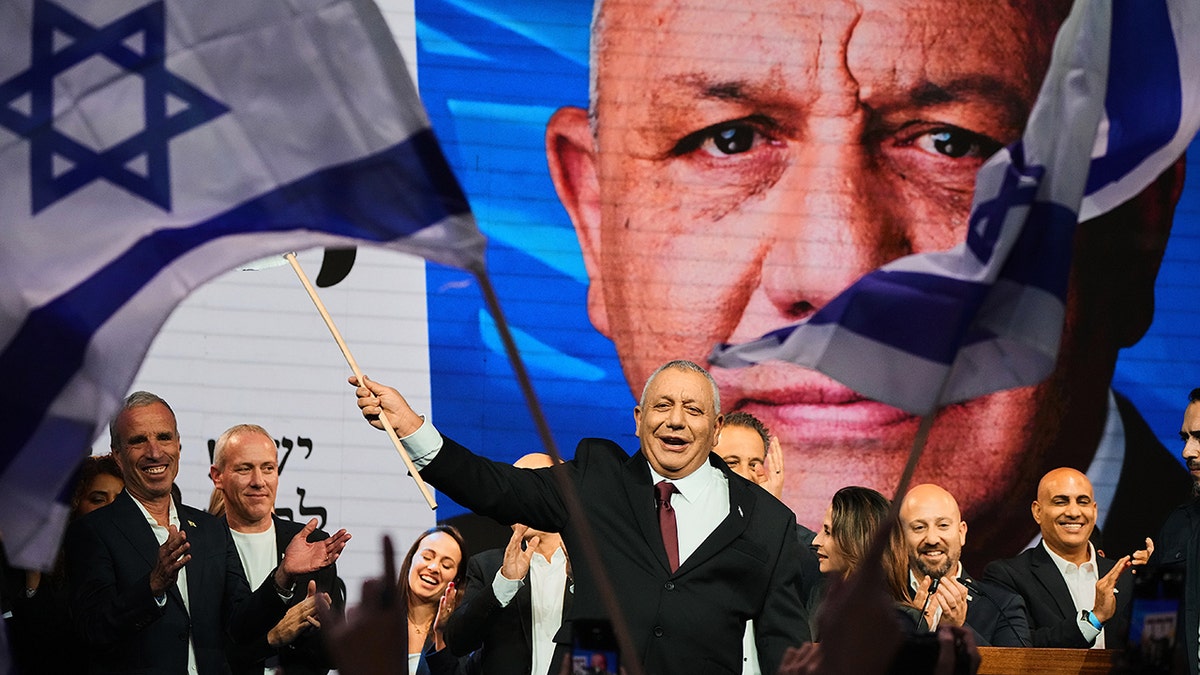
Gadi Eisenkot, leader of the Yashar (“Straight”) party, waves an Israeli flag onstage following the release of the first exit poll results in Israel’s general election in Tel Aviv, Oct. 28, 2026. (Ariel Schalit/AP Photo)
Netanyahu continued to promote a unity government Wednesday, arguing, according to The Times of Israel, that Israel’s security needs required cooperation across political divides.
Even after the confrontation, a national unity government remains among the most realistic options under discussion, according to a source familiar with talks within the bloc seeking to replace Netanyahu.
Such an agreement would require Netanyahu to accept not serving as prime minister first. Under a possible rotation arrangement, Eisenkot could lead the government while Netanyahu became alternate prime minister, the source said.
Eisenkot’s allies are also considering other paths, including agreements with ultra-Orthodox or Arab parties. Those possibilities could strengthen their hand in negotiations and increase pressure on Netanyahu to accept a power-sharing deal.
It remains uncertain whether Netanyahu would agree to surrender the premiership, even temporarily. The source stressed that negotiations are changing rapidly and that no agreement has been reached.
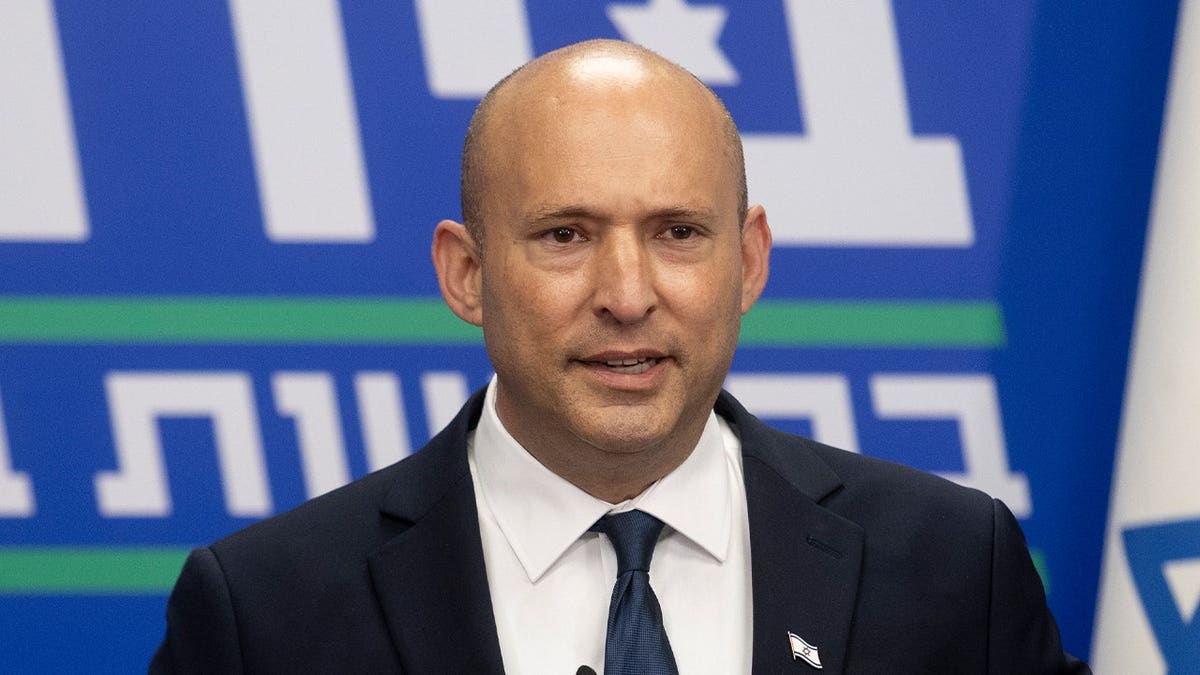
Naftali Bennett, former prime minister and head of the Together party, speaks at a press conference at the Israeli parliament on May 20, 2026, in Jerusalem. (Amir Levy/Getty Images)
Why forming Israel’s next government is so difficult
The official election results gave Netanyahu’s bloc 53 seats, while the four parties seeking to remove him won 48. The remaining 19 seats went to two Arab-led parties: the Joint List, with 11 seats, and Ra’am, led by Mansour Abbas, with eight.
Although 67 lawmakers backed Eisenkot for the mandate to form a government, that recommendation does not automatically produce a viable coalition.
Herzog recognized the difficulty during consultations with party leaders, pointing to disagreements and reciprocal political vetoes that could block either side from forming a stable government.
Eisenkot’s main partners are Bennett, Lapid, Yair Golan of the Democrats and Avigdor Liberman of Yisrael Beytenu. Their parties hold 48 seats — 13 fewer than the 61 normally required for a parliamentary majority.
Eisenkot has established four conditions for potential coalition partners: recognition of Israel as a Jewish and democratic state; acceptance of the values in the Declaration of Independence; support for military or civilian national service for everyone; and recognition of Hamas as a terrorist organization whose military and governing capabilities must be dismantled.
Those demands have produced a difficult political balancing act.
The ultra-Orthodox parties Shas and United Torah Judaism hold 13 seats combined — exactly the number Eisenkot’s four-party bloc needs to reach the 61-seat threshold.
Both parties, however, have traditionally opposed expanding military conscription to ultra-Orthodox religious students, putting them at odds with Eisenkot’s call for universal national service.
At a Nov. 10 faction meeting, Eisenkot reaffirmed that he would not give up the principle of universal military, national or civilian service, The Times of Israel reported.
The dispute was highlighted again Wednesday. Bennett’s party submitted legislation proposing expanded benefits for soldiers and reservists, while United Torah Judaism introduced bills intended to preserve draft exemptions for religious students, The Times of Israel reported Tuesday.
The Arab parties create a separate political dilemma.
Ra’am’s eight lawmakers could help Eisenkot form a government, but Liberman has rejected dependence on Arab parties. Whether such an arrangement would be politically acceptable to the broader bloc is also uncertain.
A source in Eisenkot’s party told News Outlet that Yashar has not ruled out working with Ra’am, provided its leadership accepts the four governing principles.
The source said the talks remain challenging and that several coalition formulas are still being examined.
One possibility is an agreement with ultra-Orthodox parties. Another would involve Arab lawmakers, potentially through outside support rather than formal membership in the government. A wider unity government with Likud is also under discussion.
Every option carries significant political costs, leaving Eisenkot to bridge deep divisions over religion, national identity and security policy.
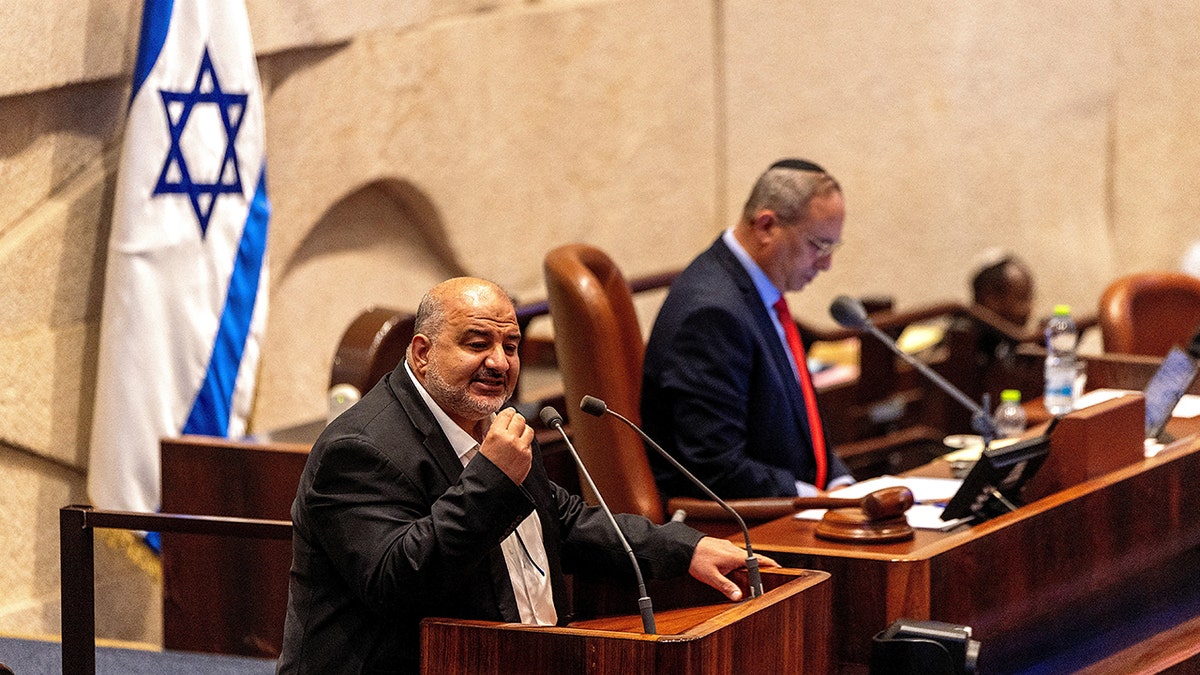
Mansour Abbas, leader of the Ra’am party, speaks at the plenum at the Knesset, Israel’s parliament, in Jerusalem, July 13, 2026. (Ronen Zvulun/Reuters)
Eisenkot challenges Netanyahu before taking office
Even before a new government has been formed, Eisenkot and his allies have started using their influence in the newly sworn-in Knesset.
In a Monday statement provided to News Outlet, Yashar said it had introduced legislation to create a state commission of inquiry into the Oct. 7, 2023, Hamas attacks and establish term limits for the prime minister.
The party also proposed repealing parts of Netanyahu’s judicial overhaul, including changes involving the judiciary, the attorney general’s powers, the police and the circumstances in which a prime minister may be declared unable to serve.
The Knesset is scheduled to vote Nov. 17 on replacing current Speaker Amir Ohana, a Netanyahu ally.
Those appointments could give Eisenkot’s allies substantial influence over Israel’s legislative agenda before they take control of the government.
Eisenkot outlines a different approach to Washington
The coalition talks are unfolding alongside Eisenkot’s effort to reassure U.S. leaders about the future of relations between Washington and Jerusalem.
In a public statement addressed to Americans and the international community on Nov. 4, Eisenkot pledged to restore bipartisan cooperation with Washington and strengthen Israel’s relationship with the United States.
“The bond between Israel and the United States is more than an alliance between governments,” Eisenkot wrote. “It is a partnership between peoples, built over generations, sustained by shared democratic values, and strengthened by the conviction that our nations are more secure and more prosperous when we stand together.”
He also spoke directly about working with President Donald Trump.
“I look forward to working closely and constructively with President Trump and his administration, whose friendship and commitment to Israel we deeply value,” Eisenkot said.
His message came as Washington faced growing debate over the future of U.S. support for Israel following the American midterm elections and disagreements over Israel’s regional policies.
A source in Eisenkot’s party told News Outlet that rebuilding ties with the United States, including relationships with both major U.S. political parties, would be a priority for any new government.
Eisenkot has also stressed that he intends to pursue regional cooperation and diplomatic opportunities while preserving Israel’s security commitments.
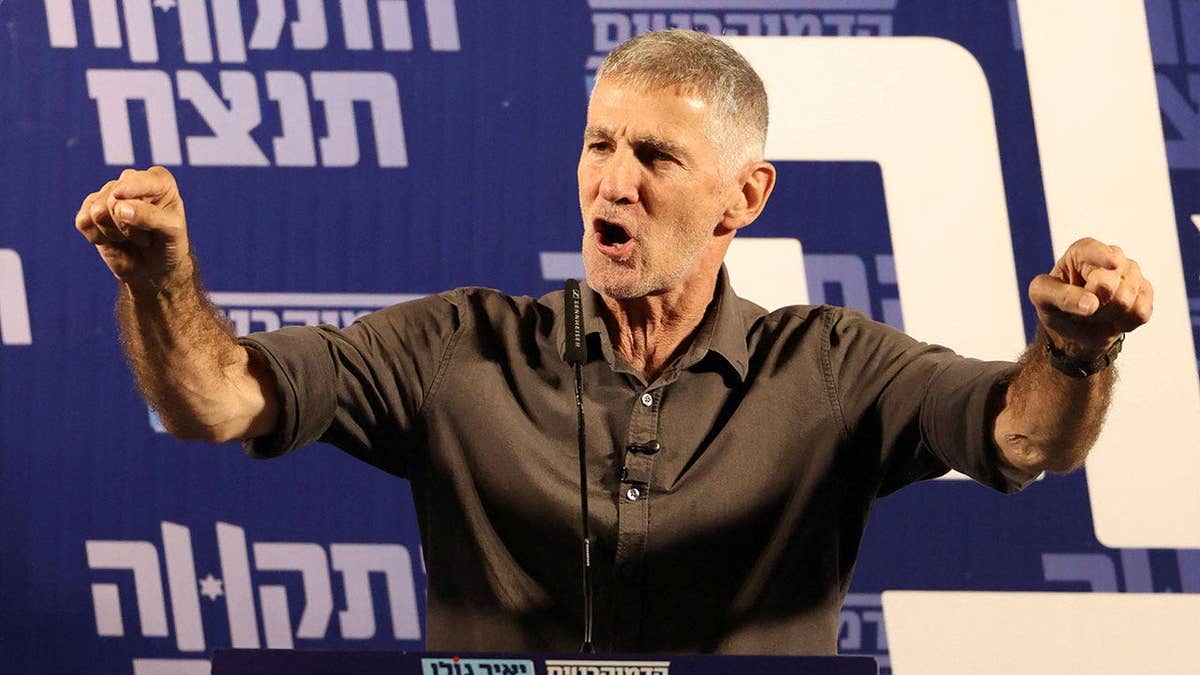
Yair Golan of the Democrats party speaks during a rally to demand the establishment of an independent state commission of inquiry into the Oct. 7, 2023, Hamas-led attacks and the events leading up to them, in Tel Aviv, Israel Oct. 24, 2026. (Kevin Coombs/Reuters)
What comes next?
Under Israeli law, Eisenkot has 28 days from Nov. 8 to form a government, giving him until Dec. 6 to reach a deal. Herzog may grant an additional 14 days, which could extend the deadline to Dec. 20.
If Eisenkot cannot form a government, the president may give another lawmaker the chance to do so. If a second attempt also fails, further parliamentary procedures could follow and potentially lead to another national election.
The result will determine not only Israel’s next prime minister, but also the country’s approach to military conscription, judicial reform, accountability for the Oct. 7 attacks and relations with Washington.
For now, Israel is navigating an unusual political transition. A newly elected parliament is already challenging the outgoing government’s agenda, while the lawmaker chosen to replace it continues negotiating over which parties will join him.
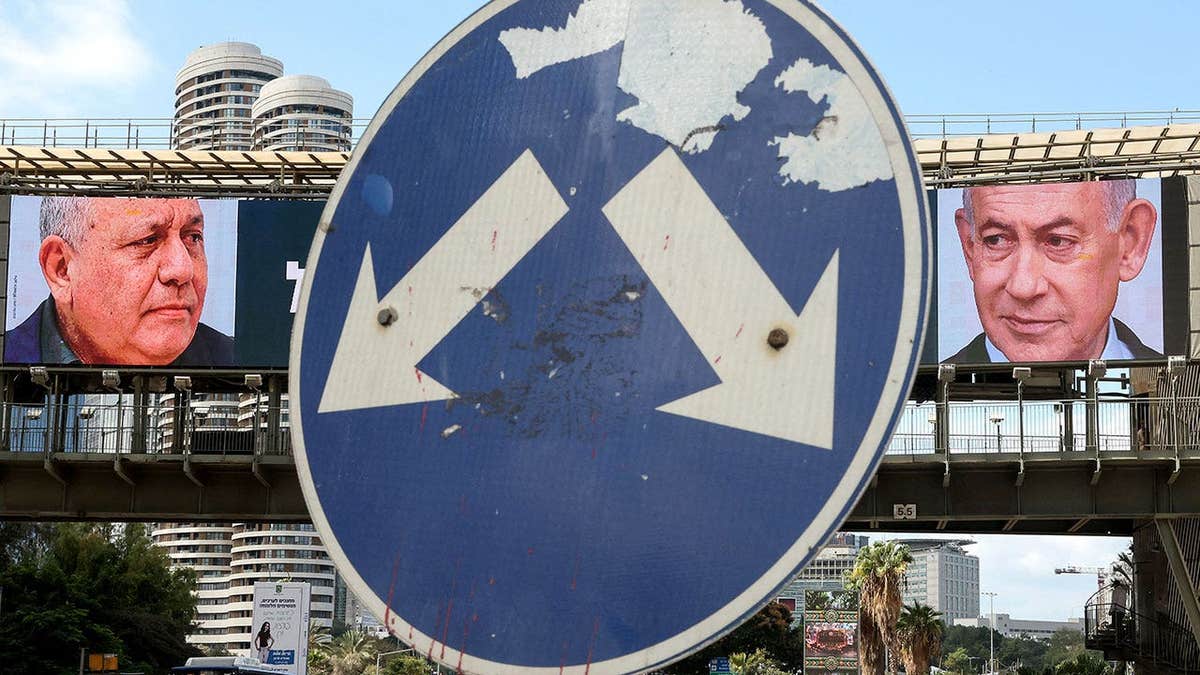
A road sign stands in front of a billboard featuring Prime Minister Benjamin Netanyahu and Gadi Eisenkot, in Ramat Gan on Oct. 20, 2026. (Jack Guez/AFP via Getty Images)
Eisenkot has the presidential mandate, Bennett’s support and the backing of a parliamentary majority that recommended him. What he still lacks is an agreement among those parties on how they would govern together.