
When I read the testimony of Woman Five during Russell Brand’s trial, my teeth began chattering uncontrollably.
The reaction came without warning. As the witness statements stirred long-buried memories of my own humiliating encounters with the comedian, my body began responding before my mind could fully process what I was reading.
Woman Five described how he told her to shower and brush her teeth before the appalling encounter. As I read her words, I realised I was trembling like a leaf—and crying, too.
After 21 years, my body was finally releasing something it had always known, but my mind had never fully allowed me to accept: Russell Brand was a cruel and ruthless predator, and I was far from the only woman he had degraded.
I was 25 when I was sent to interview Russell Brand. He was an emerging comedian who had recently begun presenting a Big Brother spin-off show. Contrary to what his lawyer, Ian Winter KC, said in court, I knew nothing about his reputation beyond the fact that he had been clean and sober from heroin addiction for several years.
We met at a café in Primrose Hill. I remember being completely wrong-footed when this funny, energetic, Fagin-like figure almost immediately propositioned me, telling me how beautiful I was and asking whether he could kiss me.

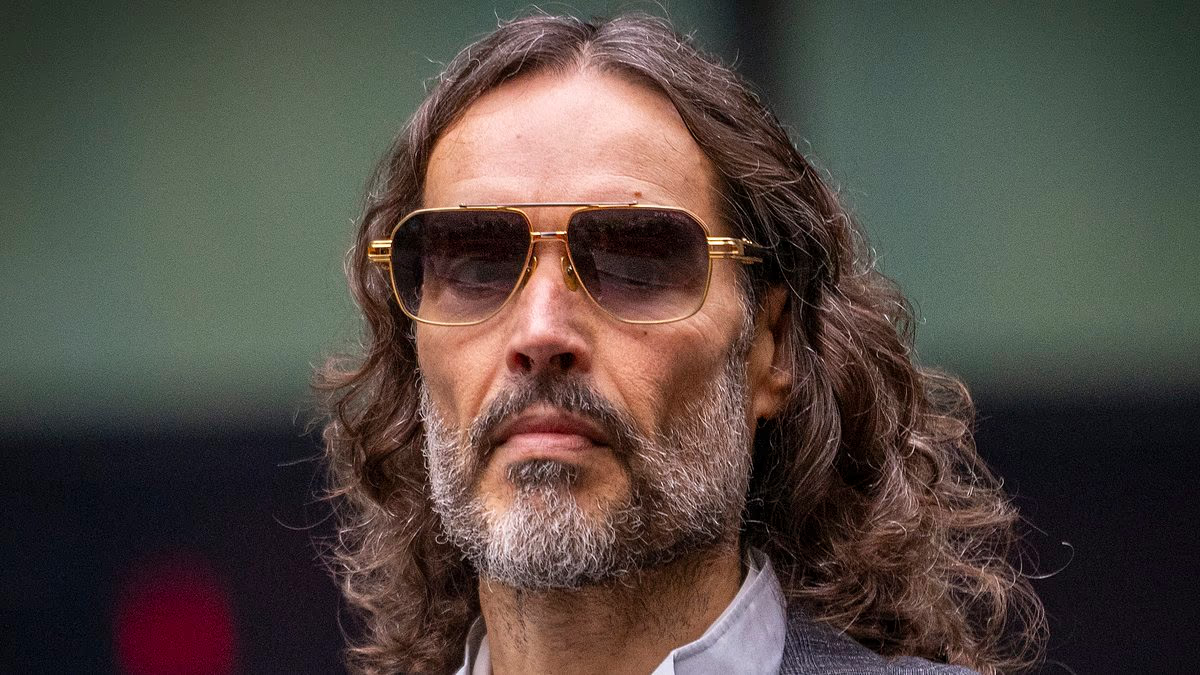
Russell Brand, pictured in 2012, was jailed for more than ten years this week after being convicted of rape and sexual assault

Bryony Gordon was sent to interview Brand at 25. He told her she was beautiful and asked whether he could kiss her
I remember giggling constantly. Afterwards, he insisted on walking me to the Tube station, repeatedly asking if he could kiss me while I continued to say no. When I returned to the office, my phone began ringing almost immediately. He had obtained my number from his publicist, and a barrage of calls and texts followed—20 or 30 a day.
Today, those behaviours are obvious red flags. But this was the Noughties, when comedians on panel shows were still making jokes about rape.
I was bulimic, depressed, consumed by OCD and, as I now understand it, in the grip of alcoholism. Whatever self-esteem I possessed was largely built on male approval. In that post-Bridget Jones era, I looked to men for something resembling safety and security. I am not proud to admit it; in fact, it makes me deeply sad. But that was how life felt for me in 2005.
What I mean is that, although I can now recognise Brand’s behaviour as narcissistic love-bombing, at the time I was completely dazzled by it. He once called and sang James Blunt’s You’re Beautiful down the phone. I had never experienced anything like it, and I was hooked. Eventually, I agreed to go on a date. We had Sunday lunch before seeing a film at the cinema.
He invited me back to his flat for drinks. I remember thinking it was amusing that, despite not drinking himself, he had filled his fridge with alcohol for me. Another red flag, of course—but at the time… At the time, at the time, at the time. How much can those three words be made to explain?
Over and over, he asked whether I found him attractive, as though I alone could provide the validation he was seeking.

Brand outside Southwark Crown Court in London with his wife Laura, who stood by him throughout the trial
CHECK THIS OUT: Muslim Student Sues California School District Over ‘Terrorist’ Slur

Brand is now being investigated over new abuse claims after “multiple reports” were made following his conviction
Just before we kissed, he told me to gargle with mouthwash. It made me feel that something was wrong with me, that I was somehow grotesque. Shamefully, that feeling made me want to please him even more and comply with what he asked.
Woman Five’s testimony has since shown me that he often behaved this way. Back then, however, I believed it was something he did only to me.
I will not go into the details of the rest of that night. What I will say is that, when I left the following day, I blamed myself entirely for the unease I felt about what had happened.
I decided that I was the problem, not him—that I was prudish, insufficiently adventurous or not glamorous enough for a man as charismatic and charming as Brand. I lacked the confidence and self-esteem to be the woman he appeared to want, and on some fundamental level, I felt I had failed. I was ashamed.
As I had done with so many experiences that caused me shame, I turned it into a joke.
Like Brand, I became skilled at making light of it. It was all just funny, wasn’t it? We were deep in the Noughties, when the wider culture—from music videos to comedy programmes—rarely took women seriously. How could I have been expected to extend that compassion to myself?
I briefly referred to my encounter with Brand in a 2013 book about my chaotic, out-of-control twenties. Even now, rereading it, I can see the shame running through the page. I tried to turn the seedy experiences I had endured into amusing anecdotes designed to make people laugh rather than confront their discomfort.
(Sample: “Bryony, tell everyone the Russell Brand story,” a friend said with a wink and a nudge. Oh no. Not the Russell Brand story. Anything but the Russell Brand story. I grimace and shake my head… there were… hundreds of other girls with a Russell Brand story.)
Apart from that, I succeeded in placing my experience with Brand inside a box, locking it and burying it deep in my mind, where I would not have to confront it. I remember being surprised that he was not challenged during the MeToo movement in 2017. Instead, I pushed the box further down, telling myself that I was probably imagining things and almost certainly overreacting.
When allegations about Brand emerged in 2023, I briefly opened that box. Even then, it felt too frightening and dangerous. We had mutual friends, and my life was completely different from the one I had led in 2005. I was sober, married and a mother, with far better things to do than spend time dwelling on Russell Brand.
I even allowed myself to consider that he might have changed. In 2024, when it became clear that the Crown Prosecution Service was preparing a case against him, I found the courage to write in this column about the warning signs I had experienced in 2005. I felt physically sick with anxiety when the piece was published, just as I feel sick with sadness and anger now.
Only in recent weeks, and because of the extraordinary bravery of the women who came forward, have I been able to confront the box containing my memories of Russell Brand. I now understand that it is an all-too-common box, carried by many women—and that perhaps we no longer need to carry it alone or with shame.
Russell Brand was able to offend amid the blurred boundaries and cultural murk of the Noughties. I will always be grateful to the six women who came forward and finally brought that reality into sharp, painful focus.
I do not know whether they will ever read this, but I wish them every happiness and peace for the rest of their lives. I want to say thank you.