
A rare nationwide flight stoppage, a sweeping technology outage and two maritime collisions have unsettled the United States, prompting questions about whether the cluster of incidents on Friday the 13th was an extraordinary coincidence—or something more deliberate.
The disruptions occurred as the US remains at war with Iran and senior Cabinet officials shelter on military bases amid security concerns. President Trump, whose public schedule lists only private meetings through the weekend, has not publicly commented on the nationwide ground stop. Instead, he used Truth Social to promote a plan aimed at supporting Hollywood.
Authorities have said there is no evidence linking the incidents or indicating that they were the result of an attack. Chris Swecker, a former FBI official who spent 24 years with the bureau, nevertheless told Our News Outlet that the timing appeared troubling given the escalating conflict with Iran and the recent election. Iran, he said, ‘thinks we’re in a weakened state right now.’
Swecker said Iran-backed Hezbollah cells operating inside the US could potentially carry out terrorist attacks, but argued that a disruption on the scale seen Friday would more likely originate overseas.
‘They can’t do this… this can’t be done by a cell. I think if this were a hostile foreign intelligence operation, or a foreign act, it would be coming from the mothership,’ he said, referring to Iran itself.
Cybersecurity specialist James Knight told Our News Outlet that any nation-state responsible for such an operation would probably avoid claiming credit. ‘If this was a nation-state, they would not be taking responsibility for it,’ he said. Knight added that the affected organizations might also be unable to publicly confirm an attack, saying ‘it would never be allowed to be stated that this actually occurred.’

The nationwide flight stoppage, global technology outage and two ship collisions left Americans questioning whether Friday’s disruptions were coincidence or something more sinister

Flights were grounded across the United States from Friday afternoon
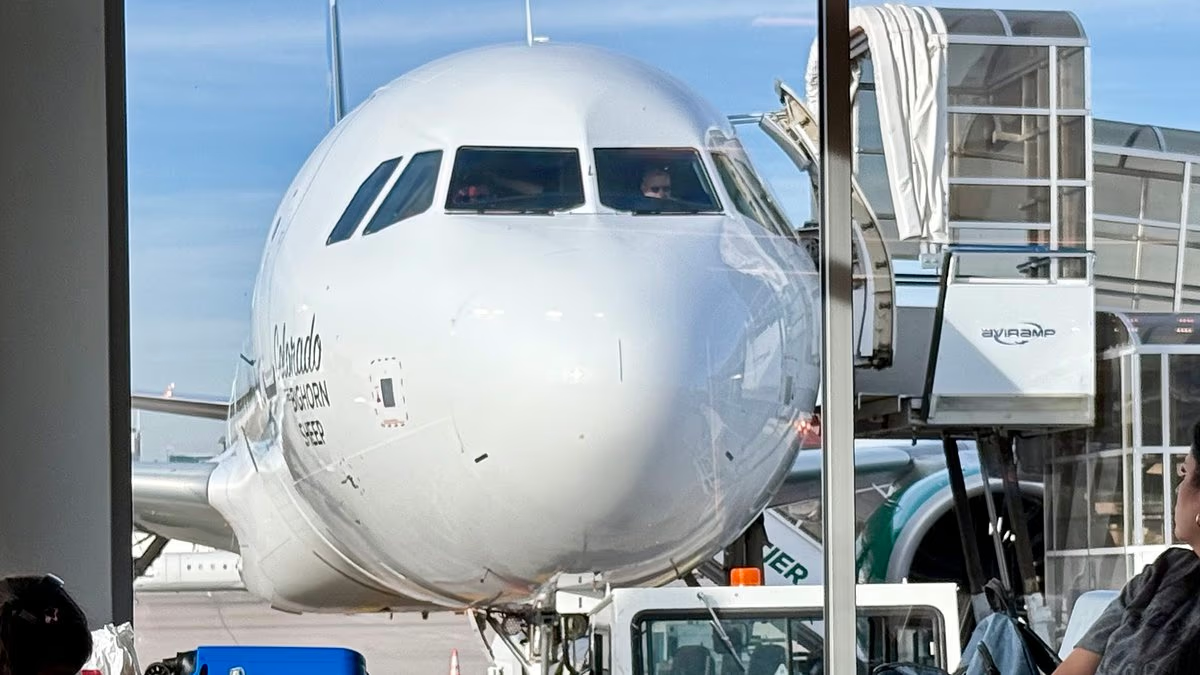
Air travel came to a halt nationwide after the Federal Aviation Administration announced an unusual ground stop at 3.45pm ET on Friday, citing extraordinary circumstances and safety concerns. The order was lifted shortly after 8pm.
Passengers were stranded at gates and inside aircraft while they waited for information, as officials worked to determine the cause of the disruption.
Initial reports indicated that the outage was not the result of a cyberattack, although FBI teams around the country were monitoring events. Homeland Security Secretary Markwayne Mullin said there was no evidence of criminal interference, while emphasizing that investigators had not eliminated every possibility.
‘There was no indication as of yet that this was a nefarious attack against us,’ he said, adding, ‘we’re not ruling out anything at this point.’
As the nationwide pause disrupted departures, Mullin also tried to calm relatives concerned about friends and family already aboard flights.
‘I want to make sure we say this again. There’s no reason for the public to be afraid or scared for your loved ones. This isn’t another 9/11. I just can’t repeat that enough,’ he said.
Swecker said he was prepared to accept Mullin’s assessment for now, though his background led him to examine the possibility of hostile interference.
‘My background is gonna go in that direction, until I see otherwise,’ he said.

The flight stoppage fueled fears that an enemy cyberattack could be behind the disruption
Swecker said the broader concern was whether additional disruptions could follow as the conflict with Iran continued. He urged the country to remain alert and prepare for the possibility of a major cyberattack.
‘I think we have to be prepared for that. I think we have to be prepared for the big cyber action, cyber attack.’
He also cautioned that any perception of weakness could encourage Iran to escalate, potentially including missile strikes, and said the US must be prepared for a range of threats.
The aviation crisis followed another major communications failure, with governments, companies and individuals worldwide still dealing with a Microsoft outage that began Thursday afternoon.
The failure disrupted access to Outlook and other critical services used by banks, courts and businesses, interrupting the digital systems that millions depend on for communication and routine operations.
Microsoft has said the worldwide outage was not caused by a cyberattack or security breach. Knight, however, said the breadth and behavior of the failure were consistent with what could be considered a potential ‘nation-state’ operation.
Knight said tens of thousands of Microsoft systems went offline after an underlying network failure. He also pointed to problems involving automated server checks and security tools designed to protect data, calling the combination unusual.

Thousands of travelers faced widespread disruption after the unprecedented flight stoppage
‘Even at ground zero, that should not have occurred,’ he said.
Knight said the key question was not only why the services failed, but also why the systems responsible for monitoring and safeguarding them appeared to be affected.
He argued that the scale of the Microsoft outage, combined with the airport disruption, deserved close examination. In his view, an intentional operation of that size would require the resources and expertise associated with a nation-state such as Iran.
Knight said he doubted that an accidental systems failure fully explained both events, noting that major technology firms and aviation agencies typically rely on backup systems and multiple layers of protection.
‘This is strange. These systems generally have redundancies. Now, we know the government systems, they were old, whatever, but it wasn’t that bad, where the whole thing goes down, and this administration was putting a lot of work into modernizing the FAA and put a lot of these redundancies in place.’
‘[The FAA] they’ve got redundancies here. Again, this should not have gone down.’
DISCOVER MORE: Inside Beijing’s New Playbook for Exploiting Powerful Western Men
Knight placed his concerns within the broader, largely unseen contest between foreign hackers and American cyber units.
He said overseas hackers had maintained access to US computer networks for years, while American cyber teams had gained access to systems abroad.
That kind of access, he suggested, could create an opportunity to launch a disruptive attack.
However, deliberately triggering a highly visible failure could expose the access point and prevent it from being used again.
Knight said: ‘It would look like this. This is a last resort because as soon as they launched this, they’ve given up the position, they can no longer use it, they’ve played the card.’
If investigators ultimately determined that the Microsoft outage was sabotage, Knight warned, it could mark a serious escalation with the potential to fuel an international conflict.

A tanker overturned in the Mississippi River, prompting a large-scale rescue response
Knight stressed that he was offering a theory and that there was no evidence of a cyberattack. Even so, he said: ‘If it was, this would be bloody serious.’
The aviation and technology disruptions occurred as authorities investigated two serious incidents on US waterways.
On Thursday, the day the Microsoft outage began, a cargo ship collided with the Tacony-Palmyra Bridge spanning the Delaware River between Pennsylvania and New Jersey.
The impact left the 3,659-foot bridge unable to close and caused substantial traffic congestion on the Philadelphia side, according to state Rep. Ed Neilson.
The following day, a tanker hit a docked paddlewheel cruise ship in New Orleans, tipping the passenger vessel onto its side in the Mississippi River and launching a major rescue effort.
The American Heritage had about 129 passengers aboard, along with crew members, when it was struck by the Atlantic Asphalt tanker.
Coast Guard Capt. Melanie Burnham said the tanker appeared to have experienced ‘some type of loss of steering’ before the collision. Investigators had not determined why the steering failed.
The reported loss of control made the tanker’s navigation systems a focus of questions surrounding the crash. Maritime cybersecurity guidance lists those systems as potential vulnerabilities on modern vessels.
Coast Guard guidance instructs investigators to consider the possibility of a cyber incident when a ship’s equipment or systems fail without an obvious explanation.

US airspace reopened shortly after 8pm as airlines began a major effort to clear the backlog

Millions of passengers continued to face long delays across the country
Industry standards identify digital steering, propulsion and navigation equipment as possible targets for cyber incidents, particularly when those systems connect to other onboard technology or remote monitoring networks.
Financial markets also endured a turbulent week. Nvidia CEO Jensen Huang, a prominent symbol of the artificial intelligence boom, resigned on Thursday following reports of extramarital affairs, including an alleged relationship with a woman suspected of being a Chinese government agent.
The scandal reportedly helped erase about $2 trillion from the chipmaker’s market value since October, affecting one of the largest holdings in the retirement savings of millions of Americans.
Swecker said the need for preparedness remained even if Friday’s disruption ultimately turned out to be accidental.
Asked whether an adversary could exploit an incident that was not intentionally caused, he said intelligence agencies should be prepared for that possibility.

Aircraft stood at Newark Liberty Airport near Manhattan as passengers faced a day of uncertainty
‘I think we have to guard against that,’ he said. ‘If our intelligence agencies aren’t on that type of footing right now, they should be.’
Swecker said he was ‘99 percent certain’ intelligence agencies were already on heightened alert. ‘We would be negligent. This country and our intelligence services would be negligent if they were not,’ he added.
He warned that the risks extended to the financial and communications networks underpinning everyday life, where a successful attack could affect far more than one company, airport or ship.
The former FBI official said threats could be both cybernetic and physical, with potentially devastating consequences if key financial services were compromised or forced offline.
‘We face a cyber threat, we face the physical threat. And if the financial system were to be compromised or shut down, it wouldn’t take a nuclear missile, it could be done via cyber means,’ Swecker explained.
‘Or they cut an underground cable that runs under the ocean. We’d be back in the Stone Age for a while.’