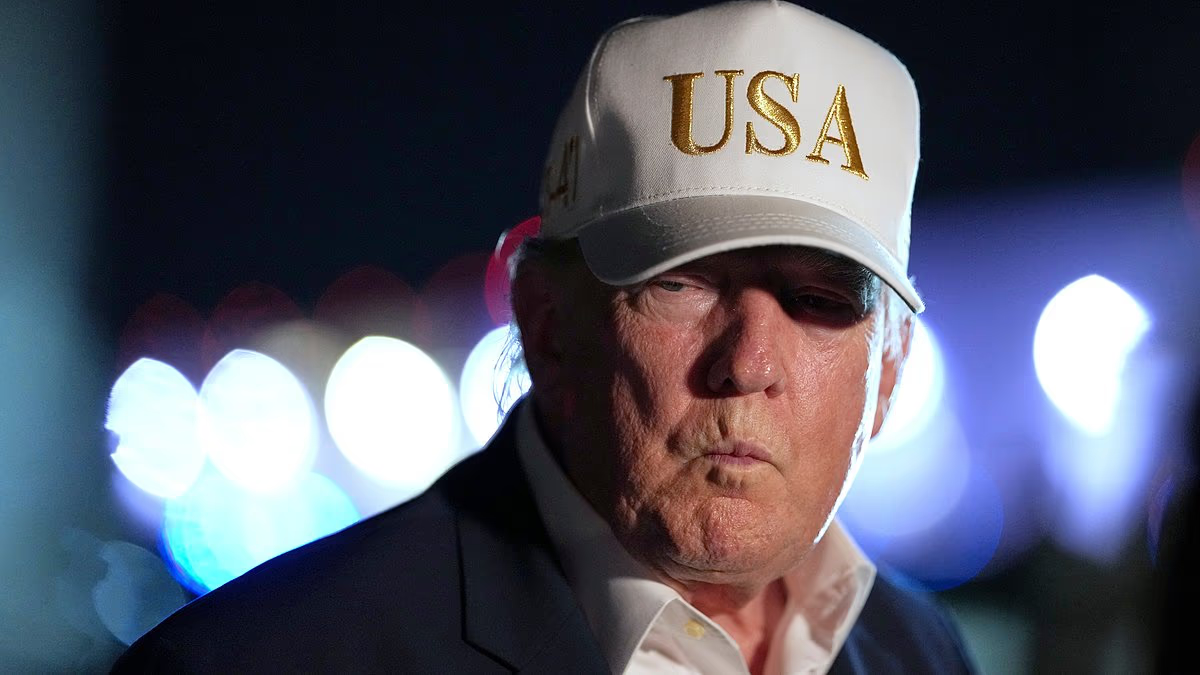

US Treasury Secretary Scott Bessent was transferred from his home in Washington, DC, to a military base this week after American intelligence concluded that the threat posed to his life by Iranian operatives was intensifying.
As the cabinet official overseeing tougher economic sanctions on Tehran, Bessent has been a longstanding target for Iran.
Authorities have now determined that he requires additional protection.
The Iranian national suspected of plotting to assassinate former US national security adviser John Bolton has also been added to the FBI’s ‘most wanted’ list, with a $20 million reward offered for information leading to his capture. Bolton has faced threats from Iran for years, but the FBI’s decision signals a renewed urgency in the effort to track down the alleged would-be assassin.
Mohammed al-Saadi, accused of working for Iran’s Islamic Revolutionary Guard Corps (IRGC), was arrested in Turkey in May before being extradited to the United States to face eight terrorism charges. Investigators believe he led Harakat Ashab al-Yamin al-Islamiya, or Hayi, an IRGC front that Western intelligence agencies say was responsible for a series of 20 terrorist attacks across Europe earlier this year.
Seven of those incidents took place in Britain, including the stabbing of two Jewish men in Golders Green and arson attacks targeting UK synagogues.

Since Donald Trump ordered the drone strike that killed Quds Force commander Qasem Soleimani in January 2020, he has feared that Iran could retaliate with an assassination attempt

Mohammed al-Saadi was extradited to the United States on eight terrorism charges after being accused of operating for Iran’s Islamic Revolutionary Guard Corps
This week, al-Saadi was indicted over alleged involvement in several terrorist acts, including an attempted attack on RAF Fairford in Gloucestershire, where American B-1 bombers were stationed.
He is alleged to have coordinated the operation and other attacks by sending coded instructions through relatives in Iran to two IRGC operatives in Tehran. According to investigators, some of those communications were sent from his prison cell in Brooklyn, an embarrassment for US authorities.
One of the alleged operatives, Mohammed al-Hassini, who previously lived in Britain, is accused of paying contacts in the UK to identify potential military targets and purchase vans, fuel and shrapnel-like materials. He is also alleged to have ordered three petrol-filled vans to travel towards RAF Fairford. The vehicles were stopped near the base only after one suspected participant became alarmed that the shipment contained a bomb and contacted police.
Two men arrested in connection with the case are awaiting trial on charges of assisting Iranian intelligence.
The US Justice Department has published an image of al-Hassini and his alleged associate, Mohsen Mohajeri, seated before a laptop displaying a map of Greater London. In video footage of the meeting, one of the men can be heard saying: ‘We need to get focused on London.’
US intelligence agencies believe al-Saadi, al-Hassini and Mohajeri formed the leadership group behind recent Iranian-linked terrorist activity in Britain. Senior defence and security officials in Washington, where I am writing, are increasingly questioning whether the UK can adequately protect important US military assets stationed here.

Defence Secretary Wes Streeting spoke of increased spending to protect military bases, but the funding announced is limited and spread across several years
That assessment helps explain why all 12 B-1 bombers were withdrawn from Fairford immediately after the failed attack and returned to their bases in the United States.
This week, 10 KC-135 refuelling aircraft were also removed from RAF Mildenhall in Suffolk and relocated to Germany and Spain. The move suggests that the United States considers its military aircraft safer in Spain, governed by an anti-American socialist, than at bases in Britain.
ALSO READ: Day of the Dead Mom Told Son, 10, to Get Gun Before He Fired
Washington’s frustration is not limited to the Labour Government’s failure to devote sufficient resources to defence. American officials are also concerned by what they see as Britain’s reluctance to acknowledge the scale of the Iranian threat and respond decisively.
The director general of MI5 says British intelligence has been monitoring more than 20 ‘potentially lethal’ Iran-backed plots in the UK. More than 50 people have been arrested over the past year in connection with ‘Iran-linked operations’. Yet those figures appear not to have roused the Government from its inertia. In Washington, I found the frustration with Britain unmistakable. ‘We are receiving copious intelligence indicating that an increase in Iranian-backed terrorist activity is highly likely,’ a senior US security source told me. ‘We know it will be varied, extensive and potentially deadly. Yet your government is behaving as though everything is normal.’
‘Rather than instructing the Iranian ambassador in London to leave,’ the source continued, ‘your foreign secretary [Ed Miliband] shakes hands with Iran’s foreign minister at the United Nations. It’s shameful.’
No senior British minister has publicly condemned Iran’s activities in sufficiently forceful terms. After the RAF Fairford incident, all Andy Burnham could say was that there were ‘strong indications’ of Iranian involvement. There was no outright condemnation, no pledge to strengthen Britain’s defences and no appeal for national unity against those seeking to harm the country.
Wes Streeting, the defence minister, spoke vaguely about spending more to protect the bases, but the sum involved is small and spread over several years. He lacks the funds to mount an effective response. The Americans have therefore imposed a ‘Charlie’ threat level at the UK bases they use—one step below ‘Delta’, the highest level, which indicates an imminent attack. The seriousness of the Iranian threat is increasingly difficult to dismiss, particularly as Tehran is also expanding its cyber operations against Britain and its allies.
Earlier this month, hundreds of grocery stores and supermarkets across Europe found that their refrigerators had been set to temperatures approaching 50C. Food stocks were spoiled and had to be discarded.
In a separate incident, two large energy tankers travelling towards Texas came under a cyberattack in the mid-Atlantic.
Western intelligence agencies broadly believe both incidents were the work of Iranian hackers acting under orders from Shahid Kaveh, the IRGC cyber command’s offensive unit. Iran was previously regarded as a second-tier cyber power, lacking the capabilities of China, Russia and even North Korea.
That assessment has changed. Security services now view Iran as a far more serious threat, with global ambitions and an increasingly aggressive approach. Tehran once focused its cyberattacks largely on Israel, where their impact was limited. It is now prepared to deploy AI-enhanced cyber capabilities against the Sunni Gulf states, including Saudi Arabia, as well as the United States and European countries such as Britain.
Western intelligence agencies fear Iran could target the computer systems that control essential services, including electricity networks, supply chains and traffic signals. They also warn that Tehran may resort to data-wiping attacks designed to destroy the information systems need in order to function.
The British Government may appear unconcerned by these risks, but anxiety over a possible Iranian attack reaches the highest levels of Washington. President Trump has feared an Iranian attempt on his life since ordering the January 2020 drone strike that killed Qasem Soleimani, commander of the IRGC’s overseas Quds Force. During the four years between his presidencies, he supplemented the reduced Secret Service protection provided to former presidents with a private security operation.
Since returning to office, Trump has been surrounded by more security than any previous US president. Even so, he has reportedly told friends in private that he worries the Iranians will ‘get me’.
That concern extends throughout the Trump administration. Bessent is not the only senior official to have been moved to a military base. White House chief of staff Stephen Miller and Secretary of State Marco Rubio were relocated earlier.
Trump has many competing priorities, but when the Iranian threat draws his attention, he is unlikely to be forgiving towards those he believes have failed to take it seriously. Britain is already viewed in that way.
The reasons are clear. Last month, two Iranians were charged over an alleged chlorine-powder bomb plot targeting Manchester’s Jewish community. On Thursday, two terrorists were convicted of surveilling Iranian journalists opposed to the regime in Britain; prosecutors said the IRGC had offered £150,000 for each killing.
Yet the strongest response Foreign Secretary Miliband has offered is to summon Iran’s ambassador occasionally for a reprimand—an exercise with little apparent impact. The ambassador has not been expelled, and Britain has still not proscribed the IRGC under its terrorism laws.
‘Because of British pusillanimity,’ a US security official told me, ‘Iran has achieved what even the Soviet Union failed to do during the Cold War: force the United States to withdraw from its British bases.’ It is a severe but telling verdict on a deeply troubling situation—one that brings shame on the Burnham Government.