
LIMURU – After heavy rains stripped away much of her farm’s topsoil two years ago, Elizabeth Itotia is taking precautions as Kenya enters its October–December rainy season, which is forecast to bring heavier-than-normal downpours.
Itotia’s 5-acre (2-hectare) farm in Limuru, Kiambu County, central Kenya, sits on a slope that leaves it highly exposed to soil erosion. Catastrophic rains in 2024 swept away large amounts of nutrient-rich topsoil and destroyed crops including kale, spinach, cabbage, potatoes and indigenous vegetables. She estimated her losses at 200,000 Kenyan shillings ($1,500). More than 230 people died in the floods.
Restoring the damaged fields required Itotia and her family to transport topsoil from neighboring farms. The work demanded additional labor and money before the land could become productive again.
Her experience reflects the difficulties Kenyan farmers face when extreme weather destroys crops and farmland. In a country where most agriculture depends on seasonal rains, recovering from such losses can take months or even years.
The Kenya Meteorological Department forecast El Niño conditions for the short-rains season, which runs from mid-October through December. El Niño is linked to warmer-than-average sea-surface temperatures in the central and eastern tropical Pacific Ocean. In East Africa, the phenomenon can produce unusually heavy rainfall.
The rainy period also coincides with Kenya’s maize harvest. Maize, the country’s staple crop, is planted during the long-rains season and harvested as the short rains begin. Excessive rainfall could force farmers to harvest early or leave maize inadequately dried, raising the risk of aflatoxin contamination.
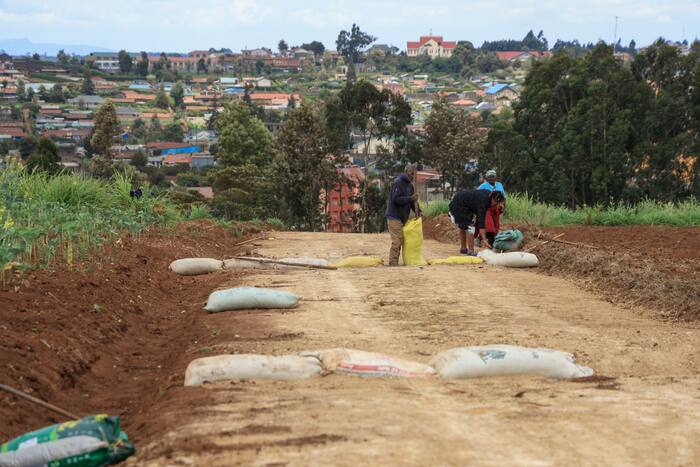
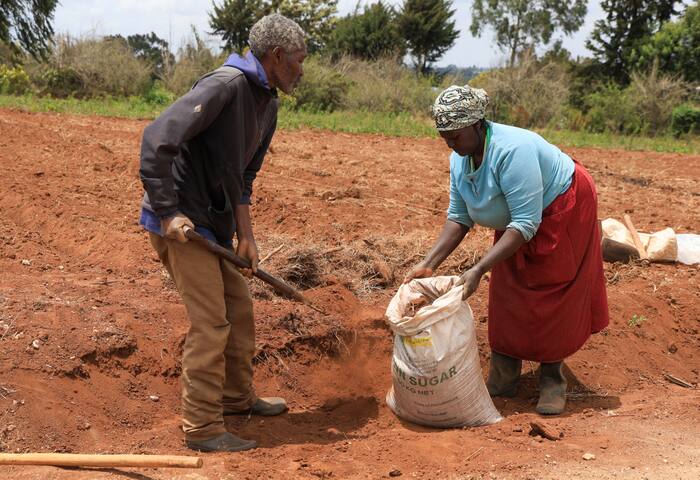
After learning about soil conservation methods on social media, Itotia began placing sand-filled sacks in trenches to slow runoff and limit erosion.
She has also planted Napier grass and bamboo in erosion-prone areas. Their roots help anchor the soil, while the Napier grass provides fodder for her livestock.
Her neighbor, Esther Njoki, is using a similar technique, filling sacks with soil to slow water flow and reduce erosion.
“We had never used this technique before, even though the soil in this area is very light and easily washed away,” Njoki said.
She said losing the topsoil leaves the ground muddy, making it difficult to cultivate the fields and move around the farm.
Crop selection matters during heavy rains
Samuel Munyiri, an agronomist at Osho Chemical Industries, said disturbing the soil during the rainy season makes it more vulnerable to being washed away. He said the sandbags farmers are using can effectively reduce runoff and soil loss, particularly where small erosion channels have already formed.
Munyiri urged farmers to use conservation measures such as terracing, building gabions — mesh structures filled with soil or rocks to slow erosion — planting crops across slopes rather than down them, and using cover crops to shield the soil.
He also advised farmers to consider crops that can withstand heavy rainfall, including maize, wheat and barley, and to adjust planting schedules during periods of prolonged downpours.
“Crops such as beans, potatoes and cabbages may be damaged by prolonged heavy rains and should be planted when the intensity of the rainfall is expected to ease,” he said.
Munyiri said cereals generally withstand prolonged rains better than pulses.
In Karatina, Nyeri County, central Kenya, coffee farmer Moses Muhoro is also preparing for the coming rains after years of losses linked to heavy downpours.
Flooding in 2024 washed away the fertile topsoil on his farm, exposing less productive subsoil beneath it. The damage sharply reduced his coffee output the following year. Because coffee is an export crop, declining harvests can hurt both farmers’ incomes and Kenya’s economy.
When The Associated Press visited Muhoro, he was digging trenches and filling sacks with soil to manage runoff and protect the farm from further erosion.
“I learned this method while visiting a friend who is also a farmer. His farm was steeper than mine, but he had managed to minimize the damage caused by heavy rains. I decided to use the same approach on my farm,” Muhoro said.
He said farmers in the area have suffered from heavy rainfall in part because they often lack timely information about how to prepare for and reduce its effects.
Protecting food security during climate shocks
David Koros, assistant director of forecasting at the Kenya Meteorological Department, said the agency issues daily, weekly, monthly and seasonal forecasts to help communities and different sectors prepare for changing weather conditions.
He said rainfall was expected to spread across the country by the end of October, with November forecast to bring the season’s heaviest rains.
Regions at risk of receiving above-average rainfall included the coast, the northeastern and southeastern lowlands, and the eastern region, including Nairobi. Parts of western Kenya and the Rift Valley were also expected to receive above-average rain, although the impacts there could be less severe, Koros said.
Western Kenya and the Rift Valley are among the country’s most important food-producing areas. Significant crop losses in those regions could therefore affect national food security.
Experts say strengthening long-term resilience will be essential to protect food supplies from climate shocks.
Tom Fletcher, the U.N. undersecretary-general for humanitarian affairs and emergency relief coordinator, said early preparations for climate-related emergencies could help prevent a humanitarian crisis.
Farmers should also have greater access to insurance, said Alice Ruhweza, head of the Alliance for a Green Revolution in Africa, an agricultural nonprofit.
___
For more on Africa and development: https://apnews.com/hub/africa-pulse
The Associated Press receives financial support from the Gates Foundation for its global health and development coverage in Africa. The AP is solely responsible for all content. Information about AP’s standards for working with philanthropies, its supporters and funded coverage areas is available at AP.org.


