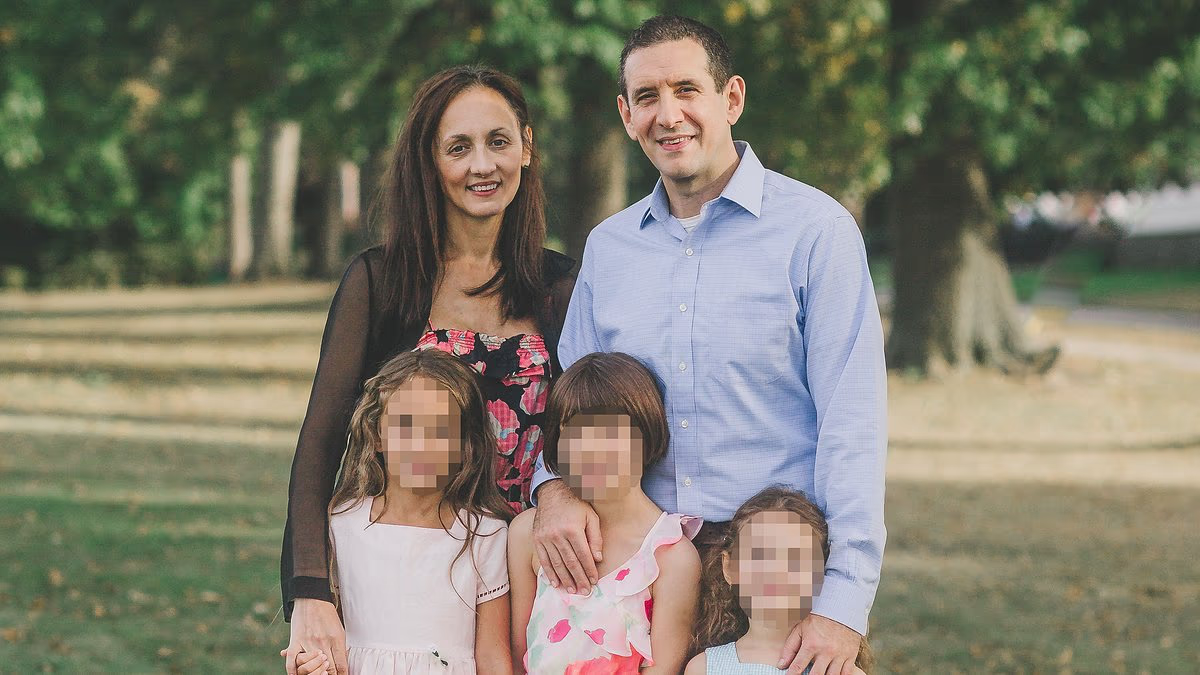

A Facebook post that appeared during an ordinary scroll stunned readers: A New York woman said goodbye to friends, relatives and supporters, detailed the bitter breakdown of her marriage and announced that she intended to end her life.
“In the last four years of my life I have woken up every day to a nightmare like no other,” Catherine Kassenoff wrote in her final message on May 27, 2023. She said she could “no longer endure” what she described as abuse by Allan Kassenoff, her husband of 16 years. “Don’t let my death be in vain,” she added.
The post exposed the collapse of a marriage between two prominent New York lawyers. Catherine had worked in Governor Kathy Hochul’s office, while Allan was a patent litigator representing clients including Pfizer and Samsung. After Catherine’s death, he left his partnership at Greenberg Traurig.
Their divorce became a bitter custody dispute. Catherine alleged that Allan had used a corrupt legal system to keep her away from their children, while details of the case spread across TikTok and other social media platforms.
On the day of her final post, Catherine also emailed hundreds of people—including friends and members of the legal system—a final “swan song” containing court filings, therapy records and videos of her estranged husband that she said “showed exactly how abusive Allan Kassenoff is.” The message began: “This is a story that ends with my own assisted death in Switzerland.”
Three years after her death, the conflict has moved from family court to television. He Said, She Said: Till Death Do Us Part, which streams on Paramount+ on November 17, revisits the tragedy through interviews with Allan and the couple’s three daughters, now aged 16, 15 and 13. The girls allege that Catherine was the abusive parent, saying the family suffered profound grief, distress and even death threats.
Katherine Klein, a family nanny who said she was the last person to speak with Catherine, told Our News Outlet that blaming the mother of three for abuse after her suicide was not “fair.”
Klein said she received Catherine’s email on May 27, 2023, the day Catherine died, and immediately called her. Klein pleaded with her not to go through with it, but Catherine said it was too late. Her decision had already been made—and, according to Klein, the process was underway.

In her final message on May 27, 2023, Catherine Kassenoff said she could “no longer endure” what she described as abuse by Allan Kassenoff, her husband of 16 years

“In the last four years of my life, I have woken up every day to a nightmare like no other. I can no longer endure the abuse and terror of Allan Kassenoff… I have also endured the emotional devastation of being without my children for so long…”
“She’s no longer here,” Klein said remorsefully of her friend, declining to discuss the details of their final call.
Klein said she personally witnessed verbal confrontations between Catherine and Allan. “It’s not fair how he wore her down and, like, beat her to dust in a sense,” she said. “He really pulverized her verbally and mentally. It really wears a person down.”
Catherine and Allan met in New York City in 2005, when they were 33 and 37, respectively, and worked at the same law firm. They connected through their shared profession, and Allan said he was drawn to Catherine’s “no-nonsense” personality.
“It was an attractive quality,” he said in the documentary series.
Religion became an early source of tension. Allan was raised in an Orthodox Jewish family in New York, while Catherine’s family in West Virginia were Egyptian Coptic Christians. Catherine converted to Judaism before their wedding, but disagreements between the families over faith made choosing a venue difficult.
The couple ultimately eloped in Puerto Rico, about a year after they began dating. It is not known whether either family attended the ceremony.
Catherine wanted to become a mother, and the couple soon began building a family.
Less than two years after their marriage, Catherine was diagnosed with a rare and aggressive form of breast cancer. The illness and its treatment placed additional pressure on the relationship. According to details Catherine included in her final post, she told a therapist that Allan “showed that he was not good at handling stress.”
While Catherine underwent treatment, the couple adopted a daughter, Alexandra “Ally” Kassenoff. Catherine wanted more children and pursued in vitro fertilization. Allan said in the documentary that she was prepared to proceed “with or without me.” They later had two more daughters through IVF: Charlotte “Charley” Kassenoff and Josephina “Jojo” Kassenoff, even as the marriage became increasingly strained.
The family settled in a large Westchester County, New York, home decorated with photographs of the children. From the outside, they appeared to be a prosperous family with two ambitious parents. Behind the wood-paneled walls, however, the household was far from orderly.
The marriage deteriorated as arguments over parenting duties and personal grievances became more frequent. Allan previously described the relationship as a “rollercoaster,” marked by severe lows caused by constant conflict and intense highs that he was reluctant to explain.
In the documentary, Allan said he loved being a father but often worked late, leaving Catherine with much of the responsibility for the children.

Allan and Catherine met in New York City in 2005, when they were 33 and 37, respectively

Less than two years into the marriage, Catherine was diagnosed with rare, aggressive breast cancer
Catherine’s friend Cynthia Monaco told documentary producers that she never saw much “lovey-dovey” affection between the couple and described Allan as “immature.”
“When everyone urged her to leave an explosive marriage, she said her children had a beautiful life and she did not want to disrupt it,” Monaco wrote in a GoFundMe campaign after Catherine’s death.
The family faced another setback in 2017, when Catherine was diagnosed with breast cancer for a second time. Little is publicly known about that illness.
By May 2019, separation and divorce proceedings had begun. Both parents became intent on recording the other’s conduct and angry statements—footage that would eventually be presented in family court and to the public.
In court filings and during the divorce, Catherine accused Allan of verbal and physical abuse and said his account falsely portrayed her as abusive toward their children. Allan denied the allegations.
A custody evaluation said Catherine had “an unspecified personality disorder, predominately histrionic and narcissistic traits.” It also accused her of gaslighting the children, alienating them from their father and coaching them.
Catherine’s psychiatrist offered a different assessment. During a temporary custody trial in 2020, the doctor said she had treated Catherine for more than a year in connection with alleged “spousal and emotional physical abuse, divorce, separation from the children.” The psychiatrist testified that Catherine “does not exhibit any features or problems relating to mental health issues.”
The custody evaluation acknowledged that Allan was “emotionally unsophisticated” and had contributed to a “noxious atmosphere.” It nevertheless concluded that his angry outbursts were provoked by Catherine’s presence and actions, and observed that he tended to flee from her rather than confront her. The court found no evidence that Allan had abused Catherine, and no criminal charges were filed against him.
The evaluation led to the daughters—then approximately 10, eight and six—being removed from Catherine’s care. The court-appointed evaluator determined that Catherine’s mental-health issues prevented her from caring for them.
Catherine maintained contact through video calls, particularly during COVID-19 lockdowns, and was required to pay a third-party supervisor for every in-person visit.
Despite advice from her lawyer and the court, Catherine continued discussing the case publicly. She posted critical comments about Allan and shared videos of volatile family interactions, including footage shown in the documentary in which Ally stood up for her sisters during one of Allan’s outbursts.

Allan was a patent litigator for clients including Pfizer and Samsung while he was a partner at Greenberg Traurig

The marriage deteriorated as arguments over parenting duties and personal conflicts became more frequent
Both Catherine and Allan spent heavily on the custody fight.
“The financial situation was dire. Catherine grew thin from stress,” Monaco wrote in the GoFundMe appeal.
According to a since-deleted interview with Ms. magazine reviewed by Our News Outlet, Catherine liquidated her retirement savings as legal bills and the cost of supervised visits reportedly exceeded $70,000.
In an email previously published by Our News Outlet, Allan told Catherine he would “never stop” keeping her from the children and said he had spent at least $3 million on the case.
“Even if this Court awards you my last dollar, I will never stop protecting them,” Allan wrote. “Until the day I die.”
Two months before her death, Catherine sued Allan and his attorneys, alleging false imprisonment. Neither that lawsuit nor the divorce was formally resolved.
The Swiss assisted-dying process can take between six weeks and six months and requires a statement explaining the patient’s suffering. It remains unclear how long Catherine had been planning her death. People close to her said they were blindsided, and she did not tell her friends, family or medical team before pursuing assisted suicide.
A report dated April 9, 2023, by former psychiatrist Colin Brewer concluded that Catherine was of “sound enough mind” to end her life. Brewer told The Free Press that he had spoken with her several times over a period of months.
Brewer described Catherine’s death as an “existential assisted suicide.”
At the same time, Catherine was facing a third breast cancer diagnosis, which she called “terminal” in her final post. Allan later disputed that characterization. Catherine cited the illness as one reason for her decision, but Brewer said the custody dispute was her central concern.
According to Brewer, Catherine was more troubled by what she believed was her husband’s mistreatment of her, which caused “understandable misery,” than by the terminal illness itself.
After publishing her post and speaking with several worried loved ones, Catherine died at the Pegasos Swiss Association. Because her death occurred abroad, official confirmation took weeks to arrive through international government records. Her death brought the marriage to an end.

Catherine did not tell friends, relatives or her medical team that she planned to seek assisted suicide, leaving those around her stunned on May 27, 2023

Catherine and Allan both spent substantial sums on the custody dispute
In the documentary, Allan described Catherine as “a very difficult person to get along with.” He compared her death to that of a suicide bomber, arguing that it was intended not only to free her from emotional pain but also to bring him down.
Ally, now 16, said in the documentary that the arrival of her younger sisters changed her relationship with Catherine when she was still very young.
“My mom told me, when I was like four or five, that I was adopted. I was adopted because she couldn’t have kids, and, as soon as she was able to have her own kids, I was not her kid at that point,” Ally told filmmakers.
Several family nannies, though not all of them, told producers that Catherine had abused the children, particularly Ally. Klein, by contrast, alleged that Allan abused Catherine and frightened the girls. Allan has repeatedly denied abuse allegations.
Kim Hull, who worked for the family in 2009, alleged that Catherine punished Ally by “dripping water” on her throughout the day to stop her from sleeping. Hull also said she found marks resembling fingernail scratches on Ally’s back when the child was a baby.
Mylene Gry, a nanny from 2015 to 2016, said Catherine shouted at Ally, who was younger than 10, telling her: “You have no friends… you’re never going to get married.”
Gry said she was afraid of Catherine and compared Ally to Cinderella, alleging that the girl was made to act “like a maid” for her sisters.
The parents’ recordings provided the documentary with a large archive of arguments, insults and images of the children visibly distressed.
In one clip, Allan said he “hated” his wife and regretted their time together. In another, he called her a “fat loser” and allegedly threatened to release footage of her wearing only underwear. At times, he stormed away during arguments and refused to care for the children. Allan has acknowledged being angry during that period but denies abusing anyone.
Other footage recorded by Allan showed Catherine berating the girls when they failed to meet the academic and extracurricular standards she had set. In one video, she mocked Ally for stealing and lying about a chocolate bar as Allan urged her to treat their daughter “civilly.” Catherine also allegedly encouraged the girls to criticize their father on camera.
The documentary says Child Protective Services was alerted to the family’s conflicts.
Ally, who was 13 when her mother died, told filmmakers: “I told my school that my dad kicked me. I don’t remember why and my mom thought it was like the best thing ever that I said that.”
Ally also said she could not remember her father physically abusing her. Allan has denied the allegations.
Allan said in the documentary that the judge ultimately ruled in his favor because of video evidence he submitted.

In one clip featured in the series, Allan said he “hated” his wife and regretted their marriage

“Even if this Court awards you my last dollar, I will never stop protecting them,” Allan wrote in an email
Although Allan said the girls initially did not take sides, videos in the series show them expressing fears about their safety to Catherine. She encouraged them to contact police if necessary. In some recordings, the girls spoke quietly in French—a language shared by Catherine and the children, though it is unclear whether Allan was fluent—to avoid being overheard.
When Ally went to a nearby police station, Catherine reportedly followed in her car, while trying to comply with court restrictions on visitation.
Allan became concerned that Catherine was encouraging the girls to reject his care. He also accused her of impersonating their nine-year-old daughter Charley and sending emails from Charley’s account describing severe distress and suicidal thoughts while in Allan’s care.
Catherine denied writing the emails, but the court accepted Allan’s position and ordered that all visits include a third-party supervisor.
Charley, who was 12 when Catherine died, said: “I never thought for myself. [My mom], like, put her voice through my mouth.”
According to audio included in the documentary, the children’s therapist asked Charley about the email. Charley did not deny sending it, but said she had no suicide plan and had simply been missing her mother.
Recordings showed Catherine crying during supervised video calls as her daughters became increasingly distant.
Natalie Blundell, whom Catherine met through a support group for mothers involved in family-court disputes, said Catherine’s conduct could be understood in the context of the pressure she faced.
“What I observed in Catherine and have observed in other women is that when you’re pushed so far, you’re so desperate to end this madness, to see your kids again, you would try anything,” Blundell said in the documentary. “I think, as any mother would, you will do what you need to do.”
Andrew Firsh, Catherine’s attorney and colleague, described the Kassenoff custody case as brutal.
“When I came into the case, I had never worked in matrimonial court,” he told producers. He recalled that Allan’s attorney said during their first conversation: “Matrimonial practices is a cesspool. I do what I have to.”
Another of Catherine’s lawyers, Evan Wiederkehr, said she felt “shackled” by the judge’s decisions.
“If you weren’t insane before, it’s enough to make you insane,” he said of the case.
Before Catherine’s death, she was permitted longer visits with her daughters. But the documentary says the visits left the girls with even greater resentment, and the relationship did not recover.
Charley and Jojo eventually stopped attending visits, leaving Ally as the only daughter still seeking what she described as her mother’s affection. When Ally confronted Catherine about the alleged abuse, she said her mother became silent.
“There was about two minutes of silence,” Ally recalled. “And then she said, ‘I’m sorry.’ And that was it. She didn’t feel any emotion about it at all.”
Wayne Baker, Catherine’s friend and the executor of her estate, recalled her love for the children. “The court said I cannot live with my children, but I cannot live without them,” he said she told him.
Catherine’s friends, meanwhile, insist that the allegations do not reflect the person they knew.
Monaco described Catherine to Our News Outlet as a “wonderful person,” adding: “I owe a tremendous amount [to her], including my decision to have two children.”
Monaco said she and Catherine had experienced similar cancer diagnoses and that Catherine’s determination to become a mother despite serious medical challenges had inspired her.
In her final requests to close friends, as well as in her last social-media post, Catherine asked that her children eventually learn her version of what happened.
“The reason Catherine’s friends agreed to participate in this documentary was because it was going to go forward without her, and one way or the other, and we thought we should try and give her a voice,” Monaco said.

Allan said in the documentary that Catherine was “a very difficult person to get along with”

Before her death, Catherine publicly discussed the case, criticized Allan and shared family videos on social media
Our News Outlet has contacted Allan Kassenoff for comment.
A friend who spoke to Our News Outlet on condition of anonymity said they intended to honor Catherine’s wishes.
“I feel that when her girls are of age, and they’re independent from [Allan], I will gladly tell them and share with them all of my correspondence with their mother,” the friend said. “I will gladly tell them everything I know and remember about their beautiful mother.”
“It makes me sick to think that they’re going to smear her,” the friend added. The person had not watched the documentary but said Catherine had previously tried to tell her story through an “exposé on the broken family court system.” According to the friend, “no one was interested.”
While He Said, She Said gives Allan a prominent voice, Baker told producers that Catherine left one final message: a video intended only for her daughters, which they have not yet watched.
“She just tries to explain to the girls what lessons she learned during her life, the importance of being able to reach your goals, not letting things that happened previously dictate what your life is going to be,” Baker told filmmakers. “She just wanted them to know her decision to end her life wasn’t predicated to anything they did.”
Our News Outlet has contacted Baker for comment.
If you or someone you love is experiencing suicidal thoughts or actions, call the National Suicide Hotline at 988.


