
Trump steps up fight against drug cartels in Ecuador
Dana Perino examines former President Donald Trump’s effort to disrupt drug cartels operating in Ecuador. The United States is supplying the South American country with military and intelligence support as it faces escalating drug violence and emerges as a major cocaine-export hub. The cooperation is part of a wider push to strengthen U.S. influence, confront transnational criminal organizations and improve regional security.
An alleged Guatemalan cocaine kingpin nicknamed “Kraken” has been captured in San Diego, while federal authorities are offering a reward of up to $10 million for information that helps secure his conviction.
Federal prosecutors accuse 40-year-old Axel Bladimir Montejo Saenz of helping oversee a cocaine-smuggling operation connected to narcoterrorist cartels.
The yearslong investigation resulted in the seizure of more than 5,500 kilograms of cocaine and $3.7 million allegedly associated with Montejo Saenz, according to the U.S. Attorney’s Office for the Southern District of California.

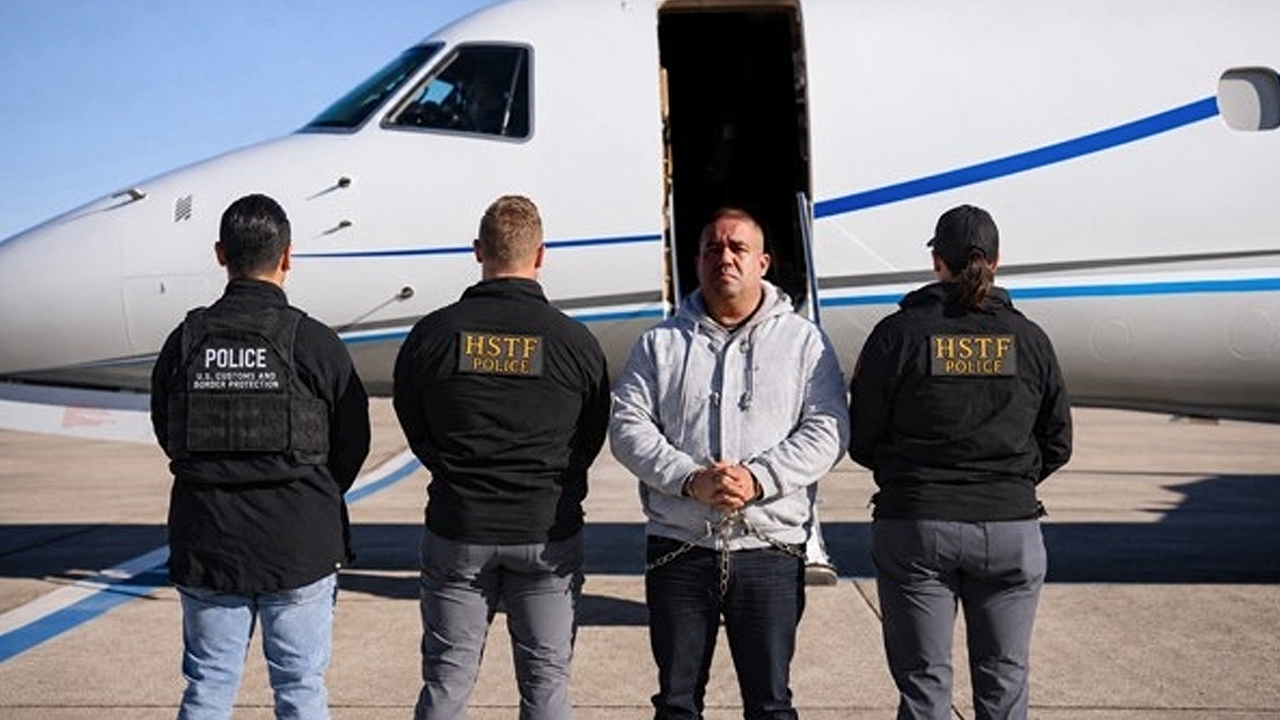
A Justice Department image shows Montejo Saenz standing beside an aircraft with Homeland Security Task Force and U.S. Customs and Border Protection officers. (U.S. Attorney’s Office, Southern District of California)
“Every drug kingpin has an expiration date. Today was his,” U.S. Attorney Adam Gordon said in a statement released Monday.
The State Department separately announced a reward of up to $10 million for information resulting in the arrest or conviction of Walfre Donaldo Calderon-Calderon, 44, who is also known as “El Teniente Jr.” Prosecutors allege that he heads a drug-trafficking organization in northwestern Guatemala near the Mexican border.
Montejo Saenz entered a not-guilty plea Nov. 9 in federal court in San Diego. Homeland Security Task Force personnel arrested him on allegations that he conspired to distribute cocaine destined for the United States and to traffic cocaine aboard a vessel. A conviction could bring a sentence of life in prison.
According to prosecutors, the network moved cocaine across at least six countries, including Colombia, Ecuador, Guatemala and Mexico, with the alleged activity continuing through November 2018. The U.S. Treasury Department sanctioned Montejo Saenz and the Los Huistas trafficking organization in 2022.

Federal reward posters feature Axel Bladimir Montejo Saenz, Walfre Donaldo Calderon-Calderon and Eugenio Dario Molina-Lopez, from left. The State Department announced rewards of up to $10 million for information leading to Montejo Saenz’s conviction or Calderon-Calderon’s arrest or conviction. (Christian Chavez, File/U.S. Attorney’s Office, Southern District of California)
A federal grand jury indicted Calderon-Calderon in 2019 on two cocaine-conspiracy charges. Prosecutors said the indictment was unsealed in June 2025, following a deadly confrontation involving Mexican law enforcement in Huehuetenango, Guatemala.
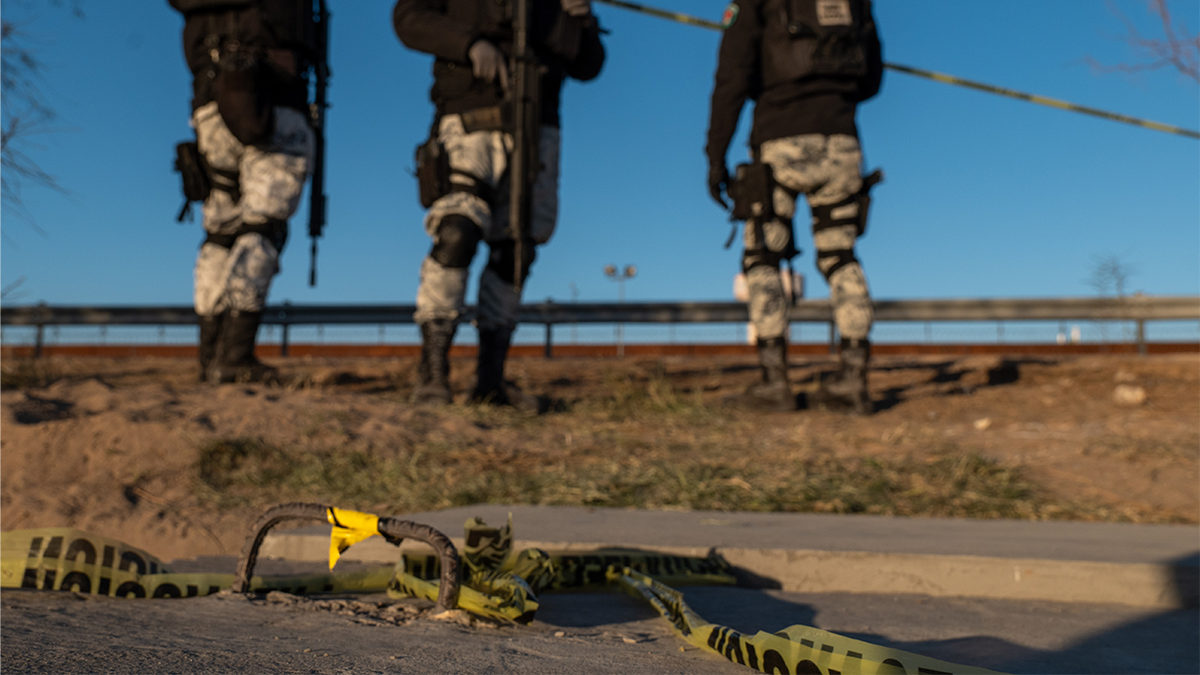
Mexican police work to seal and secure a clandestine tunnel discovered along the Mexico-U.S. border in Ciudad Juarez, Mexico, on January 13, 2025. (David Peinado/Anadolu via Getty Images)
The U.S. Attorney’s Office said authorities learned that Calderon-Calderon’s father, Baldemar Calderon-Carrillo, known as “Don Valde” and the lead defendant in the case, had been killed in the exchange of gunfire.
The rewards were announced months after the April arrest of another alleged Guatemalan drug kingpin, Eugenio Dario Molina-Lopez, or “Don Dario.” In 2022, the State Department had offered up to $10 million for information leading to his arrest or conviction.


