
Director of National Intelligence Jay Clayton told House lawmakers that a series of outages across the country, including disruptions that grounded flights, resulted from maintenance upgrades rather than a coordinated attack by a foreign adversary.
Clayton and other officials have instead highlighted the rapidly changing artificial intelligence landscape, warning that AI can make it easier to penetrate systems and trigger disruptions like those seen in recent days.
“Superintelligence,” Clayton said, using the Trump administration’s preferred term for advanced artificial intelligence, “is reshaping the cybersecurity landscape.”
“It is sharply increasing the speed, scale and sophistication of offensive and defensive cyber operations,” he said.
The disruptions took Microsoft Outlook and other services offline, prompted a nationwide ground stop for all US flights on Friday and caused outages at major banks. Because the incidents occurred within less than a week, they fueled questions about whether they were connected or linked to a foreign adversary.
Clayton said Wednesday that there was no evidence of such a connection.
“They are not a coordinated or state-sponsored attack,” he said during testimony before the House Homeland Security Committee’s annual “Threats to the Homeland” hearing.
“I understand the timing of these incidents can raise questions, and it should,” Clayton said. “The American people should ask us these questions.”

A person photographs a screen showing delayed and canceled flights after the US Federal Aviation Administration issued a national ground stop

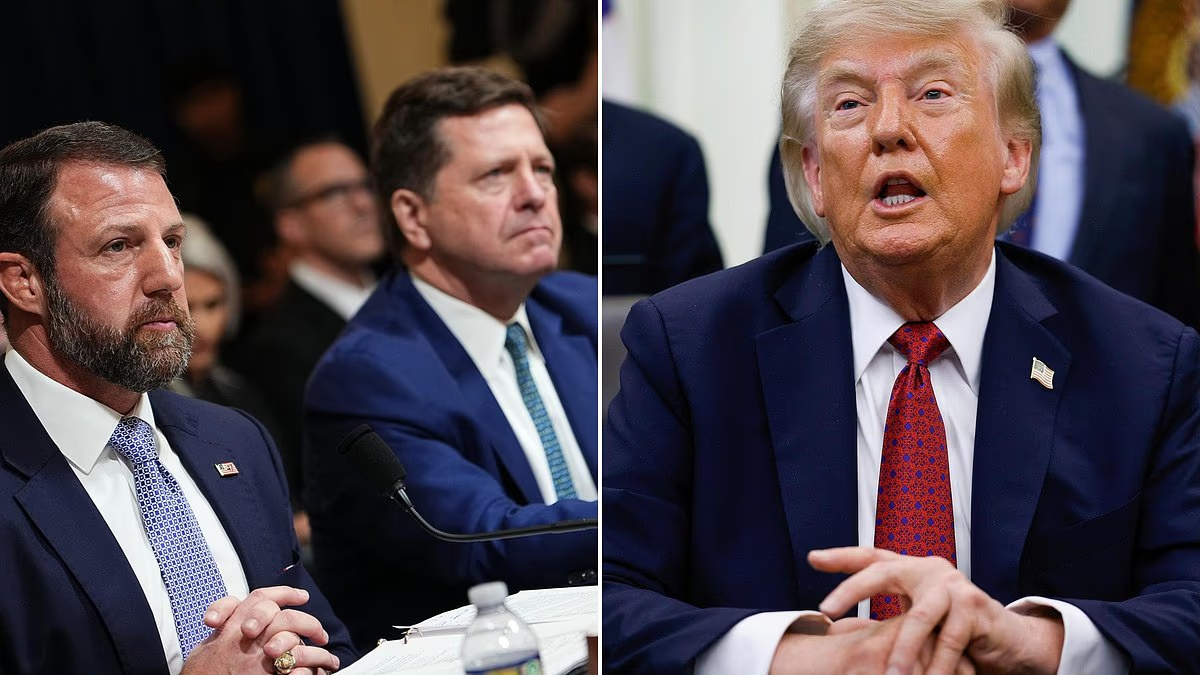
Homeland Security Secretary Markwayne Mullin, left, Director of National Intelligence Jay Clayton, center, and FBI Deputy Director Christopher Raia testify before House lawmakers

House Homeland Security Committee Chairman Andrew Garbarino speaks with ranking Democrat Bennie Thompson during an annual threat briefing
Clayton said his assessment followed multiple reviews conducted within the federal government and across agencies, along with consultations with cybersecurity experts and private-sector specialists.
At another point in the hearing, Republican Congressman Michael Guest of Mississippi listed the disruptions reported across the US in recent days.
Guest told Wednesday’s witnesses—including Clayton, DHS Secretary Markwayne Mullin and FBI Deputy Director Christopher Raia—that a Navy veteran and small-business owner from his district had texted him earlier that day with one question for the officials.
Were the outages connected?
Mullin replied that DHS officials had found nothing to suggest the incidents were linked.
Raia said the FBI’s cyber teams had been involved from the outset and had found “no indication whatsoever that there is any cyber malicious activity related to any of those incidents.”
Clayton also addressed the concern, telling Guest, “Your constituents are right to ask those questions.”
“After doing a great deal of due diligence inside the government, with the private sector and with people in the private sector whose job is cybersecurity, we have no indication that these incidents are related or that they are coordinated,” Clayton said.
“We also have no indication that they are the result of a state-sponsored malign actor.”


