
Cincinnati Zoo staff in Ohio are providing Fiona, the beloved hippopotamus, with round-the-clock attention after she accidentally swallowed a knitted hat.
The nine-year-old Nile hippo was inside her habitat on November 8 when a child threw the hat. The item became entangled in a ceiling fan and was propelled through a narrow opening above the viewing windows, according to zoo spokeswoman Michelle Curley.
Because of Fiona’s enormous size, veterinarians cannot safely remove the hat surgically. Instead, her care team is trying several methods to help her pass it naturally.
Staff borrowed a vibration platform from a nearby horse farm and are encouraging Fiona to stand on it multiple times each day.
Zoo officials said in an update Wednesday that the vibrations may stimulate movement through Fiona’s digestive system and help the hat move along. Video released by the Cincinnati Zoo showed Fiona snorting and walking around her indoor enclosure.
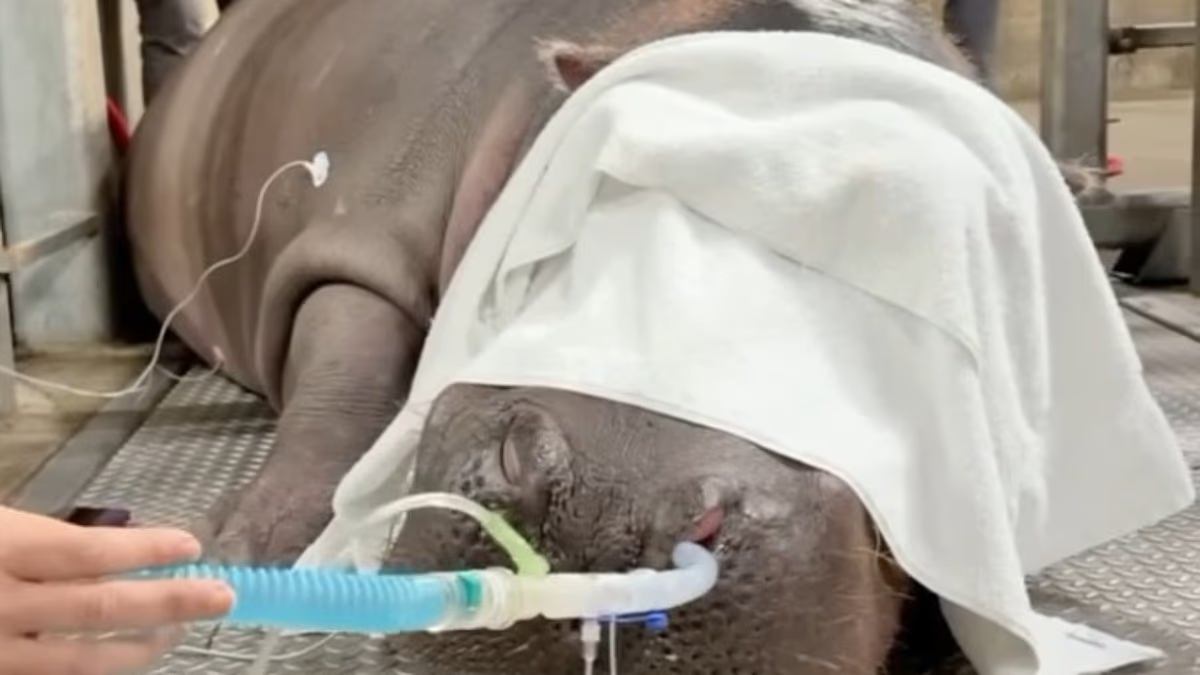
Fiona was sedated again Tuesday for additional diagnostic examinations, which revealed that she was mildly dehydrated.
The zoo also borrowed a nine-foot scope from the Columbus Zoo in an effort to perform a colonoscopy.
Although veterinarians could not reach the hat, an ultrasound detected some bunching in Fiona’s intestines, suggesting that her body is still working to move the obstruction through.

Fiona the hippo is receiving 24-hour care after swallowing a knitted hat that fell into her Cincinnati Zoo enclosure on November 8. Source: Cincinnati Zoo/Instagram

The Cincinnati Zoo sedated the nine-year-old Nile hippo Tuesday while conducting further diagnostic tests. Source: Cincinnati Zoo/Instagram
“For now, we’re giving her pain medication and anti-nausea medication so she remains comfortable,” Dr. Mike Wenninger, the zoo’s director of animal health, said. “We’re also offering her favorite foods and encouraging her to keep moving things through.”
He said Fiona’s team is observing her continuously, working to maintain her hydration and offering foods she enjoys in hopes of helping her pass the hat.
Curley said the care team even allowed Fiona to smell coffee, a scent she has long enjoyed. “They were pleased to see her react,” she said Wednesday.
DISCOVER MORE: Kim Jong Un’s Nuclear Program Raises Alarm Ahead of Trump’s Summits With Xi and Putin
Veterinarians have said they remain cautiously hopeful that Fiona will eventually pass the hat and return to her usual routine.
While the zoo continues its efforts, supporters around the world have flooded social media with messages of encouragement. Fans from Ohio, Tennessee, Florida, Nebraska, Texas, Arizona and Ontario have been sharing updates on the “Fiona the Hippo” Facebook page.
Fiona first captured global attention after being born six weeks premature at the Cincinnati Zoo on January 24, 2017. She weighed just 29 pounds at birth—25 pounds below the previous record-low birth weight documented for her species.
The zoo’s regular online updates about her development later inspired children’s books, a beer brand and even a Fiona bobblehead.

Fiona’s caregivers are offering her favorite foods as they try to help her pass the hat. Source: Cincinnati Zoo/Instagram
The American Veterinary Medical Association, an Illinois-based nonprofit and the country’s leading professional organization for veterinarians, told the Cincinnati Enquirer that it is following Fiona’s condition.
“Everyone at the AVMA is rooting for Fiona and hoping she has the best possible outcome,” President Dr. Jen Quammen said.
Quammen, who lives in Northern Kentucky, said she has cared about Fiona since the hippo’s premature birth and has been watching her recovery closely following “this unfortunate accident.”
“We are grateful to the zoo’s skilled veterinarians and animal care specialists for providing the intensive treatment Fiona needs,” Quammen said.
“Fiona has overcome difficult odds before, and we know how deeply she matters to so many people,” she added.
Quammen also described the incident as a reminder that swallowing foreign objects can seriously endanger animals, whether they are household pets, zoo residents or wildlife.
She urged people to keep hats, bags and other items that animals cannot eat out of reach at home and away from animal habitats during zoo visits.