
As The New York Post marks its 225th birthday, we’re celebrating the people, places and things that give Gotham its unmistakable character.
Bow Bridge
Central Park is one of New York’s great contradictions. Set within Manhattan’s precise street grid, the park’s paths twist and curve instead of running in straight lines. That maze-like design is intentional: sightlines often disappear within 100 feet, and visitors entering from the bustle of Central Park South can quickly lose their bearings in this wilderness tucked inside the city.
Its designers wanted to draw people away from the noise and hurry of urban life — to slow their steps and give them space to think.
Nowhere is that feeling more powerful, or more romantic, than at Bow Bridge.
Architects Calvert Vaux and Jacob Wrey Mould designed 27 arches and bridges throughout Central Park, built between 1859 and 1866.
SEE ALSO: Miss Universe Branded a ‘Laughing Stock’ After Models Stumble on Stage
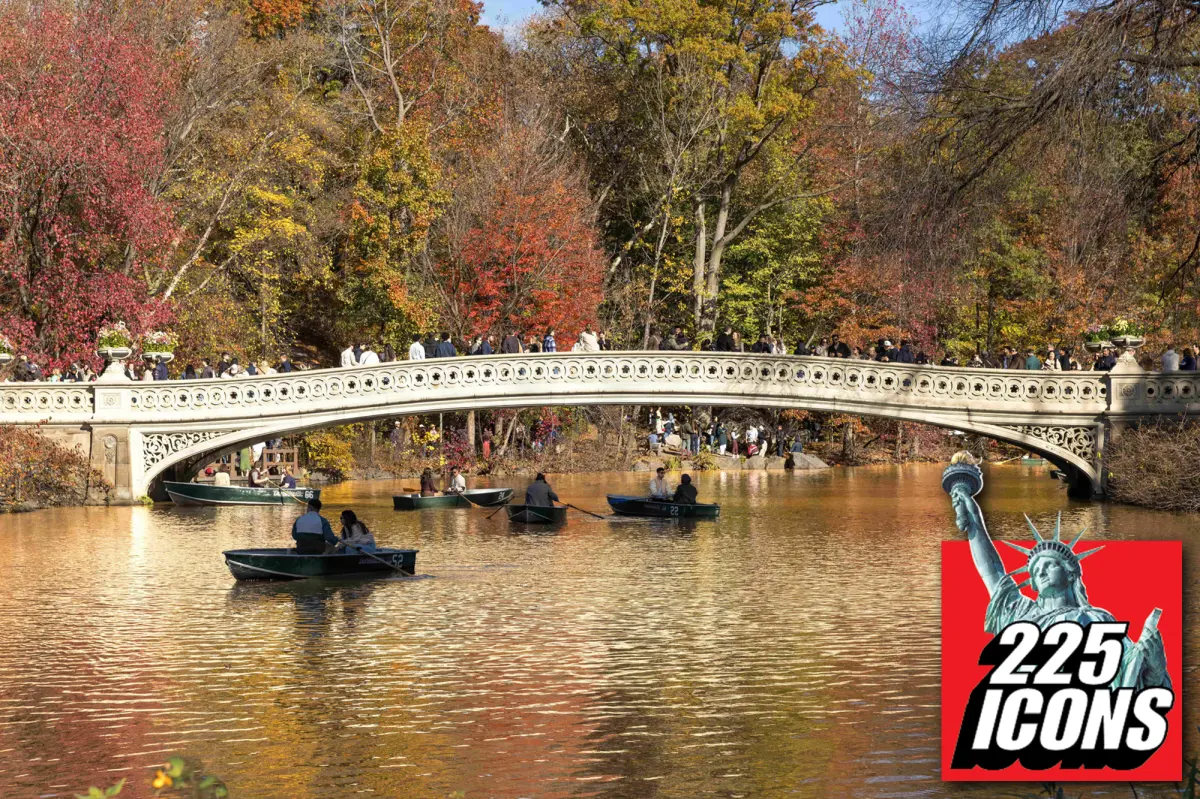
The longest is Bow Bridge, an 87-foot cast-iron pedestrian span that rises and dips almost imperceptibly above the lake — its graceful curve recalling an archer’s bow or a violinist’s instrument.
Rowboats drift across the water. On the bridge, a bride poses for photographs while someone else drops to one knee to propose. As the sun sets between the apartment towers of the Upper West Side, the surrounding trees glow orange.
After walking a quarter-mile from one of the world’s largest traffic jams, you arrive at an oasis shaped by Victorian design.
Few places feel more distinctly New York — and more removed from New York — than Bow Bridge.


