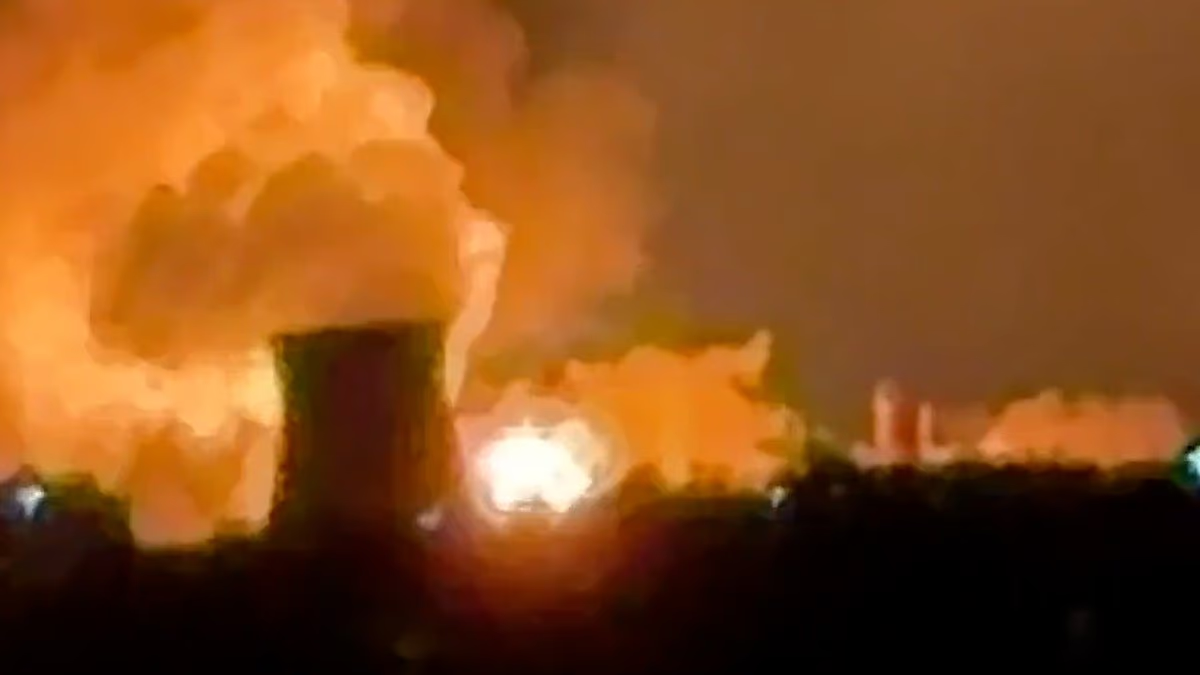
Germany’s defence minister has dismissed US criticism of Ukraine’s long-range attacks inside Russia as “stupid”.
Speaking at Nato headquarters in Brussels on Tuesday, Pentagon policy chief Elbridge Colby told supporters of Volodymyr Zelensky that Ukrainian strikes against Russian infrastructure and commercial warehouses had failed to achieve their intended effect and could instead strengthen Vladimir Putin’s determination to continue the war.
But when Boris Pistorius was asked whether he agreed with Mr Colby’s assessment, the German defence minister offered a blunt response.
He said it was “quite a stupid thing” to criticise attacks aimed at destroying strategic military targets or facilities used for military purposes inside Russia.
“Rather than criticising these strikes, we should be criticising and discussing the terrorist attacks carried out every night and every day against Ukraine’s energy, water and heating infrastructure. That is a form of terrorism,” Mr Pistorius told reporters.
British Defence Minister Wes Streeting expressed a similar view, arguing that the attacks had helped weaken Russia’s war machine, giving Ukraine more time and protecting lives.
Ukrainian Defence Minister Yevhenii Khmara, who also spoke to journalists in Brussels, said Ukraine’s attacks were retaliation for a series of Russian strikes since October. He specifically referred to the latest assault on the Russian-built Crimea bridge.
“I want the Russian Federation to receive a clear message: for every strike launched against our territory, we will respond two or three times more forcefully. We have the right to defend ourselves,” he said.

Germany’s defence minister called US criticism of Ukraine’s long-range strikes inside Russia “stupid”

Flames rise from a Russian oil refinery following a series of Ukrainian drone attacks on infrastructure inside Russia

Russia’s strategically important Kerch Strait Bridge, also known as the Crimea bridge, was damaged in a Ukrainian attack on Tuesday
He added that Ukraine’s armed forces intended to increase their long-range strike capacity by more than three times next year.
Addressing the Nato meeting in Brussels, Mr Colby compared Ukraine’s deep-strike campaign to a public spectacle.
“Although public attention is focused on dramatic long-range attacks intended to inflict pain on the Russian population, our assessment is that these strikes have not been effective in bringing the war to an end or in slowing Russia’s progress along the front,” he said.
Mr Colby was speaking at a meeting of the Ramstein Group, an alliance of countries supporting Ukraine militarily. The discussions centred on supplying Kyiv with additional weapons ahead of a difficult winter, as Russia intensifies its attacks on civilian infrastructure.
The Pentagon official said Ukrainian forces had correctly prioritised defending the front line, using medium-range weapons, innovative drones and new battlefield tactics to disrupt Russian supply routes and prevent further advances.
However, Mr Colby argued that some Ukrainian long-range attacks, particularly those targeting sites such as Wildberries warehouses—the Russian equivalent of Amazon—could strengthen public opposition to Ukraine and increase support for the Kremlin.
MUST READ: Who is Lacy Boles: The Staged Murder Trial
“Strikes against civilian infrastructure, including Wildberries, have probably hardened the Russian public’s resolve and increased the Kremlin’s willingness to escalate,” he cautioned.
“That does not mean Ukraine should be forced to fight with its hands tied behind its back. But our priority must be clear: support should focus on strengthening Ukraine’s ability to hold the line and, whenever possible, regain ground.”

Pentagon policy chief Elbridge Colby said Ukraine’s long-range attacks had been ineffective and could reinforce Vladimir Putin’s determination to continue the war

A video still captures the moment the Kerch Bridge was hit by a drone during a second attack within 24 hours

Ukrainian drone footage shows the damage to the Kerch Bridge, a key route for military and civilian supplies travelling from Russia to Crimea
Mr Colby’s comments followed a warning he reportedly delivered to European leaders last month, urging them to stop “poking” Russia amid concerns that Putin was prepared for a wider conflict, according to sources familiar with the matter.
The warning was directed at a Baltic official, the source said.
His remarks came as Ukrainian drones and missiles struck the strategically important Kerch Bridge, which connects Russia with the occupied Crimean Peninsula, on Tuesday.
Mr Zelensky described the operation as a major success after Ukrainian forces spent a week gradually weakening Russian air defences before launching a large overnight barrage of missiles and drones at the bridge.
Although the Ukrainian president did not provide details of the damage, Ukraine’s General Staff said an arch and a section of the bridge’s roadway had collapsed, cutting the road connection. The railway remained in place, although one of its arches was damaged.
Russia’s Investigative Committee, the country’s leading criminal investigation body, confirmed that the bridge had been attacked by drones and suffered damage.
The Kerch Bridge is a vital corridor for transporting military and civilian supplies from Russia to Crimea, as well as supporting Russian forces on the front line. Built after Moscow’s illegal annexation of the peninsula in 2014, it has long been viewed by Ukrainians as a powerful symbol of occupation.
“The symbol of the occupation has cracked,” Ukraine’s General Staff said in a statement.
Meanwhile, Russian forces launched ballistic missiles and drones at Kyiv, striking two major bridges in the Ukrainian capital and killing at least two people.
The latest wave of air attacks came as Moscow and Kyiv waited for a date to be set for the next round of US-mediated negotiations, aimed at ending the conflict that began with Russia’s full-scale invasion of Ukraine on February 24, 2022.
US President Donald Trump has said he intends to discuss the war in Ukraine during an anticipated meeting with Chinese President Xi Jinping and Russian President Vladimir Putin in China this week.


