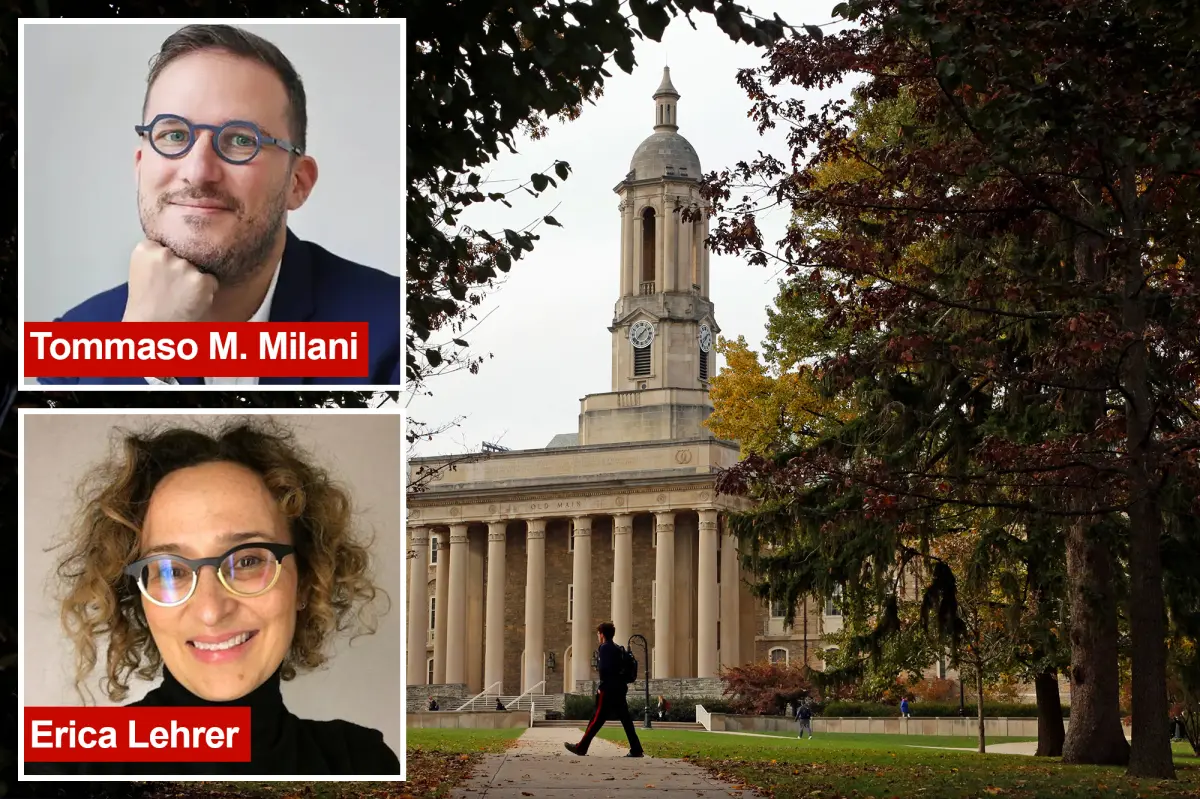

Pennsylvania State University is seeking to distance itself from a widely condemned on-campus lecture titled “Do we need to decolonize Holocaust museums?” The event was hosted by the university’s Jewish Studies Program.
The elite institution faced a wave of online criticism Tuesday after the program promoted the lecture, which was scheduled for later that evening. Critics said the title appeared to frame the Holocaust through the lens of an academic or social justice trend.
Under the advertisement, which has since been removed from social media, alumni and other users questioned the decision to host the event. Some called it “absolutely disgusting,” “vile,” “abhorrent” and “profoundly disturbing,” while another asked whether organizers had “lost their minds.”
As the backlash grew, Penn State acknowledged “how hurtful it was to many in our community.”
In a statement to The Post on Wednesday, the university said it “condemns all forms of antisemitism and is committed to making our Jewish students, faculty and staff feel safe, welcome and supported at Penn State.”
“The presence of any speaker on campus in no way constitutes an endorsement by the University of the views being espoused,” the statement said.
“We understand the concerns regarding the external speaker’s use of the word ‘decolonization’ in the event’s title, and we recognize how hurtful it was to many in our community.”
According to the event flyer, the lecture by Concordia University professor Erica Lehrer was intended to examine “the potential value of decolonial museum theories and practices for Holocaust museums to renew and expand their social justice mandates.” The wording, however, quickly triggered widespread outrage online.
“The very suggestion that Holocaust museums need to be ‘decolonized’ is deeply offensive,” one user wrote beneath the flyer after it was posted on Instagram.
“Watching a Jewish Studies department promote a lecture on ‘decolonizing Holocaust museums’ is beyond comprehension,” another commenter wrote.
Amid the criticism, ADL Philadelphia Regional Director Andrew Goretsky urged caution, saying that “conversations about the Holocaust deserve both care and precision.”
“This week, Penn State’s Jewish Studies Program hosted a scholar, herself the daughter and granddaughter of Holocaust survivors, to examine how museums care for objects taken from Jewish families and what they owe survivors and descendants,” Goretsky said in a statement to The Post.
Goretsky said “these are important questions,” but added that the title’s use of “decolonize” — a term that can carry a very different meaning outside academic settings — “caused real pain for many in our community.”
“We hope this moment encourages all of us to be thoughtful about how language lands with the public, especially when it comes to Holocaust memory.”
Tommaso M. Milani, director of Penn State’s Jewish Studies Program, said the term “decolonization,” when applied to museum collections, addresses ethical questions about artifacts, whose voices are represented and how institutions can confront historical injustices connected to the acquisition and display of their holdings.
“This presentation in particular examined questions regarding how museums care for objects taken from Jewish individuals and communities and the responsibilities institutions have when pieces on display were never returned to survivors or their descendants when their descendants asked for them,” he continued.
“Importantly, neither the lecture nor the discussion diminished the significance of the Holocaust, the experiences of survivors, or the importance of Holocaust museums and memorials,” Milani added.
As criticism continued online, Lehrer said she delivered the lecture as “a person whose own mother’s family heirlooms were donated to a Holocaust museum,” according to a statement to The Jerusalem Post.
“Most of the questions I am exploring relate to how Holocaust museums may learn from Indigenous innovations regarding more flexible ways to care for objects that keeps them connected to families and communities rather than only under glass, as evidence of crimes,” she said.
Lehrer, a former fellow at the United States Holocaust Memorial Museum, said the lecture also examined how groups of Holocaust victims, including Roma people, have sometimes been represented in stereotypical ways that fail to convey their full humanity.
She said those concerns parallel questions raised by other scholars about the content and practices of museums.
The Post has contacted Lehrer twice for comment.