
A series of technology breakdowns that grounded flights and interrupted workplace software and online banking is intensifying concerns about vulnerabilities in America’s critical infrastructure that foreign adversaries could exploit, experts say.
Cybersecurity specialists caution that U.S. rivals are paying close attention to how the country handles these disruptions. They say a damaging cyberattack would not necessarily require advanced techniques, and that hostile nations already possess the tools needed to create widespread chaos.
The National Security Agency experienced interruptions to internal systems Tuesday during planned maintenance. Officials said, however, that essential national security operations continued without interruption.
Apple also reported service problems Tuesday, affecting platforms such as the App Store, Apple Music and iCloud sign-ins. The company blamed an internal update for the outages and said many of the affected services had since been restored.

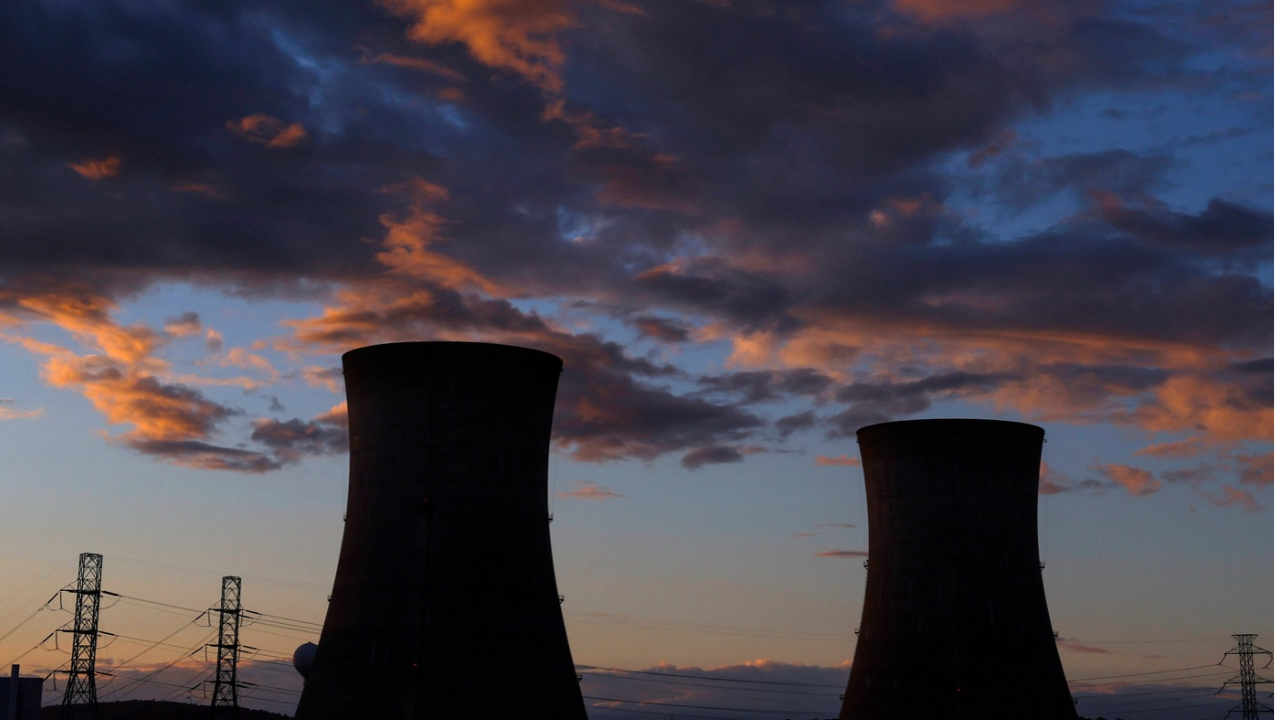
The Three Mile Island Nuclear power plant is seen at sunset in Middletown, Pennsylvania. (Reuters/Shannon Stapleton)
The technology problems followed a separate failure Monday that delayed United Airlines departures by more than 90 minutes. There was no evidence that the incident involved a cyberattack.
One day earlier, the Federal Aviation Administration imposed a nationwide ground stop that lasted more than four hours. It was the longest such stoppage in 25 years and caused travel problems that airlines needed days to clear.
Transportation Secretary Sean Duffy said on “Fox News Sunday” that investigators had found no sign of a foreign cyberattack. Officials were examining whether defective equipment or an installation issue caused the extended grounding of flights.
“We think it was the installation or the router that was the bad actor,” Duffy said. “But we’re open, if we see something else, we’re gonna continue to investigate with our federal partners and law enforcement.”
The Wall Street Journal reported that FAA radio locations in El Dorado, Arkansas, and possibly Amarillo, Texas, overwhelmed the communications network used by air-traffic controllers.

Planes wait on the tarmac at LaGuardia Airport, New York on Nov. 13, 2026. (CHARLY TRIBALLEAU / AFP via Getty Images)
Microsoft’s Outlook service was also unavailable for almost 24 hours beginning Thursday, with access restored Friday morning.
Charles Lamanna, a Microsoft executive, said the outage stemmed from a software flaw that had not previously been detected, heavier-than-usual traffic and reduced server capacity.
Workday, the human resources and payroll platform used by millions of Americans, reported a broad service interruption Friday as well.
“Workday is currently unavailable,” the company told users. “We are experiencing a service interruption. Your service will be restored as quickly as possible.”
Customers at several major banks, including Chase, Bank of America and Wells Fargo, also said Monday that they were having trouble reaching online banking services.
EXPLORE MORE: Nadine Dorries Reveals How She Reduced Her Skin Age by a Decade at 69

Passengers wait at boarding gates at Ronald Reagan Washington National Airport in Washington, D.C. on Nov. 13, 2026. (Zina DESMAZES / AFP via Getty Images)
Chase confirmed that some transactions were delayed but said customers still had complete access to their accounts and money.
Although officials have found no evidence linking Friday’s FAA ground stop to a foreign cyberattack, Charles Tango, chief strategy officer at cybersecurity firm Hydden, told News Outlet that America’s adversaries have the means to intentionally disrupt critical infrastructure.
Tango said causing a major interruption may be easier than many people assume, particularly as artificial intelligence lowers the cost and complexity of cyberattacks.
“It does not take a lot of sophistication these days to cause this type of attack, especially with the advent of AI, it’s made security attacks much easier and much cheaper, but absolutely other countries like China would have immense capability of impacting our environments,” Tango said. “They’ve spent a lot of time and a lot of effort trying to compromise our critical infrastructure.”
“Not all warfare needs to be kinetic these days. A cyber warfare can be very effective. We’ve seen that with Russia and Ukraine. We should be very mindful of the capacities that our adversaries have when it comes to cyber capability. Many of them specialize on offensive cyber capabilities, and that’s what we should be focusing on,” Tango said.
“Other countries like China would have immense capability of impacting our environments. And we’ve seen that recently with organizations like Volt Typhoon,” he added.
Tango pointed to aging technology across parts of U.S. critical infrastructure as a significant weakness. He said the recent disruptions showed how a relatively small equipment failure can trigger consequences across a much larger system.

A Microsoft Outlook outage on Thursday lasted for nearly 24 hours before service was restored Friday morning. (Cesc Maymo)
“What we saw here is that one very small incident led to a widespread outage. That’s because a lot of these systems are old. They’ve been around for a while. We haven’t invested in upgrading them. And that’s not just for the FAA. That’s across critical infrastructure,” Tango said.
“I mean, the world is watching how we respond to this, and certainly our adversaries are watching this very, very closely,” he added.
The potential threat from foreign adversaries goes far beyond aviation. In 2024, federal cybersecurity agencies said the Chinese state-backed hacking group Volt Typhoon had infiltrated U.S. energy companies and other critical infrastructure organizations. Officials believed the group was preparing for the ability to disrupt essential services during a conflict or serious crisis involving the United States.
Michael Balboni, a former New York homeland security adviser, former New York Power Authority trustee and current president of Adelphi University, said reports that foreign actors had gained access to U.S. power grids have concerned officials for years.
“We had reports and information that, in fact, adversaries were in the grids across the country,” Balboni told News Outlet. “And that, again, had been there for years. The question becomes, what is their capability?”
“Imagine taking out all the traffic lights in a major city,” he said. “Imagine having the power go off to a hospital. Now, most hospitals have generators, but what if they don’t come back on?”